
Canada’s Olympic loss to the U.S. exposed the same national anxiety McDavid once relieved, proving hockey carries emotional weight win or lose.
The reaction to McDavid’s overtime winner at the Four Nations Face-Off felt less like celebration than release — as though a threat had passed, a verdict had come back favorable. The emotional weight of that moment surprised people who thought they were just watching hockey.
That reaction — and the civil religion framework it revealed — was examined at the time in the analysis of why McDavid’s overtime goal felt like national relief.
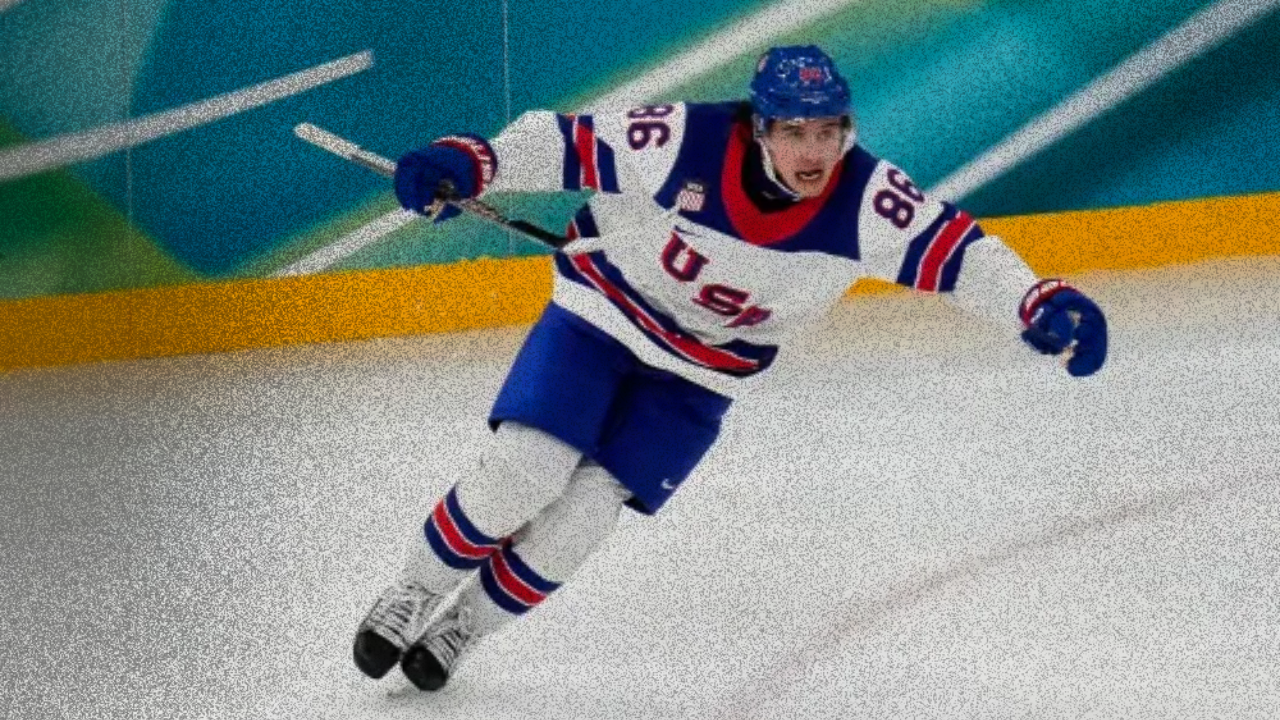
On February 22, 2026, in Milan, Jack Hughes scored 1:41 into overtime and Canada fell silent.
The structure was identical. The result was inverted. And the devastation that followed confirmed something the Four Nations win had only implied: the emotional infrastructure does not depend on victory. It was already there, fully loaded, regardless of the outcome. Winning quieted the need. Losing exposed it.
What Actually Happened
Canada outshot the United States 42 to 28. They carried play for the final two periods. Nathan MacKinnon — who led the tournament in scoring — stared at a mostly open net in the third and missed. Connor Hellebuyck made 41 saves and the best stop of the tournament off Devon Toews on a point-blank chance that should have ended it.
Sidney Crosby, Canada’s captain, did not dress. He had been injured in the quarterfinals and could not go.
The Canadians did not play badly. They were the better team by most measures. They lost anyway, in overtime, to a goaltender who was simply unreachable. That is the particular cruelty of this result — not a collapse, not an embarrassment, but a performance good enough to win that did not.
That detail matters for understanding the reaction. This was not the grief of a team that choked. It was the grief of a team that deserved better and did not get it. That kind of loss has a specific emotional texture. It lingers.
Relief in Reverse
When Canada wins a high-stakes international hockey game, the dominant emotion is relief rather than triumph. The win feels like an affirmation narrowly secured, a threat narrowly averted. Defeat reverses that emotional polarity without reducing its intensity.
The loss in Milan did not produce resignation. It produced disbelief. Commentators dissected missed chances and Hellebuyck’s save percentage. Players spoke about what the team deserved. “You be the judge of who was the better team today,” MacKinnon said after the game. The language of entitlement — not arrogance, but a genuine sense that the outcome did not match the performance — ran through the coverage.
That language reveals how fully the game had already been loaded with symbolic expectation before the puck dropped. The reaction was not proportional to a hockey loss. It was proportional to a symbolic verdict that came back wrong.
The Ceremony Still Works, Even When It Hurts
Hockey functions in Canada as a form of civil religion — a ritual space where national identity is performed rather than debated. The anthem before puck drop, the maple leaf across the chest, the global stage of an Olympic final against the United States. These are the elements of a ceremony, and the ceremony does not fail when the result goes the wrong way.
Rituals do not dissolve in defeat. They intensify. The disappointment following the final demonstrated how fully the ceremony had worked. If millions of people experience a hockey loss as a national moment, the ritual succeeded. The investment was real. The identification was complete.
This is what the Four Nations win established and what the Olympic loss confirmed from the other side: the emotional infrastructure was never conditional on victory. It was built to contain either outcome. Winning offered reassurance. Losing exposed how much reassurance had been sought.
Canada Dominated and Still Lost
There is a specific symbolic injury in the details of this game that the broader analysis cannot skip over.
Canada outplayed the United States by conventional measures. They generated more shots, more pressure, more high-danger chances. MacKinnon missed an open net. Hellebuyck made saves that had no business being made. The outcome was decided not by Canadian failure but by American goalkeeping that reached a level the game had no right to expect.
This matters because it complicates the narrative of defeat. Canada cannot point to a collapse or a loss of nerve. They can only point to a goaltender who stopped 41 shots and an overtime that lasted less than two minutes. The result feels arbitrary in the way that sport occasionally is — a 3-on-3 format that reduces ice hockey’s complexity to a single bounce.
Fans who watched the game understand this. The reaction was not embarrassment but injustice, which is a different emotional register and a more painful one. Injustice does not resolve. It accumulates.
The Rivalry That Replaced the One That Was Removed
The 1980 anniversary framing that the American broadcast leaned on — Miracle on Ice, forty-six years to the day — was not incidental. It was the US staking a claim to mythology that Canada had treated as its own territory.
International hockey for decades organized itself around Canada versus Russia. The Cold War narrative, the 1972 Summit Series, the symbolic weight of East versus West — all of it provided a structure in which Canada and Russia were the poles and everything else was context. Russia’s removal from international competition, following the invasion of Ukraine, collapsed that structure.
What remained was Canada versus the United States, promoted to the only rivalry that matters. And the US has now won it on the largest possible stage, 46 years after the last time they did, framing it in explicitly mythological terms.
That reframing is a symbolic challenge Canada has not yet answered. The Four Nations win was a response of sorts — overtime, same teams, Canada prevailing as expected. The Olympic loss inverts that response. The mythology the US is now building is about reclaiming something lost, about a generation of American players finally delivering what the ones before them could not. “So many generations before us, unbelievable players, the guys we looked up to, they didn’t get it done,” McAvoy said after the win. That is a potent narrative, and Canada is currently on the wrong side of it.
The symbolic stakes of this specific rivalry — the way Canada-USA hockey functions as the site where national hierarchy is briefly suspended and then reimposed — were examined before the final in the analysis of why this gold medal game feels different.
Crosby’s Absence and the Shape of the Loss
Sidney Crosby did not play. That fact embedded itself into the reaction immediately, and it belongs in any honest account of what the loss meant.
Crosby is the central figure of Canadian hockey mythology for his generation — the golden goal in Vancouver in 2010, two Olympic golds, the face of everything Canada believes about its relationship to the sport. His absence in the final was not an excuse but it was a wound, and it gave the loss a particular incompleteness. Canada did not fall to the United States at full strength. Whether that matters to the outcome is unknowable. It matters to the feeling.
When your captain cannot dress for the Olympic final, defeat does not arrive cleanly. It arrives with a footnote that will never stop being raised and never fully resolve anything.
The Myth Absorbs the Loss
Canadian hockey mythology was never built exclusively on victory. It was built on narrative — on the Summit Series, on near-misses and dramatic resolutions, on the accumulation of meaning around moments that the country decided to remember.
The 2026 Olympic loss enters that archive. Overtime losses are particularly fertile mythologically. They preserve legitimacy — Canada was right there, one bounce away — while generating the kind of unresolved emotional energy that keeps a story alive. The MacKinnon miss, the Hellebuyck save on Toews, Crosby watching from the bench: these are the details that get replayed.
The myth does not break when it encounters defeat. It expands to include it. The story becomes one of what almost was, and “almost” is enough to sustain the framework until the next tournament provides the next verdict. The 2026 loss will be what Canada was avenging the next time these two teams meet for something that matters.
The machinery by which hockey mythology is built and sustained — the conversion of near-misses and dramatic resolutions into national narrative — is examined in the analysis of the Oilers as Canada’s national myth machine, which documents how a playoff run became a vehicle for producing national cohesion when political institutions could not.
What the Loss Actually Revealed
The Four Nations win temporarily quieted a set of anxieties about proximity, status, and symbolic authority. The Olympic loss reopened them.
Canada’s national identity has long been constructed in relational terms — defined against the United States more than defined as itself. Hockey is the primary arena where that relational logic plays out, where the hierarchy that governs economics, culture, and geopolitics appears, briefly, suspended. When Canada beats the US, the inversion feels real. When the US beats Canada on the Olympic stage, playing the Miracle on Ice anniversary as a narrative backdrop and celebrating with a jersey that has nothing to do with Canada, the hierarchy reasserts itself in the one space where it was supposed to be held at bay.
That is what the loss exposed. Not a failure of the team. A vulnerability of the symbolic structure that the team was carrying, and that no team should have to carry, and that Canadians will load onto the next one anyway.
The goal went in. The exhale did not come. Everything else followed from that.