
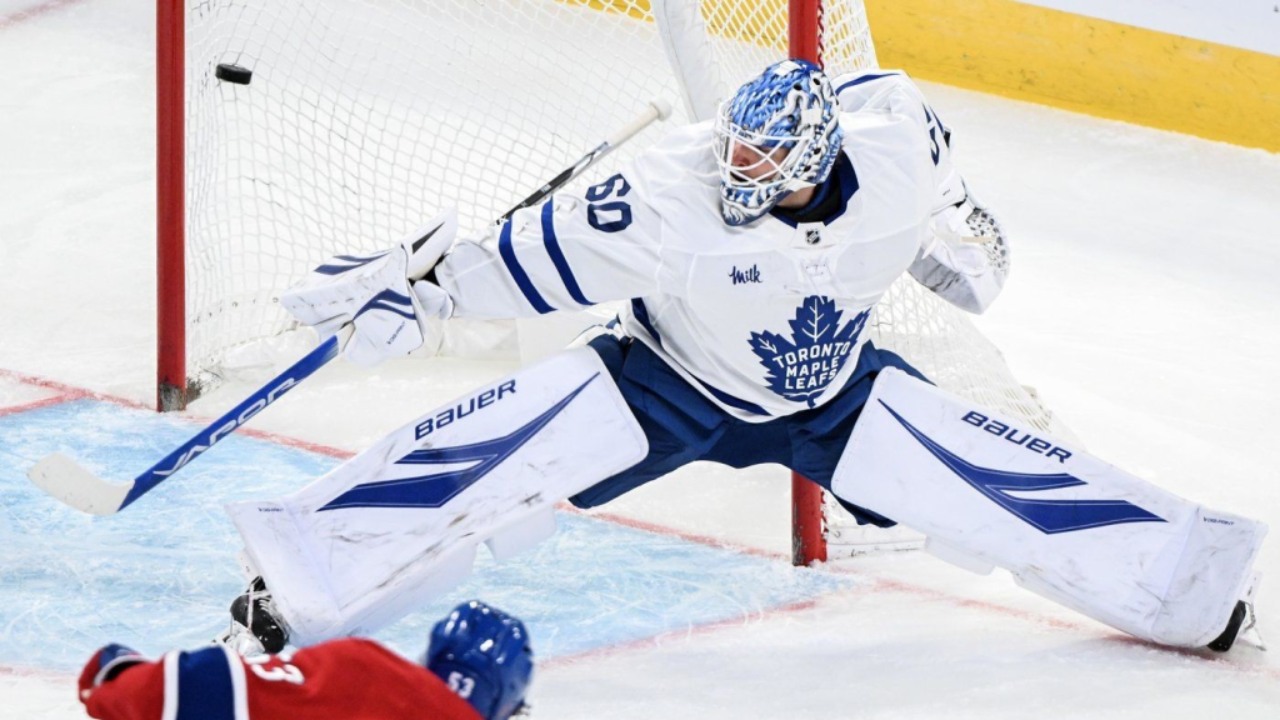
Toronto’s latest loss wasn’t an outlier but a repeat of season-long issues — poor structure, weak puck management, and no pushback when games tilt against them.
Toronto’s 5–2 loss in Montreal was not an isolated stumble but a repetition of the same structural problems that have defined their season.
Montreal opened the game with a quick 2–0 lead in the first period and controlled the pace from that point on.
Toronto spent the night chasing the play, most noticeably during a second period where they were outworked, out-executed, and unable to establish any real pushback.
Montreal didn’t need high-end finishing or unexpected tactics to take control. They attacked the vulnerabilities Toronto has shown for months: loose defensive gaps, slow coverage rotations, weak puck management, and a lack of sustained 5-on-5 pressure.
Toronto’s late power-play goal only narrowed the margin on the scoreboard without changing the nature of the performance.
This game didn’t introduce anything new.
It simply continued a familiar pattern.
How the Game Unfolded
Montreal opened the scoring when Lane Hutson finished a cross-ice pass from the right circle. Less than two minutes later, Noah Dobson added a second goal from the same side of the ice after another lateral movement sequence that left Toronto’s coverage scrambling and Joseph Woll exposed to traffic.
Early in the second period, Dobson scored again, capitalizing on a clear shooting lane created by heavy net-front presence. Later in the period, Josh Anderson made it 4–0 on a chance from the slot, a goal that ended Woll’s night after a stretch of repeated breakdowns in front of him.
Toronto’s only responses came from an Oliver Ekman-Larsson shot late in the second period and a William Nylander power-play goal in the third. Both were isolated moments in a game largely controlled by Montreal.
The Second Period Collapse
The second period was the decisive stretch of the game. Montreal controlled the pace from the opening faceoff of the frame, running up a 16–1 shot advantage early and outscoring Toronto 2–1 over the full twenty minutes. Toronto offered little resistance, spending most of the period hemmed in their own zone and reacting to Montreal’s pressure rather than generating any of their own.
This performance followed a season-long pattern in which Toronto has struggled badly in second periods, entering the game with a 32–21 deficit in goals during middle frames. A team that consistently loses the middle of games eventually turns those patterns into predictable outcomes, and this night in Montreal was no exception.
Structural Problems Exposed Again
Toronto continues to show chronic problems with defensive cohesion, struggling to maintain five-man structure, sort coverage responsibilities, and apply consistent pressure to opposing point shots.
Those issues were evident on the goals Montreal scored: clean looks from the right side, slow defensive rotations, lost battles around the crease, and defenders arriving a step too late to influence the play.
These breakdowns are part of a larger pattern. The team has spent much of the season near the bottom of the league in both expected goals against and actual goals against, a reflection that the defensive weaknesses on display in Montreal are not isolated mistakes but systemic problems.
Net-Front Chaos
Montreal repeatedly used heavy net-front screens, including traffic from Juraj Slafkovsky, to make Noah Dobson’s point shots difficult for Joseph Woll to track. Several of Montreal’s scoring chances came through layered bodies at the crease, and Toronto’s defenders were consistently late or ineffective in clearing lanes or boxing out attackers. This lack of control around the net allowed Montreal to generate clean looks and sustained pressure throughout the game.
Puck Management & Transitions
Turnovers and failed exits have been a recurring problem for Toronto, and those issues were evident throughout this game. The team struggled to move the puck cleanly out of its own zone, repeatedly relying on soft rims, blind backhand plays into pressure, and rushed clears that simply returned possession to Montreal. Each failed outlet fed the Canadiens’ cycle and extended defensive-zone shifts, leaving Toronto unable to generate speed or structure through the neutral zone.
After the first period, even Toronto’s own players acknowledged that the team surrendered momentum. Their transition game collapsed under pressure, and they never regained the pace or control needed to mount a meaningful push.
Goaltending and Special Teams
Joseph Woll allowed four goals on 25 shots before being pulled from the game, and Dennis Hildeby stopped all three shots he faced in relief. The goals against came on a steady stream of high-quality chances generated by Montreal, and the score could have been even more lopsided without several key saves early on.
William Nylander scored a power-play goal late in the third period, but the game had already been decided by that point. Montreal’s extended pressure during delayed penalties and sustained offensive-zone shifts kept Toronto pinned in its end, exposing how easily the team’s defensive structure breaks down when forced to absorb prolonged pressure.
Who Showed Up — and Who Didn’t
Noah Dobson and Josh Anderson each scored twice for Montreal, and Lane Hutson opened the scoring with the game’s first goal. Ivan Demidov and Mike Matheson both recorded two assists, and rookie goaltender Jakub Dobes made 24 saves in a composed performance that steadied a team coming off a difficult stretch.
For Toronto, William Nylander factored into both goals with one goal and one assist, while Oliver Ekman-Larsson scored the only 5-on-5 goal. Outside of those contributions, the team generated very little dangerous pressure in the middle of the ice. The top forwards and blue line were unable to drive play at 5-on-5, and Toronto never established sustained offensive-zone time.
A Loss That Mirrors the Season
Toronto’s defensive problems extend far beyond individual games. The team has shown a pattern of disorganized coverage, reactive habits, and weak rush defense, consistently giving up goals in the immediate aftermath of turnovers. These issues have defined their season and reflect deeper structural and cultural problems rather than isolated execution mistakes.
The loss in Montreal was not an exception but a clear example of those same tendencies: poor defensive structure, goals against created directly from turnovers, a passive and ineffective second period, and little meaningful pushback once the game tilted. The overall profile remains the same. The roster may project the image of a contender, but the on-ice habits tell a very different story. Until those underlying patterns change, the results are unlikely to improve.