
Toronto led nearly all night, only to watch a single impossible catch flip destiny, shatter belief, and expose the structural gulf that defined the 2025 World Series.
Game 7 of the 2025 World Series was the kind of game that cities wait decades to witness. Toronto entered the night carrying thirty-two years of anticipation, anxiety, and unspoken belief.
After surviving the chaos of earlier series, the sting of the “wall wedgie” in Game 6, and the swelling sense that destiny had briefly aligned in their favor, the Blue Jays arrived at Rogers Centre with confidence bordering on spiritual momentum.
Thousands packed the building in a dense, crackling atmosphere, convinced that this was finally their moment. Across the field, the Los Angeles Dodgers countered with the one asset that had defined their era: unshakable structure.
Exhausted, battered, and fighting an uphill battle from the first pitch, they entered the game as a team held together not by momentum but by institutional resilience. What followed over eleven innings was more than a baseball contest; it was a collision of myth, mathematics, emotion, and inevitability.
It became a night when Toronto led nearly the entire game, only to watch everything collapse in a single, physics-defying defensive play that will live in baseball history.
The Dodgers’ eventual 5–4 victory in extra innings delivered a second consecutive championship and carved its way into the canon of the sport’s greatest games.
Blue Jays’ Breakthrough
For the first two innings, Shohei Ohtani appeared composed. His rhythm was deliberate, and although the Blue Jays made contact, they generated no real danger.
Then the third inning changed the night entirely. George Springer singled, Nathan Lukes bunted him forward, and a wild pitch pushed Springer to third base. When Vladimir Guerrero Jr. was intentionally walked, Ohtani found himself trapped in the exact inning the Dodgers had hoped to avoid.
Bo Bichette stepped into the box carrying the weight of the stadium’s anticipation, and Ohtani delivered a pitch that drifted too far into the strike zone.
Bichette launched a towering 442-foot home run to center field, instantly turning the dome into a cauldron of noise. Ohtani’s night ended at just 2.1 innings pitched, and Toronto seized a 3–0 lead that electrified the entire building.
For a moment, the series felt like it had shifted back into the Blue Jays’ orbit.
The Fourth-Inning Flashpoint
The game’s first major emotional rupture came in the fourth inning. Justin Wrobleski, who entered the game in emergency relief, struggled to command the inside part of the plate.
Pitches tailed high and tight on Andrés Giménez, who responded by visibly leaning into the zone, attempting to draw a hit-by-pitch.
After a series of increasingly inside pitches, Wrobleski finally clipped him, and the spark caught instantly. Both benches emptied, with players on both sides rushing the field and trading heated words.
No punches were thrown, but the atmosphere shifted. What had been a tense game became a volatile one, with tempers on both sides threatening to boil over.
Springer’s Immediate Response
Two pitches after the benches cleared, George Springer drilled a line drive directly off Wrobleski’s leg. It was not revenge by intent, but the timing was impossibly poetic.
In a sport where narrative and performance often blur into ritual, Springer’s swing felt like a symbolic counterstrike. The Dodgers’ frustration visibly spiked as Giménez advanced and the inning continued.
Springer’s ability to transform tension into precision reflected the kind of veteran composure that defines postseason folklore, and the sequence deepened the sense that Toronto controlled not just the scoreboard but the emotional dynamic of the game.
Dodgers Begin the Slow Comeback
Despite Toronto’s early surge, the Dodgers refused to unravel. They answered immediately in the top of the fourth, beginning a steady, almost methodical climb back into the game.
Will Smith doubled, Freddie Freeman singled, and Teoscar Hernández delivered a sacrifice fly to cut the lead to 3–1. The Dodgers chipped away again in the sixth, drawing walks and piecing together contact until Tommy Edman lofted another sacrifice fly that made it 3–2.
Toronto briefly responded in the bottom half when Giménez delivered an RBI double that extended the lead to 4–2, but the Dodgers refused to yield.
In the eighth inning, Max Muncy launched a solo home run that brought the Dodgers within one, reestablishing the constant pressure that had defined their identity all season.
Dodgers’ Bullpen Locks In
The Dodgers’ bullpen transformed the middle and late innings by delivering calm, disciplined work under escalating tension.
Following Ohtani’s early departure, Wrobleski, Tyler Glasnow, Evan Sheehan, Blake Snell, and Yoshinobu Yamamoto combined to stifle the Blue Jays’ offense.
Although Toronto maintained their lead, they could not extend it.
Every inning the Dodgers survived tightened the emotional screws, pulling the contest into a kind of slow-motion inevitability where one swing—by either team—might redefine the night.
Rojas’s Ninth-Inning Equalizer
With Toronto clinging to a 4–3 lead in the ninth inning, the Blue Jays handed the ball to Jeff Hoffman, who had been flawless throughout October.
Miguel Rojas, known more for his glove than his bat, stepped into the box with one out and nobody on. On a pitch that drifted slightly above the middle of the plate, he connected with a deep drive to left field that cleared the wall for a shocking, game-tying home run.
The stadium fell into stunned silence. Toronto’s sense of control had evaporated in a single, unexpected swing. The Dodgers had clawed all the way back, and the pressure shifted entirely onto Toronto’s next at-bat.
The Catch That Broke a Nation
The bottom of the ninth produced one of the most dramatic sequences in World Series history. After a Bo Bichette single and a series of tense plate appearances, the Blue Jays loaded the bases with one out. Rogers Centre transformed into a powder keg of anticipation, vibrating with the certainty that the game—and the championship—was about to be won.
Ernie Clement stepped to the plate, already one of the postseason’s breakout heroes, and on a hanging curveball from Yamamoto, he delivered an explosive 100.7 mph drive to left-center field.
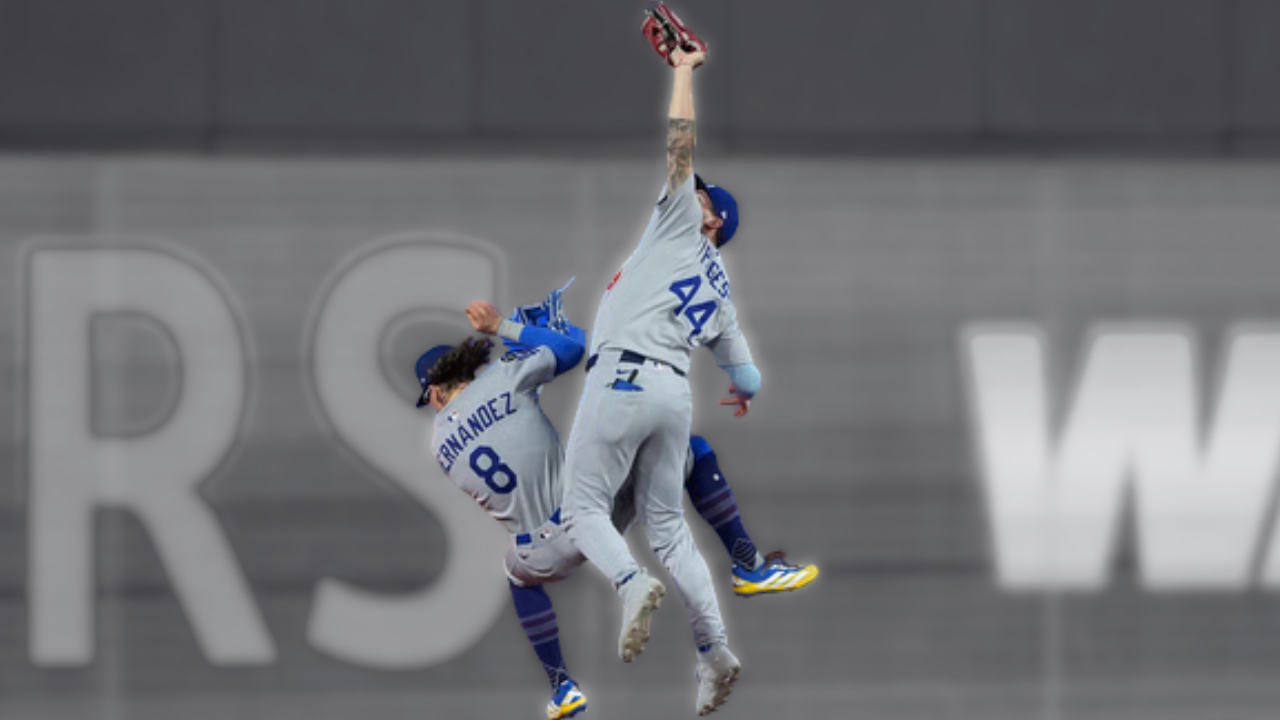
The ball appeared destined to fall, and Kiké Hernández sprinted desperately but hopelessly behind it. And then Andy Pages intervened. In a full-speed, 121-foot sprint that defied the geometry of the field, Pages dove into the gap, collided with Hernández, and somehow emerged from the chaos with the baseball secure in his glove.
The stadium’s building roar died instantly. Pages’ catch preserved the tie, saved the Dodgers’ season, and transformed a near-certain Blue Jays walk-off into the most profound heartbreak Toronto baseball had ever experienced.
The Emotional Collapse of Extra Innings
Once Toronto’s ninth-inning miracle evaporated, the psychological landscape of the game changed completely.
The Blue Jays entered the tenth inning visibly shaken, their swings hesitant and their approach disjointed. Yamamoto dominated them with calm precision.
Los Angeles pushed back in the top of the inning but failed to score, preserving the deadlock until the eleventh, where structure and resilience finally overtook momentum.
Smith’s Eleventh-Inning Heartbreaker
With two outs in the top of the eleventh, Will Smith worked a 2–0 count against Shane Bieber. Bieber delivered a fastball that caught too much of the middle, and Smith crushed it into the left-field stands. The Dodgers took their first lead of the entire game at 5–4.
For Toronto, the moment felt like the continuation of a nightmare that had begun with Pages’ theft in the ninth. The Blue Jays still generated one final opportunity, as Guerrero doubled and Kiner-Falefa advanced him to third with a bunt.
But Yamamoto executed flawlessly, inducing a ground ball from Alejandro Kirk that Mookie Betts turned into a 6–3 double play, ending the game and the season in an instant.
A Game That Will Live in Memory
Years from now, the box score will still say that the Dodgers defeated the Blue Jays 5–4 in eleven innings. But the numbers will fail to capture the emotional and structural drama that unfolded.
They will not convey the electricity when Bichette homered, the ritualistic shock of the benches clearing, the eerie timing of Springer’s retaliation, or the creeping dread of the Dodgers’ comeback.
Andy Pages’ ninth-inning catch will live on in World Series lore for eternity, the defining play that broke an entire nation’s heart while rescuing a dynasty that was in literal freefall.
It is the kind of moment that becomes shorthand for an entire era—a single act that people revisit, retell, and mythologize for decades.
But even that moment, as monumental and heartbreaking as it was, cannot fully capture what Blue Jays fans were about to endure, the collective gasp as Guerrero reached second in the eleventh, or the crushing quiet that swallowed the dome moments later.
Game 7 was not merely a championship. It was a convergence of myth, structure, emotion, and chance—an event that carved itself into the memory of baseball forever.
One response to “Dodgers Win Game 7 Thriller as Jays’ Late Lead Evaporates”
[…] That structural advantage translated directly into results: in the 2025 World Series, the Dodgers beat the Toronto Blue Jays in seven games, winning an 11-inning Game 7 thriller. […]