
A sprawling scandal of alleged mob ties, rigged poker tech, insider info, and player prop chaos exposes what happens when a league turns itself into a casino.
The NBA has always loved to sell itself as a pristine product of athletic excellence, civic uplift, and slick corporate synergy. But in the era of legalized gambling, the facade is cracking faster than a brittle meniscus in the fourth quarter.
The league’s latest scandal is not just some isolated misstep; it is a sprawling, gleefully absurd collapse of sports integrity featuring NBA players, coaches, alleged mafia connections, rigged poker tables equipped with spy-movie technology, and more insider information than a hedge-fund conference.
At the center are Damon Jones, Terry Rozier, and Chauncey Billups, each allegedly entangled in a mess so convoluted it feels like a prestige drama where everyone forgot they were supposed to act innocent.
This is not merely a gambling scandal. It is a moment of clarity about what happens when you fuse a professional sports league to the casino industry and assume nothing catastrophic will follow.
The NBA wanted to swim in the warm, profitable waters of sports betting. Instead, it now finds itself dragged out to sea by a riptide of its own making.
Origins of the Investigation
Federal investigators first noticed something strange when prop bets began moving in ways that made sportsbooks extremely nervous. According to legal-analysis commentary with the law-firm Duane Morris LLP, on March 23, 2023 an unusual influx of wagers on Rozier triggered alerts to sportsbooks and the NBA.
Duane Morris This was not the usual irrational optimism of someone betting their rent money on a backup center. It was coordinated, targeted action on obscure statistical categories tied to players who mysteriously left games early with “injuries” that appeared only after the betting lines were placed.
Around the same time, casino security flagged the presence of NBA players, ex-coaches, and various unnamed individuals whose job descriptions seemed to include “does crimes for a living” at high-stakes poker games.
These two threads—strange betting activity and suspicious poker scenes—eventually merged into two federal investigations: “Operation Royal Flush,” which targeted the poker racket, and “Operation Nothing But Net,” which examined game manipulation and insider information.
As agents sifted through text messages, betting records, and financial transfers that read like the world’s least subtle group chat, it became clear the operations were not just parallel but deeply entangled.
The gambling ring relied on insider information and in some cases on players quietly manipulating outcomes, while the poker games served as both recruitment grounds and pressure points for indebted participants.
By 2023, investigators were essentially watching NBA games like stock analysts monitoring a volatile market, the difference being that this market occasionally limped to the locker room on purpose.
Key Individuals and Their Roles
Damon Jones quickly emerged as the alleged centerpiece of the enterprise. Once known for his jump shot and larger-than-life personality, he allegedly reinvented himself as the NBA’s unofficial concierge for insider injury updates, rigged poker nights, and introducing players to opportunities that were less “harmless fun” and more “federal indictment waiting to happen.”
According to indictments referenced in media coverage, Jones not only provided confidential player information to gamblers but also helped run high-stakes poker events that were essentially theatrical productions staged for the benefit of organized crime.
Chauncey Billups, meanwhile, allegedly served a role best described as “celebrity bait.” His presence at poker games lent credibility to operations that otherwise might have resembled a basement scam. Billups, still coaching the Trail Blazers during this period, now occupies a surreal limbo where he is both NBA figurehead and suspended alleged participant in a poker racket armed with X-ray tables.
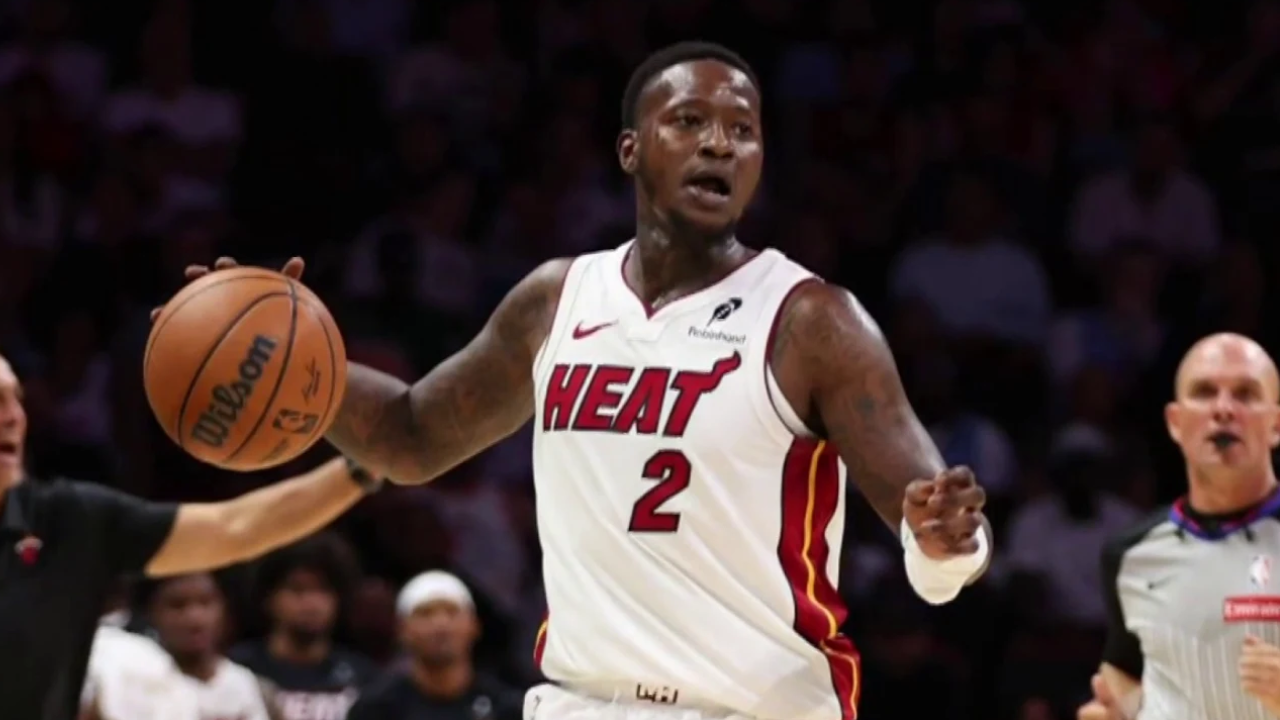
Terry Rozier allegedly approached the whole affair with the practicality of a man who sees the prop-bet economy booming and asks, “Why not me?” According to reporting from NBC News, Rozier is accused of sharing injury information and leaving games early to benefit coordinated bets.
In a separate but spiritually identical storyline, Jontay Porter had already been banned for betting on his own games, feeding inside information to gamblers, and deliberately exiting games to manipulate prop outcomes. Porter was not part of the poker circuit; he was simply the warm-up act for the NBA’s festival of alleged corruption.
The Mafia Connection
No American sports scandal is complete without the elegant touch of organized crime, and this one does not disappoint. Federal documents describe alleged involvement from members of the Bonanno crime family, Gambino crime family, and Genovese crime family—a trifecta so iconic it feels less like a real criminal threat and more like the lineup for an anniversary edition of Goodfellas.
Their alleged contributions to the enterprise included organizing and financing the poker games, enforcing gambling debts through methods the FBI diplomatically labeled “coercive,” and supplying the high-tech cheating equipment that transformed the poker tables into surveillance devices.
For the mob, the beauty of this ecosystem was that everyone was mutually dependent. Players needed the games for side income; the house needed the players to attract marks; anyone who fell behind in payments quickly found themselves encouraged—allegedly—to attend more games.
It was a closed-loop ecosystem of money, favors, threats, and card-reading glasses, all operating in the background while the NBA loudly celebrated its expanding sports-betting partnerships.
The Poker Scheme and Cheating Technology
If the on-court shenanigans were the public-facing scandal, the poker operations were the mechanical heart of the whole enterprise, quietly pumping money, leverage, and information through the system.
These games were not casual late-night card sessions but elaborately engineered traps. Tables were allegedly equipped with X-ray devices. Cards were marked with invisible ink visible only through specialized glasses.
House players had advance knowledge of card distributions. The technology would not have looked out of place in a spy thriller, except here it was operated by guys named Vito who had never heard of subtlety.
Damon Jones and Chauncey Billups allegedly acted as the star attractions, helping lure NBA players and wealthy marks into these games. Once inside, participants were coaxed into buying in repeatedly, losing predictably, and returning endlessly.
The poker rooms became the perfect setting for gathering leverage: players who owed money became more susceptible to requests for insider information, others became conduits for gamblers seeking an edge. The operation wasn’t just rigged; it was mathematically inevitable.
Game Manipulation and Betting on Their Own Games
The part the NBA cared most about—the part it desperately wished had not happened—is the alleged manipulation of actual basketball games. According to investigations summarized in the National Law Review, former and current NBA players and coaches have been charged under federal law for involvement in gambling and game-manipulation schemes.
In this case, at least seven games between December 2022 and March 2024 saw outcomes influenced by coordinated betting activity, insider knowledge, or intentional underperformance.
In these games, patterns emerged that would make even the most gullible league executive squint: early exits following pre-game texts, suspiciously targeted unders that hit with miraculous consistency, and betting surges that lined up perfectly with private injury information. Teams including the Hornets, Magic, Trail Blazers, Lakers, and Raptors found themselves unwitting stages for the ongoing scheme.
Rozier allegedly informed people in advance that he would exit a game early, then left with an injury so minor it barely qualified as an inconvenience. Porter had done the same repeatedly, with timing so obvious that sportsbooks flagged the bets almost instantly.
Damon Jones allegedly shared insider knowledge about player health and rotations, allowing bettors to exploit markets before sportsbooks could adjust. For years, leagues insisted that legalized gambling would not compromise the integrity of sports.
These games stand as a gently mocking reminder that human beings do not become morally purer after signing a betting partnership.
Federal Charges and Legal Fallout
The government, unimpressed with the creativity on display, responded with charges that carry the full weight of the American tradition of punishing people who commit the kinds of crimes rich white-collar men call “innovation.” The indictments include wire fraud conspiracy, money-laundering conspiracy, illegal gambling operations, and everything else prosecutors could find in the junk drawer. Each major charge carries a potential 20-year sentence.
Damon Jones pleaded not guilty but was immediately barred from gambling, which for someone in his alleged line of work is roughly equivalent to telling a pilot he can still work at the airport but only at the Cinnabon. Chauncey Billups was suspended by the Trail Blazers in a move that shocked nobody except, perhaps, the Portland ownership group, which had definitely been hoping the allegations would resolve themselves through vibes.
Terry Rozier was suspended without pay, prompting the NBA Players Association to issue a sternly worded statement about due process, as though returning from fake injuries is one of the great unsolved mysteries of our time. Several of the non-NBA defendants remain behind bars, presumably wondering how the FBI managed to retrieve their deleted texts—proving once again that nothing on a phone ever truly dies; it just waits patiently for a subpoena.
Law Enforcement and Regulatory Response
Federal officials described the entire scandal as “insider trading for the NBA,” a comparison that lands perfectly because, like insider trading, it involves wealthy people manipulating a system built for profit while pretending it is entirely fair.
The FBI, Michigan Gaming Control Board, and various lawmakers are now calling for tighter oversight of player data, more scrutiny of betting patterns, and a reconsideration of the disturbingly intimate relationships between sports leagues and sportsbooks. The Duane Morris article points out that the arrests may actually show sports-betting regulation is working—betting activity flagged, alerted, investigated.
Congress has also entered the conversation, largely because members realized this scandal threatens the tax revenue generated when ordinary Americans lose their paychecks betting on second-quarter alternate spreads. Committees are now examining whether players should have access to the kinds of privileged information that fuel prop bets, whether sportsbooks should limit certain wager types, and whether leagues should be allowed to promote betting as aggressively as they do.
The sudden urgency is less about protecting sports integrity and more about protecting the profitability of an industry whose main innovation has been giving every adult a casino in their pocket.
Wider Implications for Sports and Gambling
The NBA created the perfect conditions for this scandal by embracing gambling partnerships with open arms and empty foresight. For years, the league promoted prop betting as a harmless side activity, a fun way to “enhance the fan experience.”
It integrated betting odds into broadcasts, encouraged app-based wagers, and courted sportsbook sponsorships so aggressively that arenas now resemble casinos with convenient basketball courts attached.
Players watched all this unfold and inevitably asked why fans should be the only ones allowed to profit from the predictability of their injuries. The scandal reveals the deeper truth that the modern sports environment—one built on data, micro-bets, real-time injury reporting, and nonstop gambling promotions—creates endless opportunities for corruption.
Every player knows who is hurt. Every trainer knows who will play. Every assistant coach knows tomorrow’s rotation. This ecosystem runs on inside information, and the only difference between a fantasy-basketball enthusiast and a criminal enterprise is how aggressively someone chooses to monetize it.
The NBA wanted the revenue from gambling but it never grappled with the reality that athletes are the ones sitting on the most valuable information in the system.
By turning every minute of a game into a gambling opportunity, the league created financial incentives that are difficult to ignore and stupid to pretend don’t exist.
Closing Session
The NBA set out to become the most gambling-friendly league in professional sports, proudly selling the thrill of prop bets, parlays, and real-time wagering.
Instead, it now faces a federal case involving mobsters, rigged poker tables, alleged insider-trading schemes, and players who treated the game as a personal ATM.
The league can suspend coaches, ban players, and preach about integrity until its spokespeople lose their voices, but the truth remains painfully simple: when you turn your sport into a casino, you eventually get casino behavior. And sometimes, the house doesn’t win.
One response to “The NBA’s Gambling Meltdown the League Can’t Spin Away”
[…] one day before Game 1 of the World Series, the NBA released news of a major gambling scandal involving irregular betting patterns and potential misconduct across multiple layers of the […]