
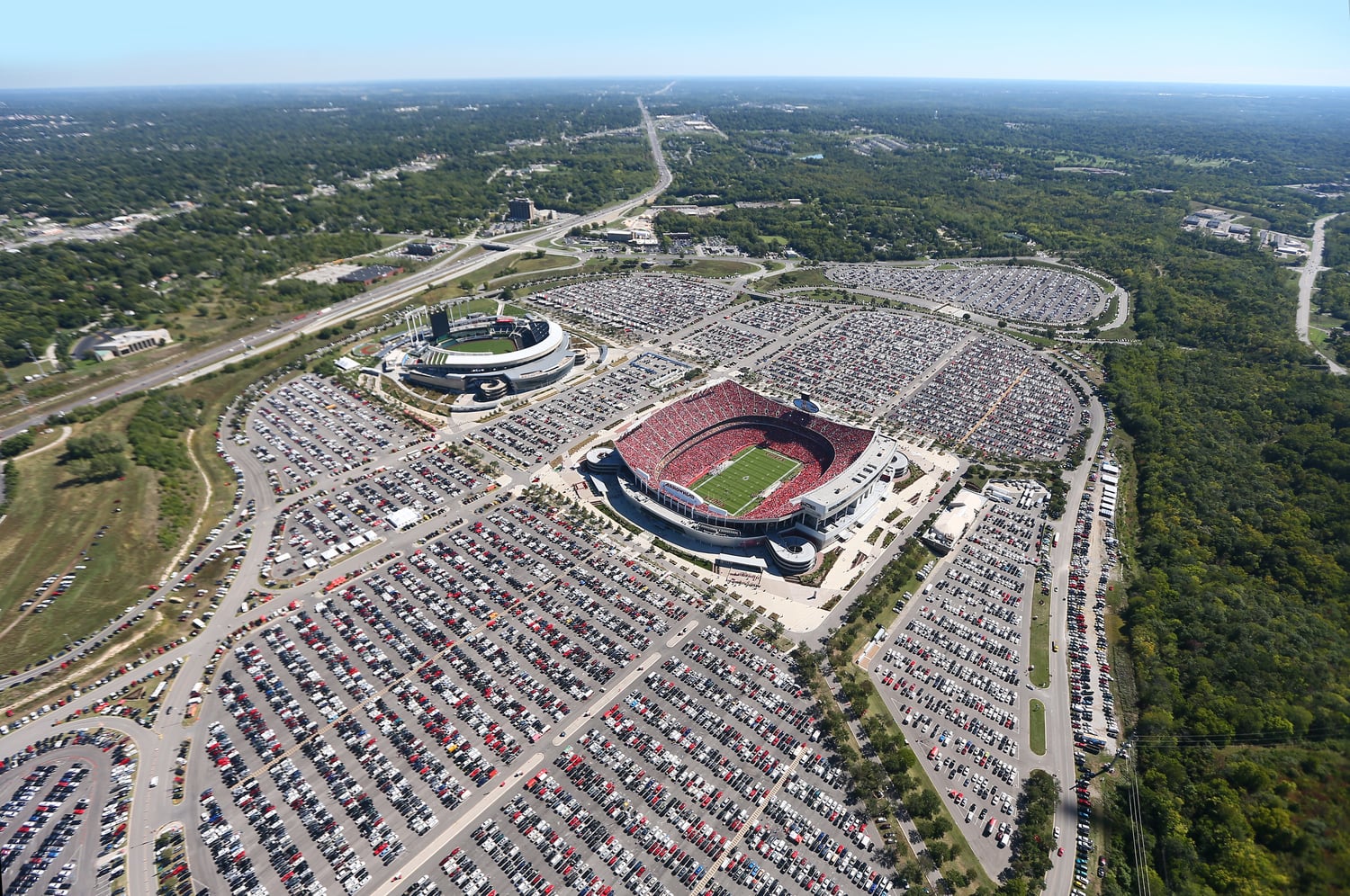
How public money, fan loyalty, and relocation threats fuel a North American sports economy built on extraction, unlike community-owned models such as Green Bay.
The politics of stadiums and team relocations have always been framed as civic milestones, sold to fans as moments of transformation and opportunity. Cities are promised revitalization. Local economies are promised growth. Fans are promised that investing public resources into private stadiums is a down payment on prestige and belonging. Yet the long history of franchise movement across North America tells a very different story—one not of civic ambition, but of a recurring extraction scheme. Stadium politics function less like community-building and more like a ritualized grift in which billionaire owners leverage fan loyalty to secure subsidies, sweetheart deals, and public financing. The emotional investment of ordinary people becomes the bargaining chip used against them.
Nowhere does this contradiction stand out more clearly than in Green Bay. Packers fans occupy a rare and revealing position within the North American sports landscape. Their team is the only publicly owned, community-operated franchise in major American sports—a cooperative structure written into its bylaws and protected against private takeover. The Packers cannot be relocated without a public vote. No billionaire owner can threaten to pack up the team unless taxpayers fund a new stadium. No private equity group can force austerity measures or impose branding overhauls. It is a model so distinct that it almost distorts the way Packers fans understand the rest of the sports world. Because they’ve never lived under the threat of extortion, they either perceive the absurdity of it more clearly than anyone else—or fail to grasp the extent of it entirely, simply because their team is sheltered from the political economy that governs everyone else.
For every other fanbase, the threat of relocation is not hypothetical. It is structural. The moment a franchise hints at dissatisfaction, politicians scramble, fans panic, and cities open their coffers. Unlike Green Bay, where the team’s democratic ownership prevents such coercion, the rest of North America operates under a system in which relocations are not free-market decisions but deliberate leverage plays. Strip away the nostalgia and civic mythology, and what emerges is a sports economy built on extracting wealth from fans, taxpayers, and communities—always with the stadium as the battlefield.
The Era When Relocation Became Extortion
By the 1990s and early 2000s, relocation had transformed into a standardized strategy. Team owners discovered that simply threatening to move was enough to extract hundreds of millions in public subsidies. It did not matter whether the move made economic sense. It did not matter whether the market was viable. The real value lay in leverage—holding a city’s emotional identity hostage.
Few relocations illustrate this better than the Los Angeles Rams’ 1995 move to St. Louis. From a rational perspective, the decision was incoherent. Los Angeles is one of the largest media markets on Earth. St. Louis was already entering economic decline. Yet St. Louis officials, desperate to project themselves as a “major league city,” offered massive public subsidies for a shiny new stadium. The Rams didn’t move because the fans were better or the market was stronger. They moved because the money was free.
Two decades later, the Rams returned to Los Angeles, again driven not by sports logic but by public financing and development deals. St. Louis was left with debt, an empty stadium, and the humiliation of having been used as leverage in someone else’s negotiation.
Glendale and the Subsidy Feedback Loop
The Arizona Coyotes provide an even more transparent example. After landing in Glendale in 2003, the team spent years holding the city hostage. Whenever their finances dipped, they demanded more public money. Whenever negotiations stalled, the threat of relocation resurfaced. At one point, the city was directly subsidizing the team’s operating losses—essentially paying the franchise to exist within city limits.
The structure was fundamentally perverse. The Coyotes weren’t a thriving community institution; they were a financial sinkhole, treated by ownership as a conduit for public funds. If any other private business demanded constant subsidies to cover its losses, it would be laughed out of the room. But in sports, civic pride becomes the perfect political weapon.
Glendale eventually walked away, but the damage was irreversible. Years of funneling public resources into a failing franchise drained budgets that could have supported schools, services, or infrastructure. The “partnership” between the city and the team was never mutual. It was a one-way pipeline.
Why This Would Never Happen in Europe
Contrast this with Europe, where fans do not merely consume their teams—they defend them. When Europe’s biggest football clubs announced the Super League in 2021, supporters didn’t grumble online. They blockaded stadiums, confronted ownership, and forced the entire project to collapse within two days. They understood the stakes because they view their clubs as public institutions, not entertainment products.
The same dynamic plays out in domestic controversies. Supporters have stormed pitches over predatory takeovers, protested against exploitative owners, and taken direct action to prevent extractive decisions. European clubs belong culturally—if not always legally—to the communities that built them. Fans consider themselves stakeholders, not customers.
In North America, the opposite is true. A franchise is treated as private property, and fans are framed as consumers whose participation ends at the point of purchase.
The Consumerization of North American Fans
This consumer-first design is not the result of cultural temperament but deliberate policy. Closed leagues with no promotion or relegation eliminate grassroots alternatives and cement billionaire control. Fans have no institutional power, no vote, no avenue for meaningful influence. Their only recognized role is financial.
This model allows owners to weaponize fan devotion. Whenever a new stadium is demanded, the threat is clear and effective:
Fund this project, or we will take your team away.
Because fans lack structural power, they internalize helplessness. They rely on civic leaders to protect their interests, even though those same leaders often fear the political consequences of losing a beloved franchise. Public money becomes the path of least resistance.
A Toronto Maple Leafs fan tossing a jersey on the ice is treated as a dramatic act of rebellion. European fans occupy fields, storm boardrooms, and force billionaires to reverse decisions.
The contrast is political, not personal.
The Real Cost of the Grift
The consequences of this extortion economy are staggering. Billions in public money have been funneled into stadiums that overwhelmingly benefit private ownership groups. Cities absorb the risks; owners pocket the rewards. Franchises flip for billions, while municipalities are left servicing debt on facilities that seldom deliver the promised economic windfall.
This is not civic partnership. It is wealth extraction disguised as civic pride.
Toward a New Fan Politics
If North American fans want change, it begins with abandoning the consumer mindset. Public funding should never be routine. Relocation threats should never be tolerated. And the Packers’ ownership model, along with the mobilization seen across European football, offers a blueprint for reclaiming sports from private extraction.
Until then, the grift will continue. Fans will pay with their hearts. Cities will pay with their wallets. And billionaire owners will keep cashing the checks.