
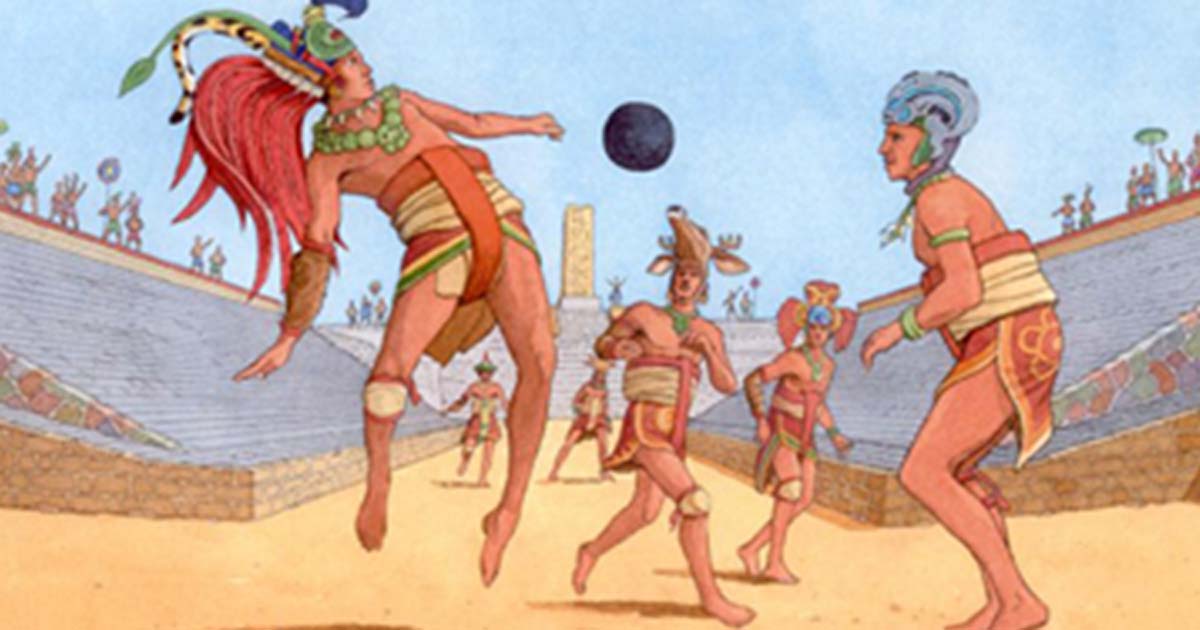
From the Mesoamerican ball game to MMA, societies have used controlled danger and symbolic violence to shape identity, hierarchy, and collective meaning.
Human beings have always been drawn to ritualized combat. Across continents and eras, societies have built entire cultural identities around controlled forms of violence that blur the line between sport, ceremony, and warfare. We tend to separate these categories today — war is “real,” sports are “games,” and ritual belongs to religion — but historically they often existed on a spectrum, feeding into one another and shaping social hierarchy, spirituality, and collective meaning.
Nowhere is this clearer than in the Mesoamerican ball game, Roman gladiatorial combat, the ritualized warfare of pre-modern societies, and the hyper-spectacles of pro wrestling and mixed martial arts. The details change, but the underlying patterns remain the same: controlled risk, public performance, symbolic violence, and the forging of identity through spectacle.
This article brings these threads together, showing how ancient rituals of danger and display still echo in the modern world.
The Mesoamerican Ball Game: Mystery, Myth, and Limited Evidence
The great Mesoamerican ball game occupies a near-mythic place in the popular imagination. The problem, however, is that we actually know surprisingly little about its specifics. Archaeology gives us the courts, the iconography, and fragments of narrative, but the rules, rituals, and variations across time and region remain opaque. We know the game was played for millennia, from the Olmecs through the Maya and Aztecs. We know the ball was heavy, made of stone, and could easily break ribs or skulls if struck forcefully. But beyond that, the historical record becomes murky.
Were participants fighting to the death? Were the losers sacrificed? Or was this mythology exaggerated by later retellings and colonial chroniclers?
Most scholars now agree that the ball game was wildly diverse: sometimes recreational, sometimes ceremonial, sometimes political theater. In some contexts it symbolized cosmic dualities. In others it settled disputes or affirmed alliances. It was likely not one fixed ritual but a constellation of practices that changed across centuries and regions.
What remains constant is its social centrality. Even if we don’t fully understand the rules, we know the ball game mattered — not just as sport, but as ceremony, performance, and meaning-making.
Gladiatorial Combat and Ancient Kayfabe
When people imagine Roman gladiators, they often picture nonstop death matches — a world where every fight ends in bloodshed. But there’s growing evidence that many gladiatorial bouts were far closer to what we would now describe as kayfabe: stylized violence, choreographed risk, and controlled injury.
This isn’t to say that gladiators didn’t die. But constant lethal combat simply doesn’t make economic sense. Gladiators were expensive to train, house, and maintain. They were investments. Much like today’s combat sports athletes, they built reputations. They had fanbases. They had brands. And promoters — ancient or modern — don’t casually destroy their moneymakers.
Given this logic, it’s reasonable to assume that many gladiatorial events were a mixture of genuine danger and staged spectacle. Fighters likely took injuries they could tolerate but avoided truly catastrophic risks except on special occasions. Much like professional wrestling today, the “show” was as important as the violence. And much like MMA, prestige came from both skill and persona.
This reframing helps connect ancient spectacle to the modern world — and helps us understand why ritualized violence endures.
Ritualized Warfare Before the Modern Era
Before the rise of modern standing armies, warfare across many societies was often more performative than total. Thousands of people might assemble on a battlefield, but only small groups — elite fighters, noble warriors, ritual champions — actually engaged in combat while the rest watched.
These fighters weren’t just soldiers; they were symbols. Their performances could determine the outcome of disputes, settle political rivalries, or uphold the honor of entire communities. Their prestige often translated into real power. Many legendary kings across Europe, Asia, and the Americas began as ritual or champion fighters, people whose combat prowess elevated them into leadership.
Jousting, too, emerged from this tradition. As warfare became more organized and lethal, aristocrats preserved a sanitized version of elite combat through tournaments. These were nominally competitions, but their function was social: reinforcing status, lineage, and class identity through ritualized display.
In all these cases, combat was never just combat. It was a tool of social order.
The Ball Game as Social Mobility and Spiritual Economy
Within this broader context, the Mesoamerican ball game takes on new significance. Participation may have offered a rare form of social mobility: one could gain prestige, spiritual favor, or community honor by enduring its risks. Even when the game wasn’t lethal, the danger was real. A solid stone ball moving at high speed could crush bones. This risk created meaning.
The comparison to pyramid labor is useful here. Contrary to popular myth, the pyramids were not built by enslaved masses but by skilled laborers and seasonal workers — often farmers who contributed during the agricultural offseason. Their reward wasn’t only material. They gained spiritual credit, social prestige, and proximity to mythic narratives of cosmic order.
In the same way, playing the ball game likely plugged individuals into a metaphysical economy. Success on the court might improve one’s standing in the afterlife. The risk of death itself — even if uncommon — amplified the spiritual stakes. The game’s meaning was not just athletic but cosmic.
This fusion of danger, prestige, and spiritual narrative lies at the heart of many ritualized combat traditions.
Gambling and Wealth Redistribution
Another underappreciated dimension of the ball game was its economic function. These events often took place during seasonal gatherings when dispersed communities converged on major ceremonial centers. With large crowds came betting, gift-giving, and forms of gambling that operated as controlled systems of wealth destruction.
In anthropological terms, these were “levelling mechanisms” — ritualized ways to prevent wealth concentration, redistribute resources, or reaffirm communal bonds. People could “blow their money,” as we would say today, in a space that was socially sanctioned. This wasn’t reckless; it served a purpose.
The spectacle provided the narrative frame. The gathering provided the scale. The gambling provided the economic churn.
Much like a modern 50/50 raffle, but operating at civilizational scale.
Ritual Warfare Among the Maya
Mayan warfare, too, was deeply ritualized. The geography of the Yucatán Peninsula — dense forests, patchwork terrain, and logistical challenges — made large-scale armies impractical. Instead, conflict often involved small bands of elite warriors engaging in stylized combat. These encounters were not about annihilation but about symbolism: capturing nobles, asserting dominance, determining tribute.
If we view these practices through the same lens as the Mesoamerican ball game, they become clearer. Both were ritualized performances of risk designed to uphold societal hierarchies, negotiate power, and maintain cosmic and political order. Both relied on tightly controlled danger. Both blended warfare, sport, theater, and spirituality.
The ball court and the battlefield weren’t opposites. They were parallel institutions.
Modern Combat Sports as the Inheritors of Ritualized Violence
If ancient spectacles feel distant, their modern incarnations are everywhere: MMA arenas, boxing rings, and pro wrestling stadiums. The costumes have changed, but the logic remains.
Pro wrestling preserves kayfabe, the ancient art of violent storytelling, where performers enact danger to generate meaning. MMA preserves the elite warrior ethos, where controlled violence unfolds within strict ritual boundaries. Audiences gather not because they believe they are witnessing literal war, but because they recognize the symbolic stakes — pride, rivalry, prestige, identity.
As in ancient times, combat sports produce celebrities, shape narratives, and reinforce cultural values about toughness, courage, and spectacle. And, as in ancient times, danger remains part of the appeal — but controlled, stylized, and bounded by communal expectation.
Human beings may no longer fight to appease gods or settle dynastic disputes, but the emotional architecture of spectacle remains the same.
Why Spectacle Endures
The thread linking the Mesoamerican ball game, Roman gladiators, medieval jousters, ritual warriors, and modern MMA fighters is not violence itself but meaning. Societies have always used controlled danger to articulate identity, hierarchy, spirituality, and communal belonging. Whether carved in stone on ancient courts or broadcast live on global pay-per-view, combat spectacle remains one of humanity’s oldest ways of telling stories about who we are.
The settings change. The costumes change. The rules change.
But the impulse — to gather, to watch, to risk, to perform — endures.