
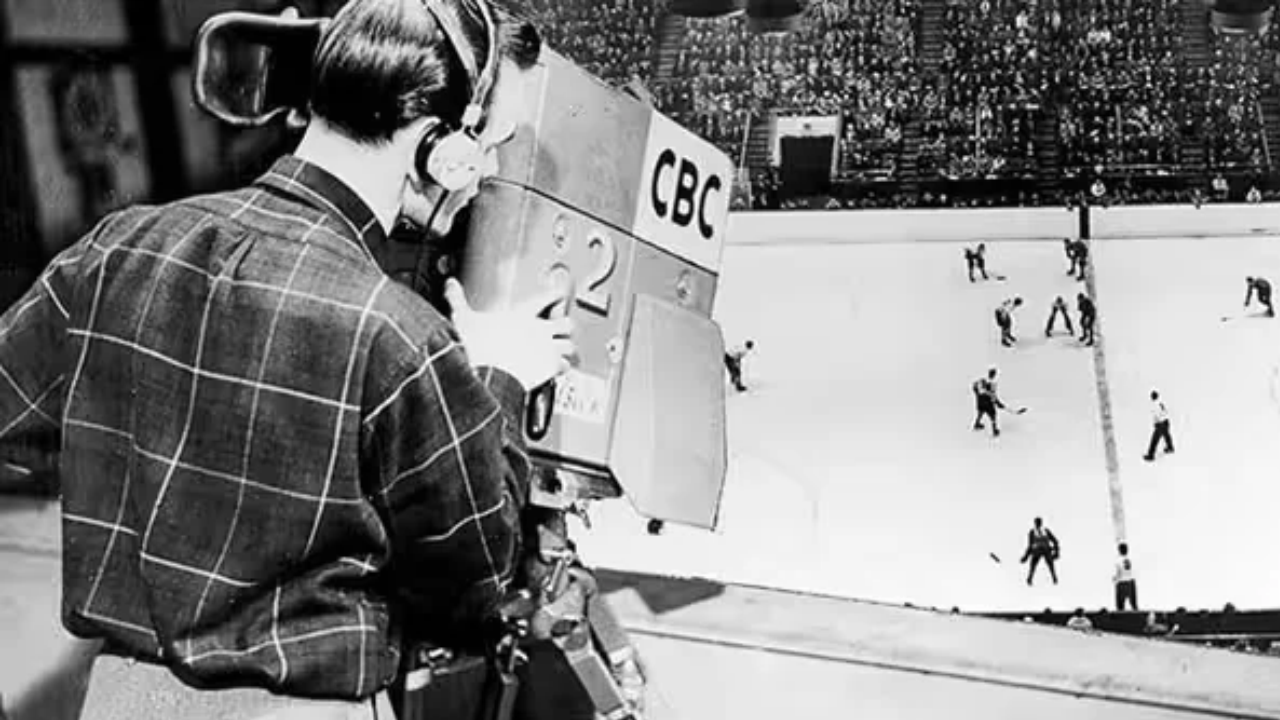
Tonight marks the first NHL Saturday without CBC since 1952, ending a 74-season tradition that made hockey feel Canadian and kept the game public.
For the first Saturday night of a new NHL season since 1952, Canadians can watch Montreal, Toronto, Ottawa, Edmonton, Calgary and Vancouver without finding a single NHL game on CBC. The national schedule remains packed, the familiar teams are all there and millions of people will still spend their evening watching hockey. What disappeared is the public television doorway through which generations of Canadians first encountered the professional game.
That loss is larger than nostalgia for Hockey Night in Canada as a national symbol. CBC unquestionably helped construct the mythology of hockey as an expression of Canadian identity, and that mythology has always deserved scrutiny. It flattened regional differences, marginalized people who did not fit the dominant image of Canadian hockey culture and helped turn a particular version of the sport into shorthand for the country itself. The more important achievement was much simpler: CBC put elite hockey within public reach. If a household could receive the public broadcaster, Saturday night hockey was available without another sports package, another platform or another monthly subscription.
Hockey Felt Canadian Because It Was Available
The first English-language television broadcast of Hockey Night in Canada aired on November 1, 1952. Over the next 74 television seasons, Saturday-night hockey became so routine that its distribution could disappear into the background. People remember the theme music, the hosts, the rivalries and the particular games they watched with parents or grandparents, while the basic infrastructure underneath those memories was almost boring in its simplicity. CBC carried hockey. People turned on CBC.
That simplicity did enormous cultural work. A national ritual becomes much easier to reproduce when participation requires almost no advance planning. Hockey could be introduced to children who had never played it, families who could never afford NHL tickets and people who were not committed enough fans to purchase a dedicated sports service. The broadcast arrived before the commercial relationship. Someone could become interested first and become a consumer later.
The association between hockey and Canadian identity grew partly from that repeated exposure. CBC helped tell Canadians that hockey belonged to the country, sometimes in ways that bordered on outright nation-building. Yet the broadcast’s most defensible contribution came from the distribution model underneath the symbolism. The game was regularly placed in front of a mass audience through a publicly accessible network, giving people access regardless of whether they had already demonstrated their value as sports customers.
The National Myth Was Always Incomplete
There is no need to romanticize Hockey Night in Canada as some perfectly democratic institution. The version of the country reflected through hockey television was often narrow, conservative and exclusionary. Indigenous players, immigrant communities, women and racialized Canadians frequently appeared at the margins of a national hockey story built overwhelmingly around white male experience. The language of “Canada’s game” could obscure how unevenly the sport’s institutions actually welcomed the people supposedly represented by that phrase.
The economics were equally contradictory. Hockey was presented as common cultural property while becoming increasingly expensive to play. Minor hockey could demand registration fees, equipment, travel and family time that excluded people long before they reached an arena. NHL ticket prices moved even farther from the everyday experience of many fans. The professional sport grew richer while its claim to universality became harder to reconcile with the cost of participating in it.
Public television could not repair those exclusions, though it did preserve one unusually broad route into the culture. A child did not need skates to watch Guy Lafleur. A family did not need tickets to the Forum to see the Canadiens. Someone who had never thought of themselves as a hockey fan could encounter the game simply because it happened to be on. That kind of access deserves to be separated from the nationalist story CBC often wrapped around it.
The Public Doorway Survived Commercialization
Professional hockey became vastly more commercial during the decades CBC remained on Saturday nights. Expansion fees grew, franchise values exploded, corporate sponsorship became omnipresent and broadcast rights turned into some of the most valuable media assets in the country. Rogers took control of Canada’s national NHL rights beginning in 2014, yet its sublicensing agreement with CBC allowed the old public-facing arrangement to continue for another 12 seasons.
That compromise helped conceal how much had changed around the game. The NHL could become a multibillion-dollar entertainment property while Saturday night still retained an over-the-air entrance. Rights ownership moved into private hands, but the viewer could continue experiencing one of the league’s most important weekly windows without being asked to follow the business structure behind it.
The second Rogers era makes the economics more visible. The company’s new 12-year Canadian agreement is worth roughly $11 billion. Sportsnet controls the core national package, Prime Video owns an exclusive Wednesday window through a sublicensing deal, and French-language national rights are distributed through Quebecor. These arrangements can produce more games, fewer blackouts and better streaming options for people already inside the system. They also place more of the NHL behind services that begin with an account and a bill.
Tonight the Viewer Becomes a Subscriber
Tonight makes that transition unusually easy to see because the hockey itself barely changes. Ottawa visits Toronto. Montreal plays Pittsburgh. Edmonton hosts Seattle. Calgary meets Vancouver. Sportsnet has deliberately preserved the recognizable architecture of Saturday-night hockey, and viewers who already subscribe may experience the evening with very little disruption.
The change appears before the game begins. CBC once addressed a population that included committed fans, casual viewers and people who had never intentionally sought out an NHL broadcast. Sportsnet and the streaming platforms increasingly address authenticated customers. Someone entering through those platforms has already crossed an economic threshold and demonstrated enough interest to purchase access.
That distinction becomes important when people talk about fragmentation as though the only problem were inconvenience. Learning whether a game is on Sportsnet, Prime, RDS or TVA Sports can certainly be annoying. The deeper issue concerns who gets included before the market asks them to make a decision. Public broadcasting could expose someone to hockey before that person had any commercial value to the league. Subscription distribution reverses that sequence.
Montreal Makes the Contradiction Obvious
The Canadiens remain one of the best-covered sports teams in North America. French-language viewers have 48 games on RDS this season, another 32 national Canadiens games through TVA Sports and additional streaming coverage through Prime Video. English-language viewers have their own national and regional options. A bilingual Montréal hockey fan can move between multiple commentary traditions and more television coverage than supporters of most professional teams could reasonably consume.
That abundance demonstrates why availability and public access cannot be treated as synonyms. RDS is a paid specialty service. TVA Sports is a paid specialty service. Sportsnet sits within paid television and streaming packages. Prime Video requires a subscription. Canadiens hockey remains everywhere culturally while increasingly existing behind commercial gates materially.
Montreal therefore exposes the strange endpoint of the Canadian hockey model. Few teams are more deeply embedded in the civic and cultural life of their region. The Canadiens can dominate newspapers, radio, television and everyday conversation while watching the actual games requires navigating a collection of corporate rights agreements. The cultural object can feel communal even as the means of accessing it become increasingly private.
Public Access Was Material, Not Sentimental
The case for preserving broadly accessible hockey does not require treating CBC as a benevolent national institution. Public broadcasters are still state institutions, and Hockey Night in Canada participated heavily in constructing a flattering mythology about Canada through sport. The familiar Saturday broadcast could make the country appear more unified, egalitarian and culturally coherent than its actual history supported.
The infrastructure beneath that mythology still produced a real public benefit. Over-the-air television lowered the economic barrier between the country’s most culturally powerful professional sport and the people who lived around it. That mattered whether someone believed in the national symbolism surrounding hockey or rejected it entirely.
Public access is valuable precisely because culture should not be reserved only for people who can most easily monetize themselves as consumers. Major sports leagues occupy public attention, use publicly financed arenas and infrastructure, shape local identity and receive enormous amounts of free cultural promotion from institutions around them. Treating access to those leagues solely as a commodity leaves ordinary people participating in the culture around a sport while increasingly purchasing permission to see the sport itself.
The Barrier Will Be Felt at the Margins
Canada will not suddenly stop watching hockey because CBC disappeared from the NHL schedule. Sportsnet will draw large audiences, Canadiens ratings will remain enormous in Quebec and the Stanley Cup playoffs will still dominate national sports conversation. The immediate numbers may make the transition look almost seamless because dedicated hockey fans are exactly the people most likely to follow the game wherever the rights move.
The cultural cost appears among people whose commitment was never strong enough to justify another subscription. It appears in households trimming monthly expenses, young viewers without control over which services their families purchase and casual fans who used to watch because the game happened to be available. Those audiences rarely announce their departure. They simply encounter hockey less often.
That process matters because fandom reproduces itself through exposure. Someone has to see a sport before deciding it belongs in their life. For decades, Hockey Night in Canada solved that problem by appearing every Saturday whether viewers had requested it or not. Moving the NHL deeper into subscription television protects the league’s value as premium content while narrowing one of the pathways through which new audiences once discovered why the content mattered.
The PWHL Inherits Something Valuable
CBC’s relationship with hockey is continuing in a form that makes the shift even more revealing. Beginning in December, the PWHL will use the Hockey Night in Canada banner for Saturday games on CBC, with Montréal’s home opener against Hamilton becoming the first women’s professional hockey game presented under the name. The network that spent generations televising the NHL will use its most famous sports brand to give women’s hockey a recurring public window.
There is enormous value in that opportunity for a league still creating its own traditions. The PWHL does not possess the NHL’s century of accumulated cultural power, though it can now reach households through one of the same mechanisms that helped build that power. Someone who has never purchased a PWHL ticket, followed a team online or considered subscribing specifically for women’s hockey can encounter the league on a Saturday because CBC placed it there.
The reversal says a great deal about how sports rights now work. Men’s professional hockey has become valuable enough to support an $11-billion rights agreement and a web of premium distribution platforms. Women’s professional hockey is still growing, which gives public exposure greater commercial value to the league than enclosure does. The result leaves the younger league occupying one of the few spaces where elite hockey can still reach viewers before asking them to pay specifically for it.
Public Culture Needs Public Access
The NHL has benefited for generations from being treated as something larger than an entertainment company. Municipal governments build arenas and infrastructure around teams. Politicians appear at games. Newspapers cover franchises as civic institutions. Broadcasters describe playoff runs through the language of cities and regions rather than customers and brands. Hockey receives cultural significance that extends far beyond the private corporations that own its teams.
That relationship creates a reasonable public question about access. If professional hockey wants to occupy the centre of Canadian cultural life, there is value in ensuring that some meaningful portion of it remains reachable without a premium subscription. The historical CBC arrangement accomplished that imperfectly, with plenty of commercial advertising and nationalist mythology attached, though millions of people could still participate in the weekly ritual before anyone asked them to open their wallets.
The new rights system reflects a different priority. Live sports have become among the last pieces of television capable of reliably attracting large audiences at a fixed time, making them exceptionally valuable to companies selling subscriptions. The NHL is being distributed accordingly. Every Saturday game represents content whose scarcity can be monetized rather than a cultural event whose widest possible accessibility carries value of its own.
Tonight Is the Break in the Timeline
Most viewers watching tonight will still see the sport they expect. There will be packed arenas, Canadian teams across the national schedule and hours of studio coverage surrounding the games. Nothing about the NHL itself needs to look dramatically different for October 3, 2026 to represent a genuine break in Canadian television history.
From 1952 through the end of last season, Saturday NHL hockey maintained a route onto CBC television. The broadcaster helped make the sport feel Canadian by placing it repeatedly inside a national story, sometimes in ways that deserve criticism. Its more durable contribution was putting professional hockey somewhere ordinary people could reach it without first proving they were paying sports consumers.
Tonight ends that arrangement. The NHL remains national in cultural importance and enormous in commercial value, while access to the weekly ritual now runs through private subscription systems. Hockey Night in Canada helped manufacture a national identity around the game for 74 seasons. Beneath all of that symbolism was something more concrete and more worth preserving: on Saturday night, hockey was public.
Sources
NHL, first television broadcast of Hockey Night in Canada | Sportsnet and CBC, June 2026 partnership announcement | Sportsnet, 2026-27 Saturday Night Hockey schedule | Rogers and NHL, 12-year Canadian national media-rights agreement | Rogers and Prime Video, NHL sublicensing agreement | Bell Media, 2026-27 RDS Canadiens schedule | Rogers and Quebecor, French-language NHL rights agreement | TVA Sports, 2026-27 Canadiens schedule | PWHL, 2026-27 CBC and Hockey Night in Canada announcements