
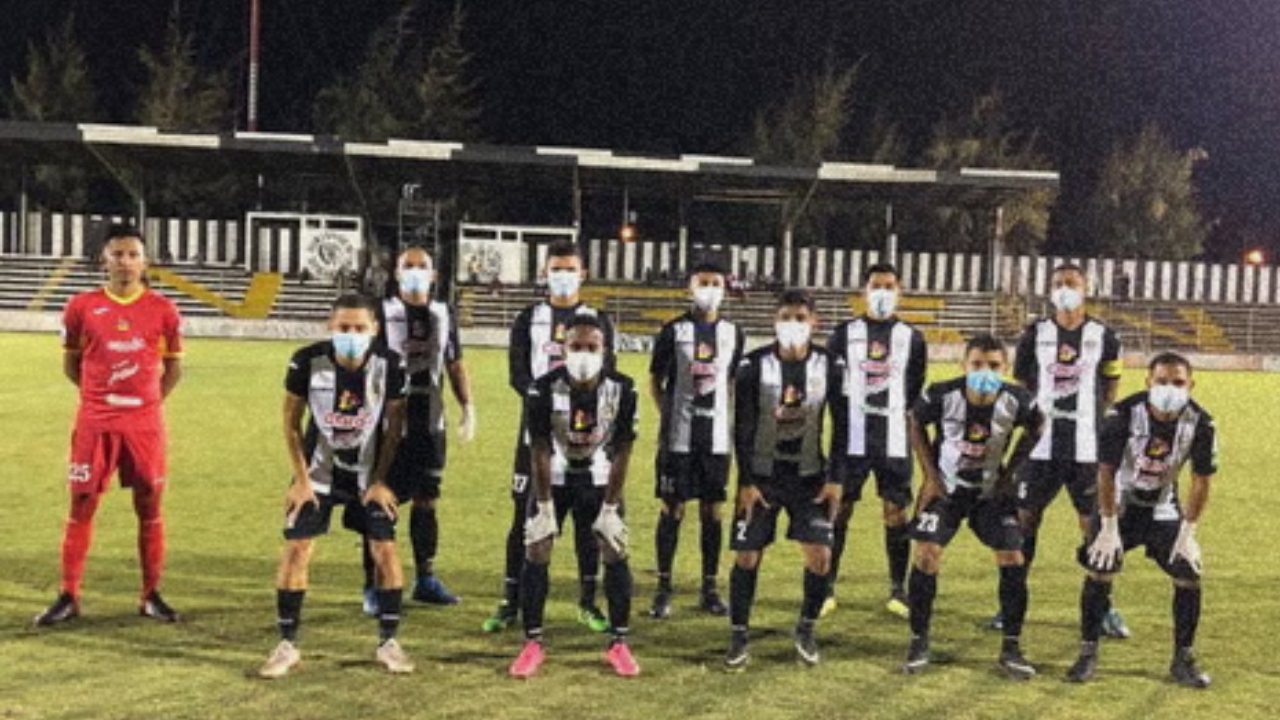
Nicaragua football coronavirus: the league played on because officials cited four cases. Doctors and monitors were counting a different country.
In early April 2020, with almost every professional football competition on earth suspended, the secretary-general of the Nicaraguan Football Federation explained to Reuters why his league was still playing. The situation in the country was almost normal, José María Bermúdez said. There were only four cases of coronavirus, and three of those had been imported. The federation had been given information by health officials and had made a decision based on it.
Then the line that mattered: “We are not the government. We run football.”
What four cases meant
The number Bermúdez was citing did not come from a health system. It came from a government that by that point had spent weeks constructing a version of the pandemic in which Nicaragua was exempt from it.
Four days before the country’s first officially acknowledged case, Vice President Rosario Murillo had staged a public march titled Love in the Time of Coronavirus. Through the spring she promoted fairs, festivals, sporting events and celebrations. When reports of hurried night-time burials began circulating, she accused the opposition of lying to stoke anti-government feeling and accused the press of creating false realities.
By mid-May the government’s official count stood at twenty-five cases and eight deaths in a country of six and a half million. The Citizen Observatory, a monitoring group made up of health workers and activists, had counted 266 deaths and more than 1,200 suspected cases over the same period. It had also flagged an unexplained spike in deaths recorded as pneumonia.
The gap between those two numbers was not an artefact of poor data collection. It was produced deliberately. Private laboratories were not permitted to conduct COVID testing. Tests were scarce and controlled by the state. The pulmonologist Carlos Quant told AFP that doctors were working blind — patients were arriving with symptoms and lung imaging consistent with COVID, tests were unavailable, and the cases were being logged as atypical pneumonia.
The people who could count
Because the state controlled testing, Nicaragua’s doctors built their own counts from what they could observe directly. The independent Nicaraguan Medical Unit tracked infections among health workers using symptoms and chest X-rays, reaching sixty-seven by mid-May. The Nicaraguan Medical Association put the figure at seventy-four and its president, Gretel Solis, said the country had entered community transmission.
At the Hospital España in Chinandega, staff told the Washington Post that around ninety patients were being treated for severe respiratory disease and that most were suspected COVID cases. They spoke anonymously, fearing reprisal. The government recognised none of those infections. Taki Moreno, president of the Pulmonologists’ Association, described a health system that was overwhelmed and maxed out.
Police were posted at the entrances to hospitals and cemeteries to keep journalists away from patients’ families. Bodies were released for immediate burial with instructions not to open the coffin. In late April the Health Ministry had summoned hospital directors to a meeting and told them the situation was becoming serious — a warning delivered privately, weeks after the public position had been established, and roughly a fortnight before Bermúdez cited four cases to a wire agency.
By the end of 2020, an independent excess-mortality analysis by the public health researcher Carlos Hernández — built by comparing the Health Ministry’s own annual death figures for pneumonia, diabetes, hypertension and heart attack against the previous year — attributed more than seven thousand five hundred deaths to COVID. The government acknowledged 163.
Who owns the clubs
This is the environment in which Liga Primera continued, and the ownership structure of the division explains why almost nobody in it objected.
Walter Ferretti is owned by the Nicaraguan National Police, a force the United States sanctioned in March 2020 over violent repression. Managua’s players draw their wages from the mayoral office of the capital. Across the top flight, most clubs depend on the state in one form or another for their existence.
Diriangén, the oldest club in the country, is the only top-flight side with no state funding. It was also the only club to say publicly that the league should stop. Its general manager Sergio Salazar told the Guardian his players did not want to continue, that they were very afraid, and that the club understood them. Diriangén wanted the tournament suspended. The clubs voted and the majority carried on.
The one club that could afford to dissent was the one whose salaries did not come from the government.
What the players were told to say
Players at the state-funded clubs gave uniform answers when asked about the risk. There was no concern on his part, one Walter Ferretti forward said; his job was to play, and while the institution in charge of health had not suspended activities, everything continued as normal. A Managua winger said he was happy with his club’s decision and felt appropriate measures were being taken.
Carlos Mosquera, the Deportivo Las Sabanas goalkeeper, described something else to Reuters. His side tried to avoid contact. Nobody was going into a fifty-fifty at full intensity. The fear was constant, and it meant that mentally you were not focused on the game — you were thinking about whether the player you were marking was carrying the disease.
The Nicaraguan journalist Camilo Velásquez, reporting from inside the country, told the Guardian that players had been messaging him privately to say they felt they were being forced to play. On why they were not saying it publicly, he was direct: when football is your income and the state pays your salary, you can understand why they stay quiet.
The other audience
Bermúdez volunteered one thing that had nothing to do with public health. People were paying more attention to Liga Primera, he noted, particularly on betting sites.
He was right, and it was a problem. With the global fixture list wiped out, sportsbooks that had never priced Nicaraguan domestic football were suddenly taking action on it, at volumes the competition had never generated. The monitoring apparatus that makes fixing expensive in major leagues — deep liquidity, market-movement alerts, established baselines for normal betting patterns — did not exist here at anything like the necessary scale.
What existed was a division of modestly paid professionals, most employed by clubs owned or funded by a government they could not safely criticise, playing under compulsion during a pandemic their state denied was happening, with unprecedented sums moving on their results from jurisdictions thousands of miles away.
Two counts
Velásquez’s explanation for why the fixtures could not be cancelled was that the government needed to prove a normality that did not exist. Since the 2018 uprising — protests met with lethal force, followed by a general strike that shut the country down and cancelled sport along with everything else — the administration had been demonstrating that ordinary life had resumed. Functioning football was part of the demonstration. Suspending it would have signalled the reverse.
Ortega himself was not available to make the case. He had not been seen in public for roughly a month, reappearing only in mid-April while his government insisted it was managing the pandemic on expert advice.
Four cases, three of them imported, was the number a football federation was given and repeated. Two hundred and sixty-six dead was what the doctors and the monitoring groups had counted by the same point, working from symptoms and X-rays because the tests were locked up. Seven and a half thousand was the figure the excess-mortality analysis reached by the end of the year. The matches were played against the first number.
Sources
- Al Jazeera / AFP — “Nicaragua’s ‘express burials’ hide true COVID-19 scale: Doctors”; the Citizen Observatory count, Gretel Solis of the Nicaraguan Medical Association on community transmission, Carlos Quant on doctors working blind, police guarding hospitals and cemeteries, and Rosario Murillo’s response
- The Washington Post — the independent Nicaraguan Medical Unit’s count built from symptoms and X-rays, Hospital España in Chinandega, and Taki Moreno of the Pulmonologists’ Association on a health system maxed out
- Havana Times — “Reviewing the Year of the Pandemic in Nicaragua”; Carlos Hernández’s excess-mortality analysis, the 8,454 figure from the Nicaraguan Foundation for Economic and Social Development, and Murillo’s programme of public events
- AP via Q Costa Rica — the late-April Health Ministry meeting with hospital directors, Róger Pasquier of the Nicaraguan Association of Anesthesiology, and the letter signed by around 600 specialists demanding protective equipment
- Reuters — “Nicaraguan footballers playing on but players fear virus”; Bermúdez’s four-case justification and betting-site remark, the closed-door decision, and Carlos Mosquera on playing in fear
- The Guardian — Sergio Salazar of Diriangén, the player statements from Walter Ferretti and Managua, and Camilo Velásquez on the government’s need to project normality
- Reuters — US sanctions against the Nicaraguan National Police over violent repression, March 2020
- BBC — the 2018 general strike and the collapse that followed the social security protests
- Bloomberg — Ortega’s reappearance after a month out of public view, April 2020