
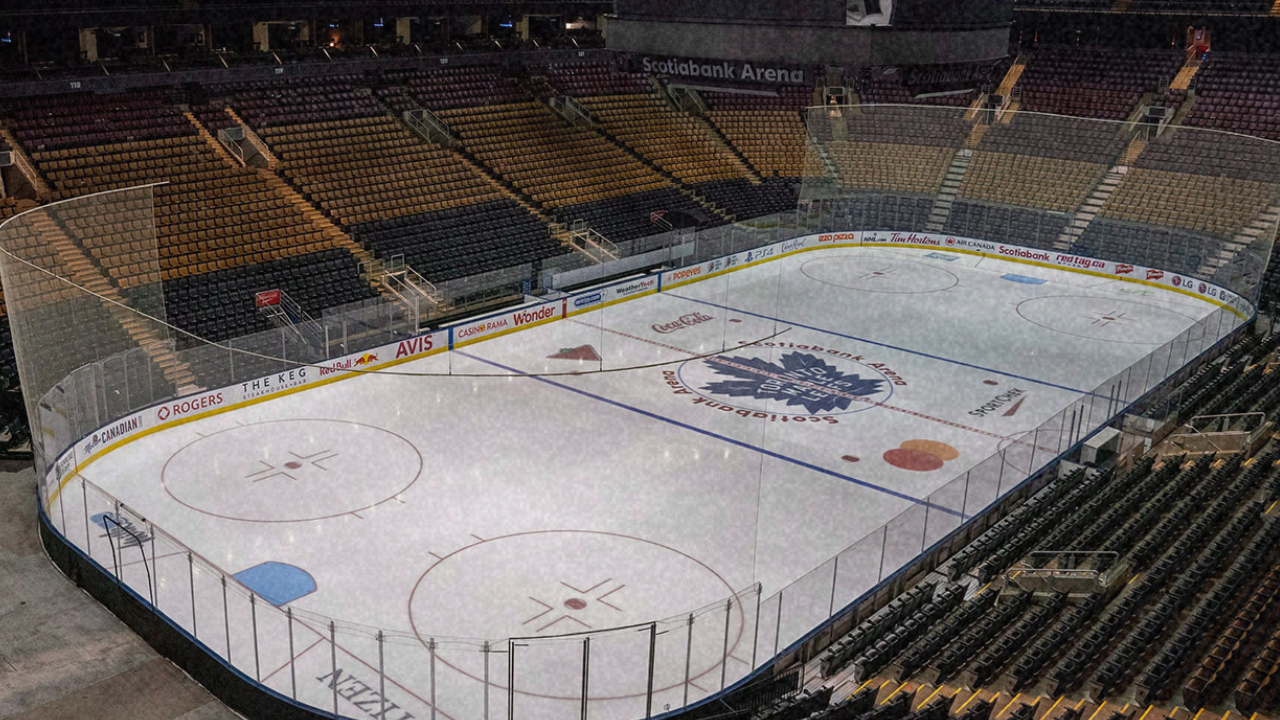
Rogers now owns all of MLSE. The company it bought spent 2020 promising to support 4,000 event staff through a benefit most of them could not claim.
On July 6 Rogers agreed to buy Kilmer Sports’ remaining quarter of Maple Leaf Sports and Entertainment for CAD $4.35 billion, ending the three-way ownership that had run the company since 2012. Across that transaction and the BCE purchase before it, the grossed-up value of the company rose thirty-nine percent. An era closes, and the records of a closing era become retrievable in a way they are not while it is still running.
The record worth retrieving is what the company did in 2020 to the people who work its buildings.
Four Weeks, and a Number Most People Missed
On March 12, 2020, the day the leagues stopped, MLSE issued a statement under president and chief executive Michael Friisdahl’s name. The health and safety of fans, teams, employees and the public was the highest priority. Employees had shown great professionalism. The company was finalising programs to assist its part-time and event staff, close to 4,000 dedicated event personnel. The programs were not yet finalised on the day the work disappeared.
Two days later the design arrived through spokesperson Dave Haggith, who told CBC the company was one team and that supporting all its hourly employees mattered. The mechanism: a payment topping up Employment Insurance to ninety-five percent of a worker’s regular average earnings, for four weeks. Haggith said this was the maximum Service Canada allowed while leaving workers eligible for their full EI benefits. Those who did not qualify for EI would receive the equivalent top-up portion.
Read that structure closely, because the whole thing rests on a threshold nobody in the coverage mentioned. EI regular benefits required between 420 and 700 insurable hours depending on regional unemployment, and the requirement moves in the opposite direction from intuition — the stronger the local job market, the more hours a claimant needs. Toronto in early 2020 had a strong job market. Workers there faced the top of the range.
Seven hundred hours is roughly nineteen full-time weeks. An event worker at Scotiabank Arena works when there is an event: a Leafs game, a Raptors game, a concert, a Marlies afternoon at the Coliseum. The company had built its support program on top of a benefit its most precarious workers were structurally least likely to have earned, in the city where the bar was highest.
For anyone below that line, the offer was the top-up portion of a benefit they were not receiving — a fraction calculated against a number that did not exist for them. CERB was not announced until March 25 and did not pay until April. Ottawa loosened the rules on April 15 after critics established that the original design excluded people working reduced hours, and later applied a retroactive 300-hour credit to anyone who could not establish a claim from March 15 onward. That credit is a legislative admission that the hours threshold had failed exactly this population.
The Fund With No Number Attached
On March 15 the five Toronto clubs announced the Team Toronto Fund. Management, coaches and players from the Leafs, Raptors, Blue Jays, Toronto FC and Argonauts would contribute to provide additional aid to arena, stadium and support staff should they need extra financial assistance. Masai Ujiri said the definition of teammate was never limited to people who wear the jersey.
No dollar figure was announced. No disbursement mechanism was described. Aid was conditional on need, which meant somebody would decide who qualified, by criteria nobody published. Raptors HQ noted at the time that it was unclear how the fund would actually work. Compare the same week in the American leagues, where every Major League Baseball club committed one million dollars each and the Ilitch companies in Detroit stood up a million-dollar fund with a stated figure attached.
What the Team Toronto Fund raised and what it paid out does not appear in the subsequent record. The announcement generated a news cycle in five markets. The accounting never followed.
Everything Possible
On November 30, 2020, MLSE told BNN Bloomberg it was moving up to twenty-five percent of its full-time staff to temporary inactive status and extending salary reductions for senior management and executives. Those moved would remain on payroll at reduced salary and keep their benefits and pension. Staff were told that afternoon.
Friisdahl’s statement accompanying it said the company’s focus had been on doing everything possible to protect its employees and support its community, fans and partners while mitigating the financial impact of the pandemic. He said the strength of the company and its community would let it return stronger than ever.
The sentence describing everything possible is the sentence announcing that a quarter of the workforce is being stood down. Both halves are in the same statement. Nine months earlier the same office had promised programs for four thousand event staff and delivered four weeks of top-up keyed to a threshold most of them could not reach.
A Market for That Product
When MLSE hired Friisdahl in 2015, the Toronto Star’s Sean Fitz-Gerald reported what the new chief executive had been doing three decades earlier. Friisdahl and his family owned Nordic Tours, which he had bought from his parents in the early 1980s, and which was reportedly among Canada’s largest suppliers of tourism packages to apartheid South Africa — around 2,000 trips booked in 1985, earning up to $5,000 each.
Brian Mulroney was at that moment positioning Canada as a leading advocate of sanctions. Friisdahl kept selling, and said so publicly. He told one reporter he was no more for apartheid than they were, but that where a market existed for the product there was an obligation to market it. He told the Globe that as long as the country stayed safe for clients and a Canadian market existed, the company would continue to sell it. Companies, he argued, should avoid becoming politically motivated.
Bernard Wood, Mulroney’s personal emissary, told the Star the tourism sanctions were largely voluntary but conveyed to white South Africans that they were no longer behaving as part of the West, and that tourism ranked high on the target list precisely because it was not survival-critical. Carleton’s Linda Freeman called the private sector’s reluctance appalling against a forming international consensus that nothing justified support of that regime.
Friisdahl declined interviews and answered the Star in writing through an MLSE spokesperson. Many companies kept doing business there, he said. Weighing a past decision against present knowledge is difficult. The travel industry was one of many trying to find the right balance between providing services to the people who depended on them and being sensitive to the people affected by the problems in South Africa.
The people who depended on them. That is the same construction that appears in 2020, and it does the same work — an obligation to one group, named warmly, arriving at the conclusion that happens to be commercially convenient. Fitz-Gerald also documented the middle term: at Air Canada Rouge, which Friisdahl launched, flight attendants were reportedly required to pay $49 a month over three years toward their own Disney Institute training, owing the balance of $1,764 if they left early.
What Transfers to the New Owner
Friisdahl left in February 2022 for Signature Aviation. Larry Tanenbaum, whose stake Rogers has now bought, praised his six years and said the organisation had prioritised its leadership role in the community and found impactful ways to help the city recover from the pandemic. Keith Pelley runs the company now, and Rogers owns all of it.
Tony Staffieri has been explicit about what the assets are for. Rogers held significant sports holdings and was getting no credit for them in its share price, so the plan was to consolidate and surface that value for shareholders, with a minority stake to be sold and the proceeds applied to debt. That is the stated purpose of owning the buildings where roughly 4,000 people work events.
Nothing about the 2020 record was hidden. It ran in CBC, in BNN Bloomberg, in the Star. What did not happen was anyone adding it up while the company was mid-era and the quotes were arriving one at a time. The era has now been bought out at a thirty-nine percent premium, and the people who load in the stage and pour the beer and scan the tickets remain the input the valuation is calculated against.
Sources
- MLSE — statement on the suspension of the NBA, NHL and MLS seasons (March 12, 2020); Friisdahl on priorities and on programs still being finalised for close to 4,000 event personnel
- CBC News — Scotiabank Arena workers as the leagues shut down (March 14, 2020); Haggith on the EI top-up to 95% for four weeks and the Service Canada maximum
- Government of Canada — EI regular benefits eligibility; 420 to 700 insurable hours depending on the regional rate of unemployment
- CBC News — CERB’s transition to EI (August 2020); the retroactive 300-hour credit for claims that could not be established from March 15, 2020
- CBC News — CERB rules loosened April 15, 2020 after criticism that the original design excluded people working reduced hours
- CBC Sports — the Team Toronto Fund announcement (March 15, 2020); contributions from management, coaches and players, conditional on need
- Raptors HQ — contemporaneous note that it was unclear how the fund would actually work
- MLB — all thirty clubs committing $1 million each for ballpark employees (March 17, 2020), for comparison on stated figures
- BNN Bloomberg — MLSE moves 25% of staff to inactive status (November 30, 2020); Friisdahl on doing everything possible to protect employees; payroll, benefits and pension retained
- Toronto Star — Sean Fitz-Gerald, on Friisdahl’s appointment (November 14, 2015); Nordic Tours and South Africa, the 1986 quotes, Wood and Freeman, Friisdahl’s written response, and the Air Canada Rouge training charge
- The Globe and Mail — Friisdahl’s departure for Signature Aviation and Tanenbaum’s statement on his tenure (January 2022)
- Sportico — the CAD $4.35 billion Kilmer purchase (July 6, 2026), the thirty-nine percent grossed-up increase, and Staffieri on surfacing value for shareholders