
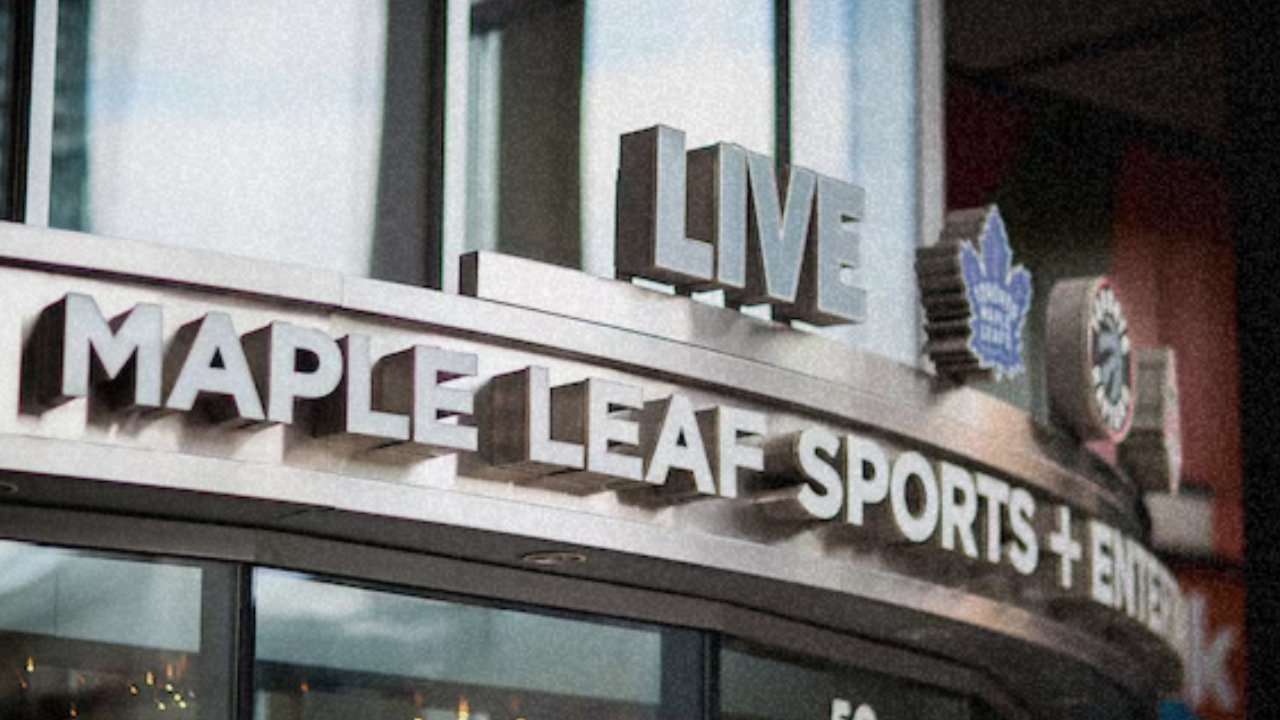
MLSE Rogers buyout: in eleven days the Leafs took McKenna, the Raptors mortgaged 2033 for Kawhi, and Rogers bought the rest of the company.
Rogers Communications agreed on Monday to buy Kilmer Sports’ remaining twenty-five percent of Maple Leaf Sports and Entertainment for CAD $4.35 billion, giving it outright ownership of the Maple Leafs, the Raptors and Toronto FC on top of the Blue Jays, Rogers Centre and Sportsnet. Across that transaction and the BCE purchase before it, the grossed-up value of the company rose thirty-nine percent.
The eleven days leading up to it are worth setting out in order, because both of the clubs Rogers was completing its purchase of spent that stretch making the largest transactions either had made in years.
June 26 to July 6
On June 26 the Maple Leafs used the first overall pick on Gavin McKenna at the draft in Buffalo, a selection that arrived by way of a lottery win from fifth position four days after the organisation’s general manager had been publicly described as a sham hire by nineteen of twenty league executives a Toronto Sun columnist had contacted.
On June 30 the Raptors agreed to reacquire Kawhi Leonard from the Clippers. Toronto sends Brandon Ingram, Gradey Dick, unprotected first-round picks in 2031 and 2033, second-rounders in 2030 and 2033, and a first-round swap in 2027. Leonard is thirty-five, is owed fifty million dollars in the final year of his deal, and the club is reportedly planning to discuss a two-year extension.
ESPN observed that the structure is identical to the 2018 deal that brought him the first time: the leading scorer, a recent lottery pick with middling production, and draft capital, for Leonard in his last season before free agency.
On July 1 John Chayka opened free agency by adding seven players through six signings and two trades. Sergei Bobrovsky signed for three years at a reported twenty-one million US, a seven-million cap hit. He is thirty-seven, turns thirty-eight in September, and is coming off the worst statistical season of his career, one year removed from consecutive Stanley Cups in Florida.
Dennis Hildeby went to Tampa Bay with a 2028 third and a 2027 fourth for Nick Paul. Nick Robertson went to Pittsburgh for a 2028 fourth. Colton Sissons, Jack Roslovic, Teddy Blueger, Brandon Duhaime and Zack MacEwen were signed, Darren Raddysh was acquired in a sign-and-trade, and the coaching job changed hands.
Five days later Rogers announced the buyout.
What the moves have in common
Taken individually, several of these are defensible and some are good. Nick Paul solidifies a bottom six. Clearing a third goaltender before waivers is sound management. The depth signings were mostly short-term, which preserves flexibility if the roster does not work.
What they share is a shape. Every one of them converts something with a long time horizon into something that generates conversation now. Draft picks in 2031 and 2033 become a thirty-five-year-old with one year left on his contract. A twenty-four-year-old goaltending prospect becomes a veteran forward. Cap space becomes seven new names in a single afternoon. A first overall pick becomes a headline in June rather than a player who matters in 2029.
Chayka described his own approach in those terms without appearing to notice. Asked what he had accomplished, he emphasised flexibility and optionality, and said the club had done a lot of buying and selling over the previous month. Daily Faceoff’s Matt Larkin, listing the Leafs among the winners of free agency, wrote that Operation Appease Auston Matthews was in full swing.
Two clubs, one balance sheet
The Leafs and the Raptors are usually discussed as separate stories with separate fanbases and separate problems. They are two holdings in one portfolio, and Sportico’s numbers put that portfolio at roughly $13.1 billion: Raptors at $5.22 billion, Leafs at $4.25 billion, Blue Jays at $2.9 billion, Toronto FC at $730 million.
Chief executive Tony Staffieri told Rogers’ April earnings call that the consolidated sports assets were worth more than CAD $25 billion, and the company has said it intends to sell a minority stake over the coming year and use the proceeds to pay down debt. His stated thesis, given to Sportico, has been consistent: Rogers held significant sports assets and was getting no credit for them in its share price, so the plan was to consolidate them and surface that value for shareholders.
An eleven-day stretch in which both marquee clubs make their biggest moves in years, immediately before the parent company completes a purchase at a thirty-nine percent premium and prepares to sell a slice of the result, is not obviously a coincidence. Nor is it obviously a conspiracy. Front offices are not typically told to generate news on a schedule. What is true is that a portfolio in the process of being valued looks better when both of its largest components appear to be doing something.
What none of it required
The Maple Leafs finished 32-36-14, twenty-eighth in the league, out of the playoffs for the first time in a decade. That season produced the lottery odds, the lottery produced McKenna, and McKenna produced a summer of optimism. The Raptors had a genuinely good year, winning sixteen more games than the season before, and have now spent 2031 and 2033 on a player who turns thirty-six in June.
Neither outcome was a problem for the transaction. Rogers paid its premium against a hockey club that missed the playoffs and a basketball club that has just mortgaged the next decade, and the grossed-up value went up thirty-nine percent regardless. That is the argument this site has been making since April about the Leafs specifically, and the last two weeks have extended it across the hall.
What supporters of both clubs experienced over these eleven days was one of the most eventful stretches in the recent history of either franchise. What the owner experienced was the closing week of a purchase. Those are the same eleven days, and only one of them has a number attached at the end of it.
Sources
- Sportico — “Rogers Completes Toronto Sports Empire With $3.1B MLSE Purchase” (July 6, 2026); the CAD $4.35 billion Kilmer purchase, the 39% grossed-up increase, Staffieri’s statements, and the Toronto portfolio valuations
- NBA.com — the June 30 agreement to send Ingram, Dick and picks to the Clippers for Leonard, with the full return package
- ESPN — trade grades; the observation that the 2026 structure repeats the 2018 deal move for move
- Yahoo Sports — Leonard’s age, the $50 million owed in the final year, and the reported plan to discuss an extension
- CBC Sports — the July 1 Leafs moves; Bobrovsky’s three-year deal, the Hildeby-for-Paul trade, the Robertson trade, the depth signings, and Chayka’s comments
- BlogTO — seven new players through six signings and two trades on the opening day of free agency
- HockeyFeed — Bobrovsky’s age and statistical decline, the coaching change, and Matt Larkin of Daily Faceoff on “Operation Appease Auston Matthews”
- Maple Leafs Hot Stove — Chayka’s July 1 remarks on flexibility, optionality, and having done “a lot of buying and selling over the last month”
- Lindy’s Sports — the week-one accounting of Chayka’s signings and trades, and the goaltending logjam that produced the Paul deal
- CBS Sports — the June 26 draft and Gavin McKenna taken first overall
- NBA.com — Leonard’s 2025-26 numbers and the Raptors’ sixteen-win improvement