
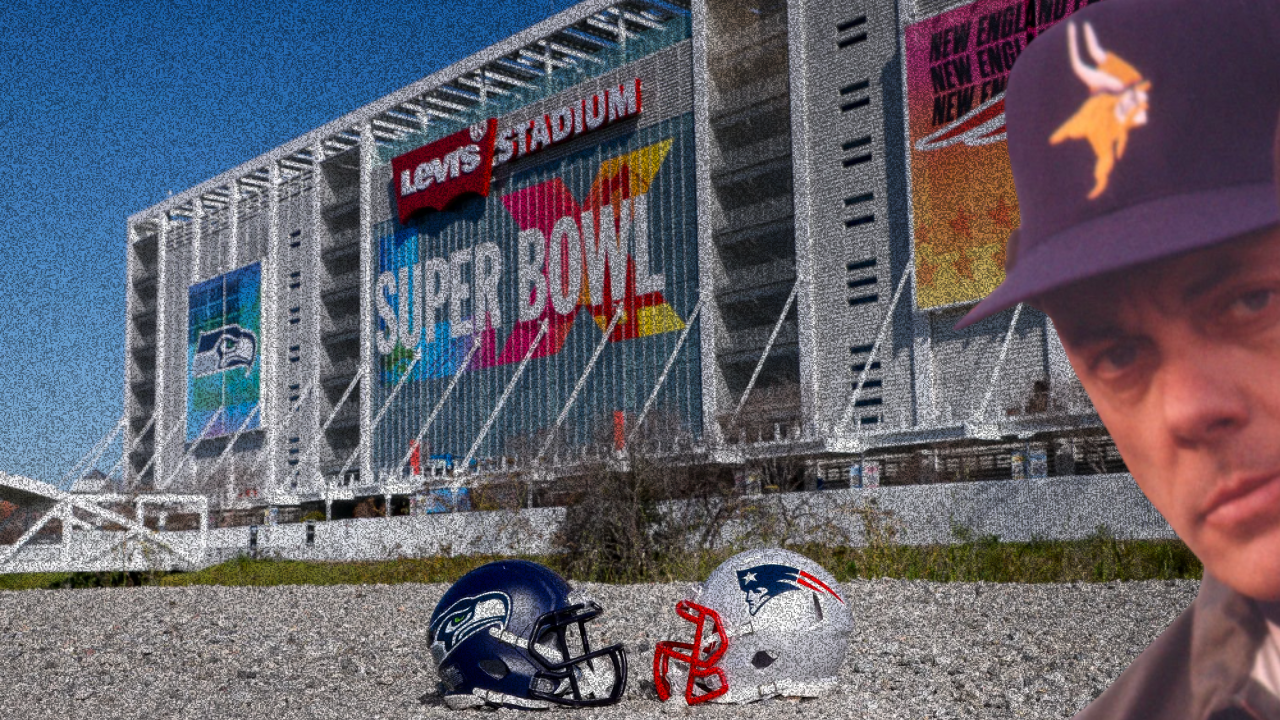
From season-long competition to global spectacle, the Super Bowl became a monetized ritual that reshaped how we define legacy and greatness.
The Super Bowl just happened again, consumed the way it always is now: as an all-encompassing media event, a commercial ritual, a night where the game itself often feels secondary to the advertisements, the halftime show, the legacy debates, and the social media performance surrounding it. This way of experiencing football feels completely natural to us.
It feels inevitable. But it would have been alien to the originators of modern NFL football. Long before the Super Bowl became shorthand for spectacle, commerce, and national ritual, professional football was a very different enterprise.
It was rooted in process, seasons, consistency, and collective achievement rather than a single compressed, mythologized moment.
To understand how dramatically that shift occurred is to understand something fundamental about how football has been rewritten by capitalism, media, and branding.
Bud Grant and the Season-Long Ethic
Someone like Bud Grant would likely have found today’s Super Bowl mythology foreign and even incoherent. Grant did not emerge from obscurity or nostalgia. He was one of the architects of professional football’s formative era, a coach whose record and longevity earned him a place in the Pro Football Hall of Fame.
Under his leadership, the Minnesota Vikings reached four Super Bowls, an unprecedented achievement at the time. They won numerous division titles and playoff games across decades of competition. Yet Grant’s worldview toward the Super Bowl and professional competition stands in stark contrast to how the event is framed today.
For Grant and his contemporaries, football was defined by the season. Coaches did not orient their entire careers toward a single night of ultimate judgment. They coached through months of incremental achievement, mastering fundamentals, navigating injuries, adjusting schemes, and building organizational culture. Winning the championship mattered. It was significant. But it was understood as the culmination of sustained effort, not the lone arbiter of worth. A single game governed by weather, turnovers, officiating, injuries, and matchup quirks was a poor instrument for declaring definitive superiority in an increasingly complex sport.
The Early Super Bowl Was Not a Myth
The Super Bowl itself was not originally designed to function as an existential referendum on coaches, players, or franchises. Its origins lie in the championship game created after the merger between the NFL and the American Football League, first played in January 1967. At the time, it was essentially an additional season finale. It was not the symbolic heart of the sport. It was not yet an unofficial national holiday. It did not carry the mythology it carries now.
In the early years, even the term “Super Bowl” had not fully entered official cultural usage. The NFL still existed within a broader sporting marketplace where baseball and college football dominated national attention. Television contracts were growing, but they had not yet transformed the league’s calendar into a commodity-defined ritual. The Super Bowl was important, but it was not sacred.
Television, Capital, and the Making of a Ritual
Over time, that changed dramatically. What was once a celebratory capstone evolved into the single most important node in the sports-industrial complex. The Super Bowl now regularly draws well over 100 million viewers, absorbing the attention of audiences who may ignore the NFL entirely for the rest of the year. It has become a global broadcast event, one of the largest advertising spectacles in the world, and a cultural ritual engineered for maximum attention.
That transformation was neither natural nor inevitable. It was constructed. As television revenue became the financial engine of the NFL, the league and its broadcast partners learned how to extract maximum value from a single concentrated moment. Networks pay billions of dollars for media rights anchored around this game. Advertisers bid tens of millions of dollars for thirty-second spots. The halftime show has become a stage that rivals the game in cultural significance. The week surrounding the event has expanded into a corporate festival of sponsored activations and marketing platforms.
Under this logic, the Super Bowl is no longer just a championship game. It is a narrative engine. It is where careers are sorted, legacies are validated or erased, and cultural memory is condensed into a few hours of spectacle. Rings, quarterback counts, and legacy debates feel like common sense in the modern era, but they rest on an economic architecture that privileges comprehensible moments over sustained processes. Attention has become more valuable than the substance of competition.
From Outcomes to Identity
In the earlier worldview represented by figures like Bud Grant, championships were outcomes. They were results of seasons. They were significant but not existential. Today, championships are treated as identity. A Super Bowl loss can be framed as a permanent stain. A win can redefine an entire career. One game is allowed to justify years of work or render them meaningless in the public imagination.
This shift did not occur because football became more competitive or more complex. It occurred because capitalism required a product that could be packaged, sold, and broadcast as an unmissable event. A single night that could anchor advertising markets, brand partnerships, global streaming deals, and social discourse is more efficient than a slow appreciation of durable competence. The modern Super Bowl is less a culmination of a season and more a peak spectacle engineered for commodification.
Two Different Football Worlds
When viewed this way, the era of Bud Grant and the current era of the Super Bowl belong to almost different socioeconomic realities. Grant’s era emphasized accumulated seasons, durable competence, and the lived texture of competition. The current era emphasizes condensed moments, broadcast appeal, and monetized narratives. The rules of the game may remain the same, but the meaning surrounding it has been rewritten, constructed, marketed, and sold.
That rewriting shapes not only how we watch football, but how we value it. It shapes how we talk about greatness. It shapes how we measure success. It shapes how we experience loss. Once you see that, there is a strange calm that comes with it. If your team has never won a Super Bowl, you can still understand football coherently. Championships become outcomes again, not civic identities or personal validations.
That worldview feels almost incomprehensible now because the spectacle has swallowed everything. The Super Bowl has become the tribunal. But it was not always that way, and it did not become that way by accident.