
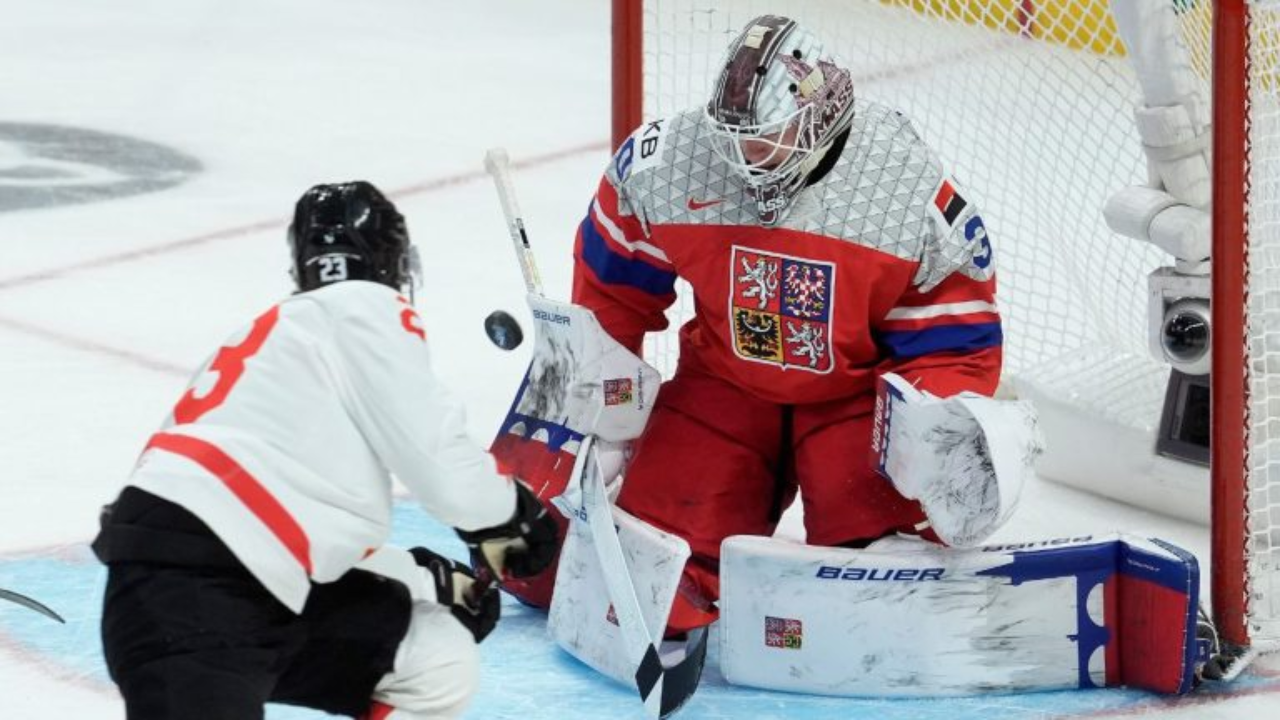
Canada opens against a Czech team built to survive pressure, force mistakes, and make this opener a test of discipline, control, and patience.
Canada opens its campaign at the IIHF World Junior Championship with a matchup that feels anything but routine. What used to be a comfortable opening-night win has quietly become one of the most revealing games on the schedule. Czechia is no longer a plucky underdog. Over the past three tournaments, they have turned into Canada’s most persistent obstacle, forcing tight games, dragging favorites into overtime, and twice ending Canada’s medal hopes earlier than expected.
This opener is not about talent evaluation. Canada has more of it, and everyone knows that. It is about control, discipline, and whether Canada can finally dictate the terms of a game against an opponent that has learned how to survive Canadian pressure. The result will not decide the tournament, but it will shape the emotional and tactical narrative that follows.
Tournament Context and Group Stakes
Group B at the World Juniors rarely offers a gentle runway, and this year is no exception. Canada and Czechia open against each other at 3M Arena at Mariucci in Minneapolis, sharing the group with Finland, Latvia, and Denmark. Finishing position matters. Group winners tend to avoid the most punishing quarterfinal matchups, while second and third place teams often face crossover games against rested, structured opponents.
This is also Day 1 for both teams. Coaches must balance the desire to send a message with the reality of a short, high-intensity tournament. Overplaying top forwards or leaning too heavily on a starting goaltender can have consequences later in the week. That tension shapes how aggressive each bench is willing to be if the game stays tight early.
Why Canada vs Czechia Feels Different Now
The emotional dynamic between these programs has shifted. Czechia pushed Canada to overtime in the 2023 gold medal game, then followed that performance by knocking Canada out in the quarterfinals in consecutive tournaments. That history matters. Czechia no longer approaches these games hoping to keep things close. They approach them expecting to win.
For Canada, the pressure flows the opposite way. Being the favorite is nothing new, but repeatedly failing to separate from the same opponent creates doubt. Players feel it on the bench. Coaches feel it in late-game decisions. Every missed chance reinforces the idea that this game might not break open on its own.
That psychological edge is subtle, but in a tournament where margins are thin, it shows up quickly once a game reaches the third period tied.
Team Canada: The Search for Separation
On paper, Canada enters the tournament as the consensus favorite. The roster is loaded with high-end skill, pace across all four lines, and more offensive upside than any team in the field. Even with a handful of eligible players staying in the NHL, this group compares favorably to Canada’s strongest recent entries.
Canada’s identity is built on speed through layers, quick puck movement, and attacking off both the rush and the cycle. This roster is not one-dimensional. It can generate chances off broken plays or wear teams down with sustained zone time. That flexibility is an advantage, especially against teams that rely heavily on neutral-zone traps.
The problem for Canada over the last two tournaments has not been chance creation. It has been conversion and control. Dominating possession without scoring early allows structured opponents to settle into their game plan. When that happens, frustration creeps in, penalties follow, and the game compresses into a one-goal margin.
Canada’s challenge in this opener is not to overwhelm Czechia, but to stay patient long enough for their depth to matter.
Team Czechia: Structure as Strategy
Czechia’s rise has been rooted in clarity. Czechia knows exactly what kind of game it wants to play against elite opponents, and it rarely deviates from that plan.
Defensively, Czechia leans on a big, mobile blue line that prioritizes gap control and early box-outs in the slot. They are not chasing hits or forcing turnovers at all costs. They are comfortable steering attackers to the perimeter, blocking lanes, and ending possessions cleanly. Their forwards track back aggressively, creating a five-man defensive shell that limits odd-man rushes.
Offensively, Czechia is opportunistic. When turnovers happen, they transition north quickly, often with simple, direct plays designed to generate rebounds rather than highlight-reel goals. The objective is not to dominate shot totals, but to make every chance count.
Goaltending has quietly stabilized this entire approach. Czech netminders over the past three tournaments have not needed to steal games outright. They have simply needed to be steady. That steadiness is often enough to extend games into the third period tied, where Czechia is at its most comfortable.
How the Game Is Likely to Play Out at 5-on-5
At even strength, this game is a battle over pace. Canada wants movement, creativity, and layered attacks that pull defenders out of position. Czechia wants compression, predictability, and patience.
Early on, expect Canada to test Czechia’s structure with speed through the neutral zone. The response will likely be conservative gaps and controlled retreats rather than aggressive pressure. If Canada starts forcing east-west passes too early, Czechia’s defense is well positioned to break up plays and clear rebounds.
The most important stretch of the game may be the middle of the first period. If Canada scores early, Czechia will have to open up, exposing the very seams Canada is built to exploit. If the game stays scoreless, Czechia’s confidence grows, and Canada’s margin for error shrinks.
Special Teams and Discipline
Under IIHF officiating, discipline matters more than talent in tight games. Stick infractions, neutral-zone obstruction, and retaliatory penalties are called quickly, especially early in tournaments.
Canada’s high-skill style naturally pushes players to the edge. Czechia’s style invites opponents to cross it. That dynamic has decided previous meetings. One ill-timed penalty can erase a period of territorial dominance and hand Czechia the kind of momentum it thrives on.
Canada’s power play is a clear advantage, but only if opportunities are earned rather than traded. Playing a clean game is not optional here. It is the difference between dictating the script and reacting to it.
What to Watch in the First Ten Minutes
The opening minutes will reveal more than any pregame narrative. Watch Canada’s forecheck structure. An aggressive two-man press signals confidence. A more conservative approach suggests respect for Czechia’s counterattack.
Pay attention to Czechia’s breakout success under pressure. Clean exits mean the structure is holding. Scrambled clears mean Canada is wearing them down.
Finally, watch the benches. Shortened rotations early often indicate a coach sensing an opportunity to push. Full benches suggest a long-game mindset.
Why This Game May Stay Tight
Everything about this matchup points toward a narrow margin. Canada has the skill to win comfortably, but only if it resists the urge to force separation before it is earned. Czechia has no incentive to rush. Their recent success has proven that patience pays off against favorites.
If the game is tied after one period, the pressure tilts toward Canada. If Czechia reaches the third period within one goal, history suggests they are exactly where they want to be.
This is not a referendum on Canada’s talent. It is a test of maturity. Breaking the pattern requires discipline, patience, and a willingness to play a game that feels slower than Canada would prefer.
That is why this opener matters. Not because of the points, but because it will show whether Canada can finally dictate terms against the one opponent that has learned how to deny them.