
On the anniversary of Vertières, Haiti’s 2026 World Cup qualification reclaims a history of resistance, uniting the nation and reshaping how the world sees it.
On November 18, 2025, Haiti qualified for the 2026 FIFA World Cup after defeating Nicaragua 2–0 in Curaçao.
This alone was historic, but the date made it extraordinary: November 18 is the anniversary of the 1803 Battle of Vertières, the final major battle of the Haitian Revolution, as widely documented by historians of the revolutionary period.
Haiti’s victory on this date created a profound echo between two moments separated by centuries — one won with courage on a battlefield against a colonial empire, the other earned with speed and precision on a football pitch.
The connection underscores Haiti’s long legacy of resistance, pride, and the refusal to be defined by hardship.
Revolution’s Legacy and Global Impact
The Haitian Revolution, lasting from 1791 to 1804, was the only large-scale slave uprising in world history to result in the formation of an independent state ruled by formerly enslaved people.
The revolution culminated when Jean-Jacques Dessalines and his forces defeated Napoleon’s troops at Vertières on November 18, 1803. This victory made Haiti the first Black-led republic of the modern era after independence was declared on January 1, 1804.
Historians from Age of Revolution and other research collectives note that Haiti’s success reverberated across slaveholding societies throughout the Americas, terrifying colonial powers and inspiring abolitionists, rebels, and revolutionaries from Cuba and Jamaica to the United States.
Haiti became a symbol of the possible — a nation that proved empire could be defeated from below.
The Power of Vertières Day
The symbolic resonance of Haiti qualifying on November 18 cannot be overstated. This date, recognized nationally as Vertières Day, marks the moment Haitian revolutionaries delivered their final blow to French colonial rule.
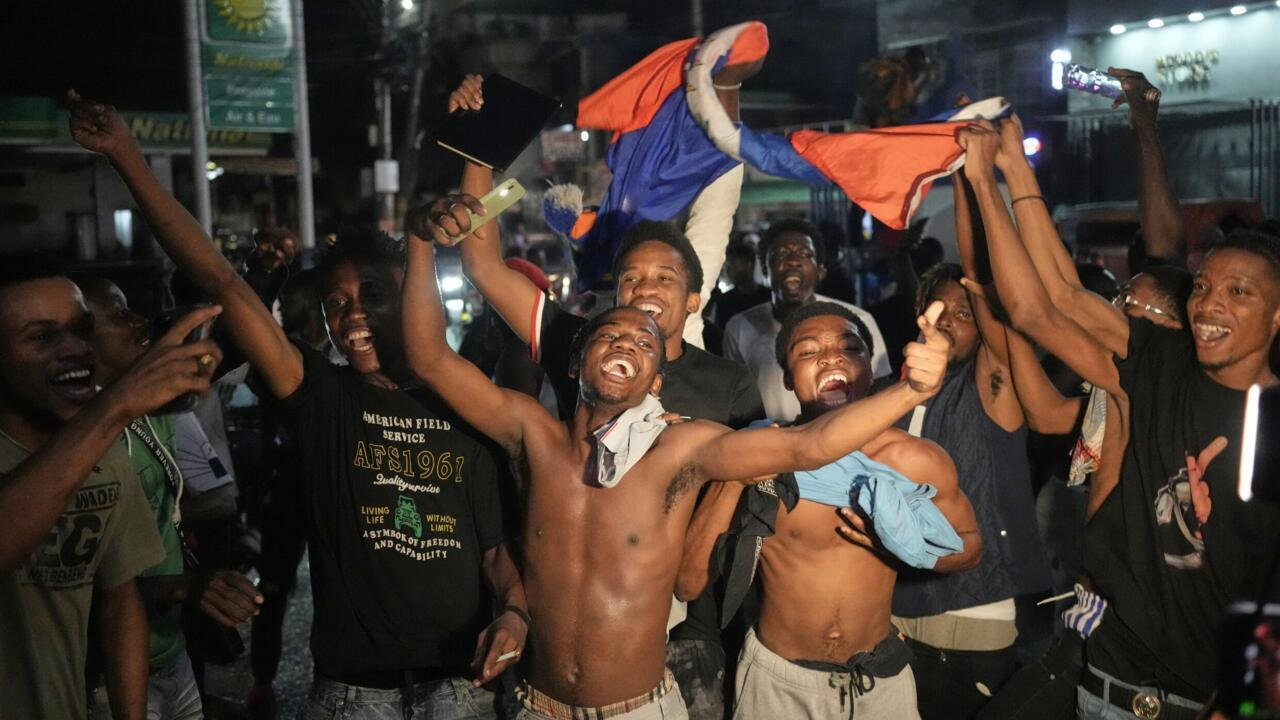
Contemporary descriptions emphasize the importance of Vertières as a national marker of liberation. When Haiti secured its World Cup qualification on this anniversary, the Associated Press reported spontaneous celebrations in the streets, noting how rare it is for a moment to unite a nation facing such profound challenges.
The historic symmetry of the date — revolution then, football now — transforms the sporting achievement into something larger: a reminder that Haiti’s history is one of victory against impossible odds.
Football as Resistance and Revival
Haiti’s 2–0 win over Nicaragua, with goals coming from Louicius Deedson and Ruben Providence, secured the country’s first World Cup appearance since 1974, ending a wait of more than 50 years.
Haiti achieved this while unable to play home matches in Port-au-Prince due to gang violence that has overtaken much of the capital.
Forced to play “home” games abroad, Haiti’s team became a symbol of the nation’s resilience in the face of instability, displacement and political crises.
For Haitians at home and abroad — including large diasporic communities in Canada, the United States and France — the qualification represents a reclaiming of dignity.
It signals to the world that the nation is defined not only by tragedy or turmoil but also by collective joy, talent and an unbreakable spirit.
The Symbolism of the Player’s Image
The widely shared image of a Haitian player celebrating qualification resonates far beyond sport. Its symbolism reflects realities documented by France 24, Reuters and the Associated Press — that Haiti’s people have endured centuries of colonial punishment, foreign intervention, natural disasters and political instability.
The player becomes a representative of the Haitian diaspora, whose families often left the country because of dictatorship, economic hardship or violence.
He embodies the continuation of Haiti’s revolutionary legacy, now carried by athletes, artists, activists and communities asserting Haiti’s presence on the world stage.
A Moment of Global Reclamation
For decades, Haiti’s global image has been shaped by crisis-focused reporting, with much of the coverage emphasizing political instability, gang violence, and humanitarian emergencies.
At the same time, Western media consistently describes Haiti as the poorest nation in the Western Hemisphere, a condition closely tied to the crushing 1825 indemnity that France imposed following independence — a financial burden economic historians have shown to be devastating and long-lasting.
Haiti Rises Again
Haiti’s qualification for the 2026 World Cup cuts through this entrenched narrative. Instead of appearing as a nation defined by deprivation, Haiti steps onto the largest stage in global sport as a country demonstrating talent, endurance, and national pride.
The victory created a rare moment of unity, with people across the country celebrating despite the severe instability they continue to face.
The significance of this achievement reaches beyond sports. It echoes a deeper historical arc, linking modern success to the 1803 victory at Vertières, the decisive battle that ended French colonial rule.
This connection situates Haiti’s qualification within a longer tradition of overcoming the odds — from revolutionary triumph to contemporary accomplishment.
Haiti’s presence in the 2026 tournament compels the world to reconsider its understanding of the country. Rather than a place defined solely by difficulty, Haiti stands as a nation whose cultural strength, global diaspora, and athletic achievement affirm an identity rooted in resilience and possibility.