
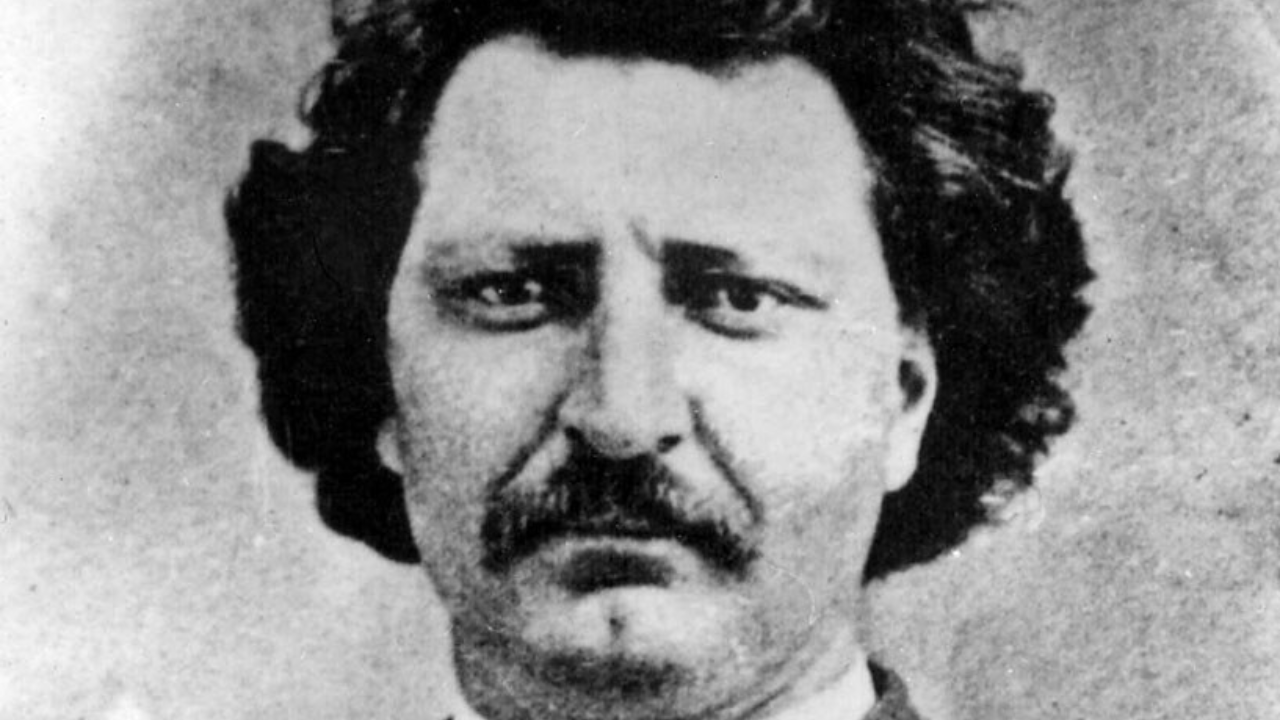
On the day Canada marked 140 years since Louis Riel’s hanging, the Grey Cup celebrated Indigenous visibility, revealing the deep contradictions of the settler state.
On November 16, 2025, Canada marked the 140th anniversary of Louis Riel’s execution. Riel had been hanged on November 16, 1885.
On the very same day, Winnipeg hosted the 2025 Grey Cup Festival, with the Manitoba Métis Federation and Treaty One Nations having served as co-hosts.
Now that the festival had ended and the Grey Cup had been played, the pairing of celebration and historical violence stood out even more sharply than it had in anticipation.
Riel’s Death as State Policy
Louis Riel’s execution had been the culmination of decades of Métis and First Nations resistance to Canadian expansion.
Riel had risen to political prominence through the Red River Resistance of 1869–70 and the later North-West Resistance of 1885.
The Canadian government’s military suppression of the North-West Resistance—carried out between March and June 1885—has been outlined in great historical detail, which outlines the government’s determination to dismantle Métis political authority.
Riel’s trial for high treason and subsequent execution, archived in the Dictionary of Canadian Biography, had never been a mistake of state excess.
It had functioned as a deliberate assertion of Dominion authority designed to neutralize Indigenous political agency and secure Western lands for settlement and capitalist development.
From Suppression to Spectacle
A century and a half later, the state that had executed Riel had celebrated Indigenous cultural participation in one of its signature national spectacles. The Grey Cup Festival had marketed itself as “Canada’s biggest social,” and Indigenous involvement had been placed prominently in the festival’s programming.
The MMF’s co-hosting role had been framed as a historic moment in Manitoba’s story.
Yet as the festivities unfolded, the shift from suppressing Indigenous political resistance to showcasing Indigenous cultural visibility revealed the extent to which Canada had embraced Indigenous identity as national branding rather than confronting the structural conditions that once animated Riel’s resistance.
What the Celebration Left Out
Even as the festival celebrated Indigenous presence, the material systems Riel had fought against remained entirely intact.
The Indian Act continues to serve as active federal law governing Indigenous status, land, and political authority.
The Assembly of First Nations has described colonization as having “destroyed and stolen First Nations’ lands, territories and resources,” a condition that persisted in various forms.
Research from the Yellowhead Institute has continued to document conflicts over resource extraction occurring without free, prior, and informed consent.
Against this backdrop, the festival’s celebration of Indigenous cultural presence had done little to engage with the structures of political and territorial control that had remained unchanged.
The Settler Logic Behind the Irony
The contradiction between the anniversary of Riel’s execution and the festival’s celebration of Indigenous visibility had not been a coincidence of scheduling, but a function of the settler state’s internal logic.
Canadian liberalism had smoothed over its history of Indigenous dispossession by reframing the past as tragic but resolved, while maintaining the systems that had required the suppression of Indigenous political authority in the first place.
By shifting from killing Indigenous leaders to celebrating Indigenous cultural symbols, the state had presented itself as progressive without relinquishing meaningful power.
As a result, Canada had erased the continuity between historical violence and contemporary national spectacle.
What the State Chose to Remember
Louis Riel’s execution cleared the political and territorial ground upon which Canada has built itself, a fact widely acknowledged in historical scholarship of some of Canada’s most prominent historians.
Today, the country continues to use Métis and First Nations cultural presence to brand itself, even on the anniversary of Riel’s hanging.
This is not been reconciliation. It is the settler state functioning precisely as designed: erasing Indigenous resistance while appropriating Indigenous identity for national legitimacy.
In the aftermath of the festival and the Grey Cup game, what lingers most forcefully is the unsettling clarity of how November 16 has been used—not to reckon with Riel’s death, but to celebrate the very nation that had required it.