
How the 2025 Blue Jays run exposed Toronto’s emotional life, state power, colonial narratives, and the machinery that turns sports into civic governance.
Baseball in Toronto has never been just a sport. It functions as a civic ritual, an emotional outlet, a cultural narrative, and a tool through which political and economic forces shape how people understand their city.
It is a space where personal feeling and structural power collide. During the 2025 postseason, this collision became impossible to ignore.
Toronto fandom begins with emotion: sincerity, superstition, heartbreak, and the desperate hope that maybe, this time, things will finally go right.
Generations of disappointment — the Leafs’ drought, the Raptors’ fleeting glory, the Blue Jays’ cycles of promise and collapse — have carved out a shared emotional memory that defines what it means to love sports in this city.
Every postseason run feels like a collective exorcism.
But Toronto’s emotional intensity doesn’t mean naivety.
The same fans crying over a ninth-inning meltdown are also dissecting roster construction, calling out media manipulation, critiquing casual-fan moralizing, mocking state propaganda, and memeing their way through existential dread.
Toronto fandom has developed a dual consciousness: deeply sincere yet hyper-aware of the systems surrounding the sport.
Fans feel everything, but they also understand how their feelings are being shaped, packaged, and resold.
Baseball as Managed Public Emotion
This mixture of raw feeling and sharp awareness becomes essential when you recognize that baseball is not a neutral civic activity. It is statecraft.
Every game becomes a managed ritual in which the city, police, media, and corporations coordinate the choreography of public feeling.
During the 2025 run, you could see it everywhere: the security apparatus surrounding the stadium, the carefully planned fan zones, the messaging about “keeping the city safe,” the way broadcasters framed civic emotion as something requiring oversight.
Policing becomes part of the emotional script. During high-intensity games, officers aren’t just enforcing laws; they are defining the outer boundaries of acceptable joy.
Their presence shapes when crowds can swell, how long they can linger, and how far their excitability is allowed to stretch. This isn’t simply crowd control — it is emotional management wearing the uniform of public safety.
Sports media collaborates in this choreography by normalizing the presence of authority as part of the entertainment ecosystem.
Coverage frames police as protectors rather than regulators, teaching fans to see state intervention not as political imposition but as an expected feature of large-scale emotional life.
The entire environment works to make control feel natural.
This is what communication scholar Barry Richards first termed “emotional governance.” In his work, Richards argues that institutions manage collective feeling in order to maintain social order.
Sports operate exactly this way: they unify the public under controlled conditions, turning civic identity into a safe, consumable product.
Wins become temporary social glue; losses become acceptable emotional catharsis. The structure reinforces a sense of order: we cheer, we hurt, we gather — but always within boundaries set by the same institutions that police the streets and manage the city.
Toronto Between Empire and Instability
The political logic of baseball mirrors this dynamic. The Dodgers represent developmentalist capitalism — reinvested wealth, global scouting, analytical supremacy, depth so massive that randomness itself becomes suppressed.
Smaller teams resemble middle-power economies: their windows open and close according to scarcity’s whims.
Toronto sits between these worlds. With corporate backing, the Blue Jays have the raw resources to imitate the Dodgers’ empire, yet lack the institutional coherence and long-term discipline that create structural inevitability.
Their failures stem not from limitation but from misalignment — abundance without architecture.
This is why the Dodgers–Jays matchup became such a potent symbol: empire versus unfinished development, capital accumulation versus volatility, infrastructure versus vibes.
It wasn’t just a series. It was a structural allegory.
Colonial Extraction in the Middle of the Game
This became explicit when the Ford government saturated Jays broadcasts with Ring of Fire ads — a provincial propaganda campaign inserted directly into the emotional heart of postseason baseball.
Many Canadian sports fans recognized the tactic immediately.
The government used the nation’s biggest shared emotional moment to sanitize an extractive colonial development project, framing it as inevitable progress and green transition.
The Ring of Fire isn’t simply a mining proposal. It is Canada’s developmental logic laid bare: capital-first extraction, environmental sacrifice zones, and divide-and-rule strategies directed at First Nations.
The peatlands at stake are some of the planet’s most critical carbon sinks, yet the ads presented the project as already underway and uncontroversial.
The parallel becomes unavoidable: the structures that govern baseball and the structures that govern resource extraction operate through the same emotional and narrative mechanisms.
Both systems shape feeling, frame progress, and marginalize dissent — all while asking the public to see control as natural and inevitable.
Ritual, Survival, and the City’s Emotional Life
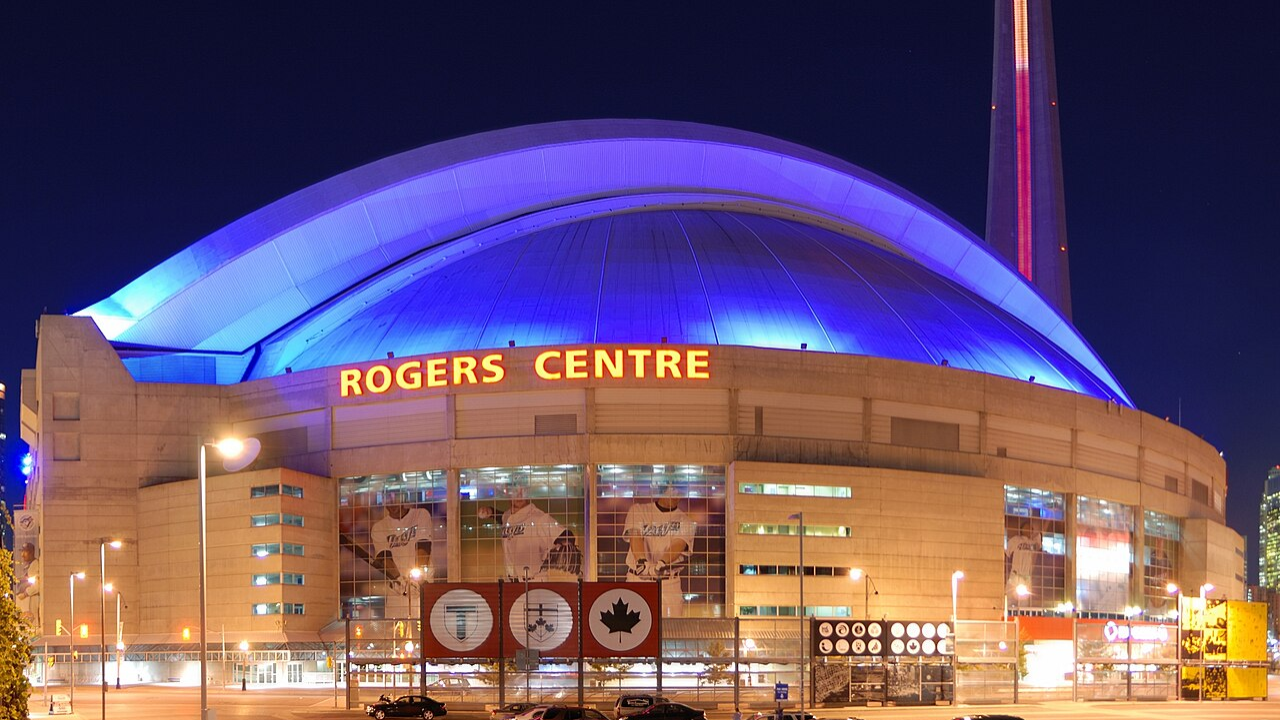
Game days become pilgrimages across the city: waves of fans moving through transit routes, gathering in bars, entering the lit dome like a sanctuary.
What people call “atmosphere” is not spontaneous. It is an engineered emotional machine — lighting, sightlines, sound cues, pregame rituals — all calibrated to guide and modulate collective feeling.
The magic remains real, but it is magic built atop an intentional emotional architecture.
In these moments, Toronto briefly becomes a unified organism, its usual isolation replaced by collective ritual.
Baseball becomes the one place where people can feel something real together while everything outside the stadium feels precarious, extractive, or impossible.
This is why baseball in Toronto feels so profound. It becomes a framework for understanding civic life — its emotional patterns, its governance structures, its colonial histories, its contradictions.
The Blue Jays give the city a narrative form for processing hope, disappointment, and the tension between community and power.
Baseball is statecraft. It is myth. It is colonial allegory. It is civic ritual. It is collective therapy.
And in Toronto, it remains the one space where people gather to feel something true when the world outside feels unbearable.