
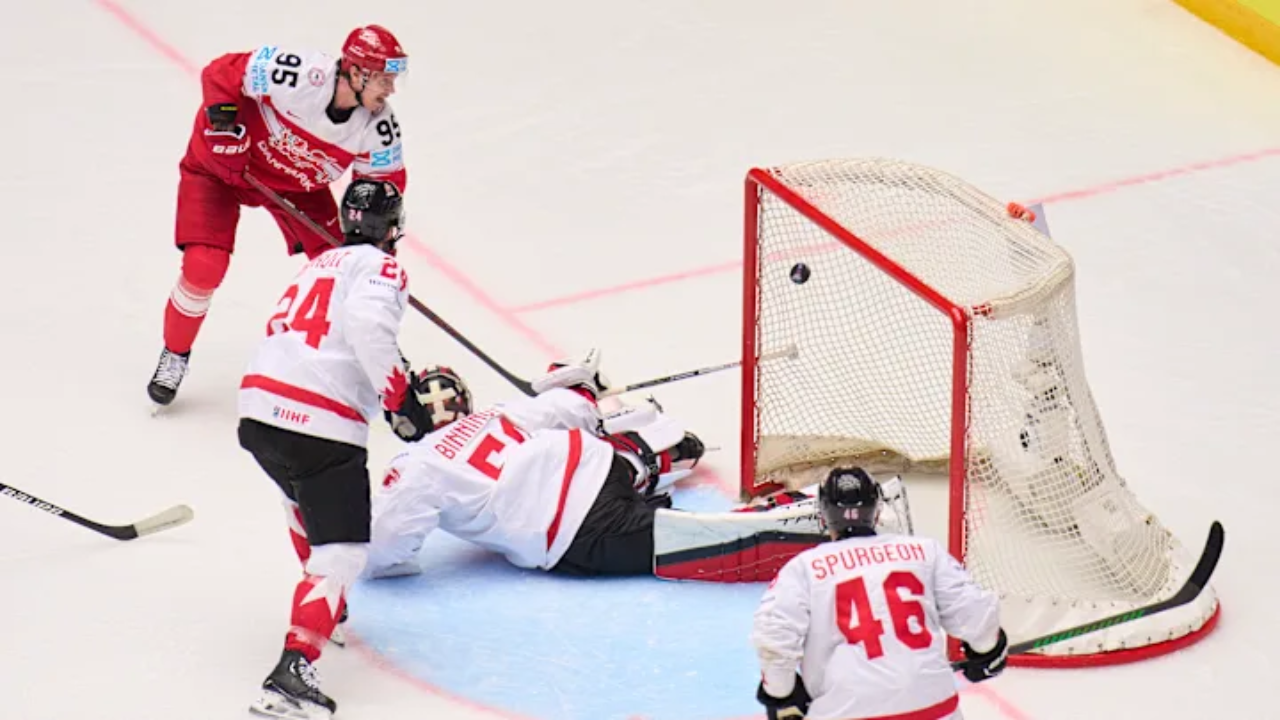
Canada loses to Denmark—and with it, a piece of its national identity built on hockey pride, collective memory, and the comfort of expected victory.
By any metric, it’s one of the most shocking upsets in recent Canadian hockey history. A quarterfinal loss to Denmark—2–1, in regulation, no overtime, no fluke bounce—just a clean, humbling defeat. On paper, it shouldn’t have happened. Canada outshot the Danes 35–22, dominated possession, and dressed a roster stacked with NHL talent, Stanley Cup winners, and seasoned veterans. Denmark, with more players from the Ice Hockey League than the NHL, had no business winning this game.
But they did.
And the worst part? This wasn’t just about a hockey game. It was about a story—one that every Canadian, even the casual fan, thought they knew the ending to. This tournament, this game, was supposed to be the middle act of a perfect trilogy. Canada vs. USA, again. A spiritual rematch of February’s Four Nations Final—the game that, however briefly, made Canadians feel like they’d saved the soul of their country with Connor McDavid’s overtime goal against Connor Hellebuyck. A game that turned sportswriters into poets and forced politicians to tweet like believers. That game was mythology. It was soft power. It was statecraft on ice.
And Denmark shattered it with two goals.
It’s hard to overstate what was lost—not just a hockey game, but a narrative. The bracket was aligning with poetic precision. USA had beaten Finland. Sweden was handling Czechia. Switzerland had blown out Austria. The favorites were all doing their part. All signs pointed to a showdown between North America’s eternal rivals. Canada-USA on a Saturday afternoon. The kind of game that stops time.
But the myth didn’t even make it to the final act. It died quietly, somewhere in the third period, with Canada clinging to a 1–0 lead before surrendering two unanswered goals. No miracle finish. No highlight-reel redemption. Just silence.
This wasn’t supposed to happen—not in this tournament, not against this team. But that’s the thing about mythologies: they’re fragile. It only takes one hot goalie, two opportunistic goals, and three unlucky bounces to snap them in half. Suddenly, the thing that was supposed to make you feel something—national pride, unity, catharsis—just becomes another disappointment in a growing collection.
Because this wasn’t just a game. It was an attempt, however naive, to feel something larger than ourselves. Canada doesn’t have many sources of shared pride left. Our political institutions are paralyzed. Our economy is unaffordable. Our unions are compromised. And our cultural touchstones have been hollowed out by cynicism and content fatigue. Hockey remains the one place where we pretend—if only for sixty minutes—that we still believe in something together.
And when that illusion cracks, what’s left?
It’s embarrassing. That’s the only word that fits. Not just disappointing—embarrassing. Canada wasn’t supposed to lose this game. The Vegas line had them at -3.5 goals. They were supposed to win by four. And now? Now they’re not even playing for bronze. They’re going golfing. Meanwhile, Team USA—young, scrappy, fast—marches on with something to prove. Their top stars didn’t even show up, either due to playoff obligations or disinterest, yet they’ve built a real campaign. If they win gold, it’ll be their first IIHF World Championship title since 1960.
And yet, without Canada, even that story rings hollow. There’s no foil. No emotional payoff. No myth-making. If the U.S. beats Switzerland or Denmark, what does it really mean? There’s no catharsis to be found in a lopsided final against a team that doesn’t stir the soul of American hockey fans. No drama. Just a trophy and a shrug.
This is the painful truth: sport doesn’t care about your story arcs. It doesn’t care about your content plans, your geopolitical subtext, or your hunger for symbolism. The puck drops. It bounces. And sometimes it ends in a way that leaves nothing behind but silence.
For Canada, this was supposed to be another chapter in a long saga of hockey as national salvation. But all it did was expose how much we’ve come to rely on sport to feel something—anything—about this country. When we win, we wrap ourselves in the flag. When we lose, we’re left exposed, wondering why it mattered so much in the first place.
The answer is simple. Because we don’t believe in anything else.
We don’t believe in our politics. We don’t believe in our institutions. We don’t believe in our leaders. We don’t even believe in our future. So we cling to hockey, not just as a sport, but as a cultural anchor. A beautiful overtime goal can momentarily cleanse us of the shame of colonization, of environmental collapse, of economic inequality, of end-stage capitalism. It’s absurd. It’s tragic. And it’s real.
That’s why this loss stings so badly. Because it reveals the hollowness of the dream. Canada isn’t the moral guardian of hockey. We’re not the chosen people of the ice. We’re just another country that can lose to Denmark in a quarterfinal.
And the worst part? Most people won’t even know it happened. It won’t be a headline. It won’t spark a national conversation. It’ll be a blip. A ghost in the box score. A missed moment. And now we wait until Milan 2026 for another shot at meaning. Another chance to inject purpose into a population increasingly unsure what it’s doing here.
But maybe that’s the lesson. Maybe next time, we shouldn’t assume we’ll be there. Maybe the game really is played on ice—not on paper, not in tweets, not in narratives. And maybe fate is just the name we give to the outcomes we can’t script.
In the end, the myth didn’t die in battle. It died quietly, under the weight of our expectations, in a game we thought we’d win by five goals. And now we’re left with nothing—no climax, no content, just a country staring into the mirror, wondering what it all meant.
And realizing, maybe, it didn’t mean anything at all.
Leave a Reply