
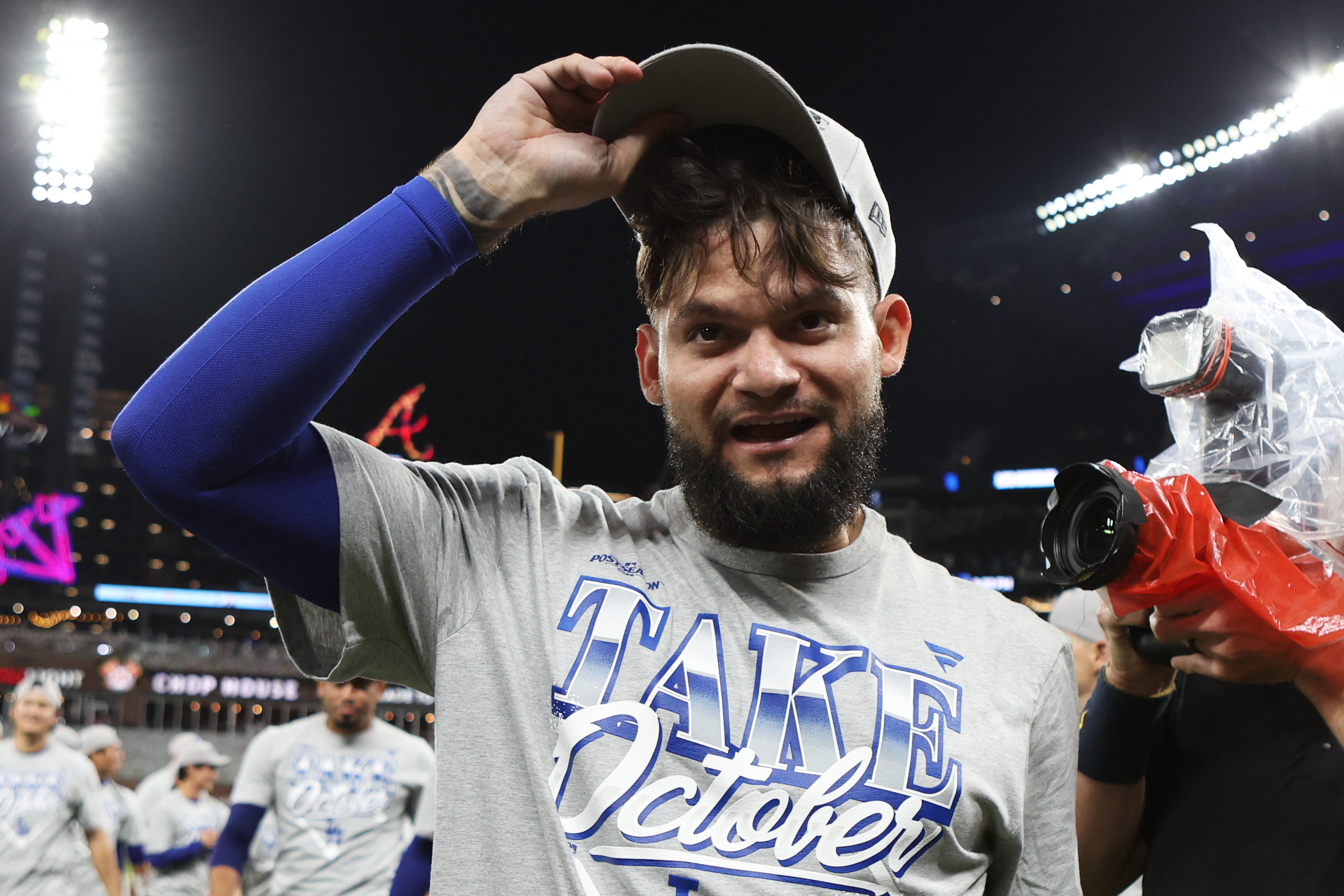
Dodgers vs Braves Game 4 ended 4-1 as Andy Pages broke a 1-1 tie and the Dodgers eliminated the Braves to reach the NLCS.
Tyler Mahle gave the Braves almost exactly the game they needed.
For six innings, that still was not enough.
The Dodgers beat the Braves 4-1 Wednesday night at Truist Park, winning the NLDS 3-1 and returning to the National League Championship Series. Andy Pages delivered the decisive two-run single in the seventh inning, Max Muncy added a ninth-inning homer and Los Angeles’ pitching staff once again gave Atlanta almost no room to recover.
Atlanta spent most of the series asking its pitchers to make one or two runs sufficient. Game 4 finally showed the limit of that arrangement.
Mahle made one run matter for as long as he possibly could. The Braves never gave him another.
Mahle Did His Job
Mahle entered an elimination game as the less celebrated starter opposite Tyler Glasnow. He left having given Atlanta every reasonable chance to force Game 5.
The right-hander worked 6 1/3 innings, allowed three hits and two runs, only one earned, walked one and struck out four. He needed just 85 pitches to get there.
His fourth inning was particularly sharp. Mahle struck out Will Smith, Shohei Ohtani and Teoscar Hernández in order, exactly the kind of clean trip through the middle of Los Angeles’ lineup that Atlanta needed from a starter carrying an elimination game.
The Dodgers had one run through six innings, and even that required help.
Ohtani walked to open the second, stole second and reached third when Sean Murphy’s throw went into center field. Muncy then lifted a routine popup into shallow left that Mauricio Dubón dropped, allowing Ohtani to score.
Mahle had not been beaten. Atlanta had given the Dodgers a run anyway.
Atlanta’s One Run Came Early
The Braves actually struck first.
Michael Harris II singled to open the bottom of the first, stole second, moved to third and scored when Glasnow uncorked a wild pitch. Atlanta had a 1-0 lead before Glasnow had settled into the game.
Then the offense disappeared.
Atlanta finished with three hits. Harris had two of them, including a double. The Braves put runners on because Glasnow walked five, but they could not turn those baserunners into another run.
The best opportunity arrived in the sixth. Ozzie Albies led off with a double in a 1-1 game. Edgardo Henriquez came out of the Dodgers bullpen and stranded him.
That inning became even more painful a few minutes later.
The Seventh Decided Everything
Teoscar Hernández singled with one out in the seventh. Mahle was still throwing well. His four-seam fastball had averaged 94.9 mph in the sixth, higher than it had during any of the first three innings.
Walt Weiss made the move anyway.
Didier Fuentes entered three days after throwing 47 pitches over 3 2/3 innings in Atlanta’s Game 2 win. The version of Fuentes who appeared Wednesday looked very different from the one who had carried such a heavy load Sunday.
He threw only four strikes among 14 pitches. His fastball averaged 95.9 mph after averaging 99.7 on Sunday. Fuentes walked two of the three hitters he faced and left Robert Suarez a bases-loaded situation.
Pages finally punished it.
With two outs and a full count, the Dodgers center fielder lined a 99.7 mph pitch into center for a two-run single and a 3-1 lead.
It was Los Angeles’ first hit with runners in scoring position in the entire series. The Dodgers had started 0-for-14.
They needed only one.
Atlanta’s Pitching Depth Finally Broke
The temptation is to reduce the seventh inning to one bullpen decision. Atlanta’s larger problem had been developing for months.
The Braves entered October with only Mahle and Chris Sale functioning as traditional starters. They had already built multiple postseason games out of openers and bulk relievers. That worked until the cumulative workload began removing options.
Fuentes had thrown 47 pitches Sunday because Atlanta needed 19 bullpen outs after Ray Kerr opened Game 2. Sale’s own Game 3 effectiveness came after being used to finish the Wild Card round. Robert Suarez had only recently returned from a three-month injured-list stint.
By Wednesday, Weiss was choosing among pitchers whose recent workloads were already part of the decision.
Mahle said afterward that removing him was the right move. The larger point is that Atlanta had reached a Game 4 where even a starter cruising at 85 pitches could hand the ball to a bullpen carrying accumulated costs from the games before it.
The Dodgers had considerably more healthy pitching depth. Over four games, that difference kept showing up.
Glasnow Survived Without Command
Glasnow was not dominant in the conventional sense.
He walked five hitters in 4 2/3 innings and threw 78 pitches before Dave Roberts removed him. Atlanta repeatedly had opportunities to make those free passes expensive.
The Braves managed one hit against him.
Glasnow allowed one run, struck out five and kept recovering before traffic became damage. Alex Vesia, Henriquez, Tanner Scott and Edwin Díaz then combined for 4 1/3 scoreless innings while allowing two hits.
The bullpen retired Atlanta’s final seven hitters.
That is what Los Angeles’ rotation depth ultimately bought the Dodgers. Yamamoto had controlled Game 3. Glasnow did not have his best command in Game 4 and still handed the bullpen a tie game with Atlanta barely able to put the ball in play.
The Braves Never Solved Runners in Scoring Position
Atlanta’s season did not end because of one seventh-inning pitching change.
The Braves finished the series 1-for-23 with runners in scoring position.
That was the second-lowest batting average with runners in scoring position by any team with at least 20 such at-bats in a postseason series. Only the 1966 Dodgers, who went 0-for-22 in the World Series, were worse.
Los Angeles held Atlanta to a .145 batting average and a .501 OPS across the series. The Braves scored eight runs in four games and collected only 18 hits.
Harris kept creating something. Albies contributed. Too much of the lineup around them simply failed to convert the few openings Dodgers pitching allowed.
Sale allowed three runs in Game 3 and lost. Mahle allowed one earned run in Game 4 and lost. Atlanta’s starters kept creating games the offense could win. The offense kept making those margins impossible.
The Series Fit October’s Smaller Games
Game 4 also landed squarely inside the scoring environment that has emerged as the Division Series has progressed.
The Wild Card round averaged 8.3 runs per game. Through 14 Division Series games, that number has fallen to 5.9.
Dodgers-Braves averaged 5.5 runs across its four games. Wednesday sat 1-1 through six innings before Pages finally produced the hit that separated them.
The series was filled with good pitching and missed offensive opportunities rather than constant scoring pressure. Even Los Angeles struggled when runners reached scoring position until Pages’ seventh-inning single.
In a round increasingly defined by compressed games, the Dodgers survived because their pitching kept making one converted opportunity enough.
Road Teams Took Over Wednesday
Los Angeles was part of a larger Division Series swing.
All four road teams won Wednesday. Cleveland extended its series in Chicago, Tampa Bay eliminated the Yankees, Milwaukee eliminated San Diego and the Dodgers finished Atlanta.
Road teams are now 8-6 through the first 14 Division Series games.
For Los Angeles, that result was less surprising than the location might imply. The Dodgers have spent October carrying enormous expectations and a roster built to survive away from Dodger Stadium. Wednesday required neither a huge offensive night nor a perfect start.
It required the Dodgers to remain close long enough for their depth to eventually become Atlanta’s problem.
Muncy Finished It
Atlanta never seriously threatened after Pages’ single.
Muncy added the final run with a solo homer in the ninth, his third of the postseason, stretching the lead to 4-1 before Díaz closed the series for his second save of the NLDS.
The final score looked more comfortable than the game had been.
For six innings, Atlanta had exactly what it wanted: Mahle pitching well, Glasnow struggling with his command and a tie game at home.
Then the Dodgers reached the part of the roster where their advantage was largest.
Atlanta did not.
The Dodgers Get Milwaukee Next
Los Angeles now advances to face Milwaukee in the NLCS after the Brewers eliminated San Diego 3-1 later Wednesday night.
Game 1 is Sunday in Milwaukee.
The Dodgers enter that series trying to become the first National League franchise to win three consecutive World Series. They arrive with the part of their roster most responsible for October success already operating at a championship level.
Atlanta scored eight runs against them in four games.
The Braves spent Game 4 waiting for Mahle’s work to become meaningful. By the time the pitching finally broke, the season had already spent six innings demonstrating why it was in danger.
The Braves needed one hit when it mattered.
The Dodgers got theirs.
Sources
MLB, October 8, 2026 — Dodgers-Braves NLDS Game 4 recap and box score | MLB / Atlanta Braves, October 8, 2026 — Braves NLDS elimination, pitching-depth and offensive analysis | MLB, October 8, 2026 — Tyler Glasnow Game 4 and Dodgers rotation coverage | Reuters, October 8, 2026 — Dodgers 4, Braves 1 and NLCS advancement