
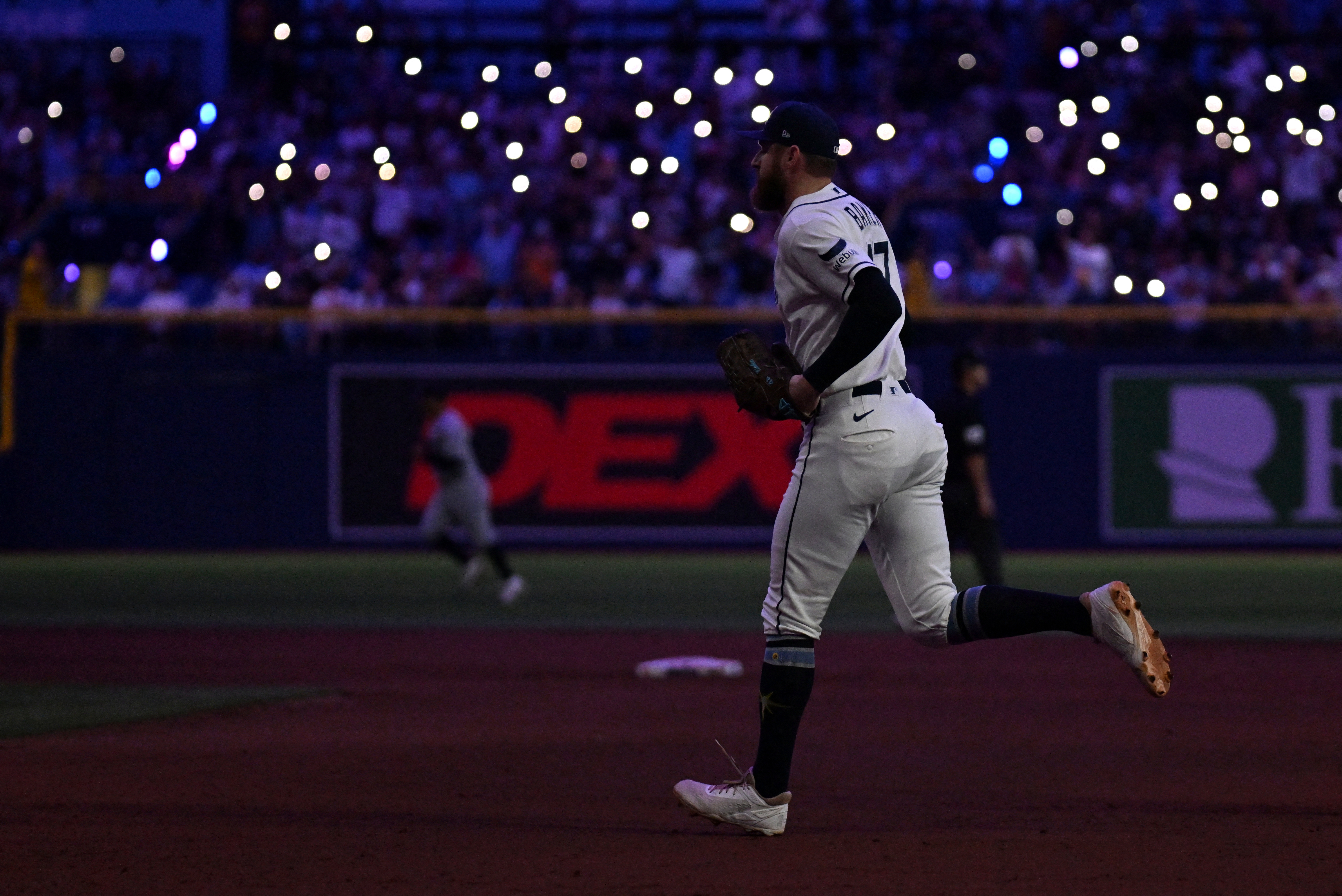
Home teams are 12-7 through 19 MLB playoff games, including 6-4 in the Division Series, as home-field advantage holds up in October.
Nineteen games into the 2026 MLB playoffs, October is beginning to develop an identity.
The Wild Card round was loud. Nine games produced 75 runs, an average of 8.3 per game. Favorites won seven of nine, six games produced a first-inning run and five reached at least five combined runs before the sixth inning.
The Division Series has been something else entirely.
Ten games have produced only 54 runs, or 5.4 per game. Favorites and underdogs are 5-5. Only four games have produced a first-inning run, and just two have reached five combined runs through five innings.
At the same time, two teams that spent the regular season exceeding the expectations attached to them, the Rays and White Sox, are both one win from the American League Championship Series.
That gives us the clearest picture yet of what the 2026 playoff field actually looks like.
October Has Split in Two
The difference between rounds goes deeper than final scores.
The Wild Card round averaged 4.33 combined runs through five innings. The Division Series has fallen to 3.3. Wild Card games produced 14 total first-inning runs. The first 10 games of this round have produced five.
That is what a shrinking playoff field is supposed to do. Weak pitching innings become harder to find. Managers shorten rotations, use high-leverage relievers earlier and become less willing to let the bottom of a pitching staff decide a season.
The current scoring drop is too small a sample to declare a permanent October rule, but it fits a larger historical pattern. Division Series games have rewarded teams capable of staying close early, especially when expectations were lower entering the game.
The postseason has gone from separation to compression.
Underdogs Stay Alive
The strongest historical expectation signal in the current data appears before the bullpens take over.
Across 72 priced Division Series games in the historical sample, first-five underdogs are 35-27-10. Full-game Division Series underdogs are only 37-37, but have still exceeded the expectation built into their prices because those wins arrived while receiving plus-money treatment.
The first-five result is more striking. Underdogs have won 35 of 62 decisions before the sixth inning, with another 10 pushes. The corresponding expectation return is +23.8%.
That is not an argument that the weaker team suddenly becomes better in October. It suggests something more useful: playoff pricing can exaggerate the gap between teams that are actually capable of keeping five innings close.
The 2026 Division Series has fit that idea so far. Favorites are only 5-5 after going 7-2 in the Wild Card round.
The Rays Set the Standard
No remaining team has a cleaner relationship between results and expectations than the Rays.
Tampa Bay is 100-64 across the current all-games sample. Relative to the prices attached to those games, that performance sits 11.0% above the market baseline. The same signal appears when the winning margin is considered, where the Rays remain +8.6%, and through five innings, where their run-line profile is +9.28%.
That breadth matters. This is not one narrow statistic being driven by a hot month.
The Rays have now taken a 2-0 lead over the Yankees by winning two completely different games. Game 1 was a 1-0 pitching squeeze. Game 2 became a 5-2 game in which Tampa exploited New York’s defensive mistakes and created separation.
The expectation question has therefore changed. Tampa Bay should no longer be treated merely as a team that quietly wins more often than its reputation suggests. The Rays are one victory from the ALCS and have spent an entire season producing evidence that this level is real.
The White Sox Keep Exceeding
The White Sox are building a similar argument through a completely different style.
Chicago is 88-78 in the updated all-games sample and has performed 8.08% above its moneyline expectation. Its games have also been one of baseball’s clearest scoring environments, going 95-69-2 to the Over with a +10.29% return.
That combination is unusual. Chicago has been underestimated as a team while its games have simultaneously produced more scoring than the market expected.
The postseason has added another layer. The White Sox are 4-0, all on the road, after sweeping Houston and taking the first two games in Cleveland.
Now they return home with three chances to win once.
A sixth seed does not usually enter October carrying the same expectation as a division champion. Chicago has spent four games demonstrating how useful that gap can become when the seed undersells the team.
The Brewers Still Deliver
Milwaukee represents a different category entirely.
The Brewers were not overlooked. They won 103 regular-season games. Their updated record is 105-60.
They have still managed to exceed high expectations.
Milwaukee sits +9.44% relative to its moneyline pricing and +8.28% against the run line. That makes the Brewers one of the rare elite teams whose prices have not completely absorbed how often they win.
San Diego’s Game 3 victory prevented the series from becoming a sweep, but all three games have been decided by one run. Milwaukee leads 2-1 and remains one win from the NLCS.
The Brewers do not have Tampa’s clean 2-0 leverage or Chicago’s three home chances. They do have the strongest full-season record left in the field and a season-long profile that says the record has not simply been priced away.
The Dodgers Carry the Tax
The Dodgers show the opposite side of expectation.
Los Angeles is 102-63 in the updated sample, an extraordinary winning record. Yet the Dodgers remain -4.63% relative to their moneyline prices and -12.29% against the run line.
They win constantly. The market simply expects even more.
The clearest example comes from their offense. Dodgers team totals have finished Under 97 times and Over 68, producing an +11.04% return on the Under. For one of baseball’s most famous lineups, the expectation has repeatedly been set above what the offense actually produced.
None of that makes Los Angeles less dangerous. Yoshinobu Yamamoto’s 10-strikeout performance in Game 3 gave the Dodgers a 2-1 lead over Atlanta and put them one win from the NLCS.
The distinction is between greatness and expectation. Los Angeles is excellent. Everybody already knows it, and its prices reflect that knowledge aggressively.
The Padres Still Belong
San Diego is the best example of why bracket position and underlying expectation should not be confused.
The Padres are 94-73 overall, +7.69% relative to moneyline expectation, +8.34% against the run line and +5.53% through five innings.
That is one of the strongest multidimensional profiles in the remaining field.
It has produced a 1-2 Division Series deficit because October does not reward a résumé. All three games against Milwaukee have been decided by one run, and the Padres now need Game 4 to preserve the argument long enough to take it back to Wisconsin.
San Diego still looks stronger than its position. Its problem is that position eventually wins the argument.
Three Teams Need Answers
Atlanta, New York and Cleveland enter Wednesday from increasingly narrow positions.
The Braves have the healthiest underlying expectation profile of the three. Atlanta is 97-71 and sits modestly above its season-long moneyline and run-line expectations. Trailing Los Angeles 2-1 is dangerous, but Game 4 remains at home and the series is still one win from returning to Dodger Stadium.
The Yankees are more complicated. New York is 95-70 and owns the strongest run-line performance in the league at +9.46%, but its moneyline profile is essentially neutral at -1.05%. That is another reputation effect: the Yankees have been excellent, but they are rarely priced as though excellence would be surprising.
Cleveland has the most difficult expectation profile remaining. The Guardians are 85-79 overall and slightly below their moneyline baseline, with a particularly poor home result. Losing the first two games in Cleveland erased the principal advantage that came with hosting the series.
Both American League teams now need three wins before their opponent gets one.
World Series Outlook
1. Tampa Bay Rays — The strongest combination of a 2-0 series lead and sustained performance above expectation across multiple measures.
2. Chicago White Sox — Four consecutive road playoff wins have created enormous bracket leverage, and their regular-season expectation gap gives the run credibility beyond one series.
3. Milwaukee Brewers — Baseball’s strongest remaining overall record, a 2-1 lead and one of the best examples of an elite team still outperforming elite expectations.
4. Los Angeles Dodgers — The highest obvious ceiling in the field and a 2-1 lead, offset by the fact that the market has priced that dominance aggressively all season.
5. San Diego Padres — A strong expectation profile with almost no remaining margin for error.
6. Atlanta Braves — A positive season-long profile and home field for Game 4, but the Dodgers now control the series.
7. New York Yankees — Max Fried gives the Yankees a credible way back into the series, but 0-2 leaves very little room for another ordinary night.
8. Cleveland Guardians — Two home losses have turned a competitive team into the field’s most constrained remaining path.
What October Is Saying
The 2026 playoffs have produced 129 runs through 19 games, but that overall average hides the most important development.
The tournament is getting tighter as it gets deeper.
Division Series scoring has fallen from the Wild Card round’s 8.3 runs per game to 5.4. First-inning scoring has collapsed from 14 total runs to five. Games reaching five runs through five innings have dropped from five of nine to two of 10.
At the same time, favorites that went 7-2 in the Wild Card round are only 5-5 in the Division Series. That lines up with a longer historical record in which Division Series underdogs, particularly through five innings, have remained more competitive than their prices implied.
And the teams taking the greatest advantage are not random.
The Rays and White Sox spent the regular season exceeding expectations and now lead 2-0. The Brewers spent the year proving that even high expectations were not high enough and remain one victory from advancing. The Dodgers keep winning while carrying the burden of being priced like a superteam every night.
That is the 2026 playoff picture through 19 games: fewer easy innings, smaller margins and a postseason increasingly rewarding teams that were better than the expectations attached to them long before October started.
Sources
MLB, October 7, 2026 — 2026 postseason bracket, scores and Division Series schedule | MLB, October 5-7, 2026 — Rays-Yankees, White Sox-Guardians, Dodgers-Braves and Brewers-Padres Division Series coverage | Reuters, October 6-7, 2026 — Division Series game coverage | EVAnalytics — 2026 all-games team results and historical postseason market data