
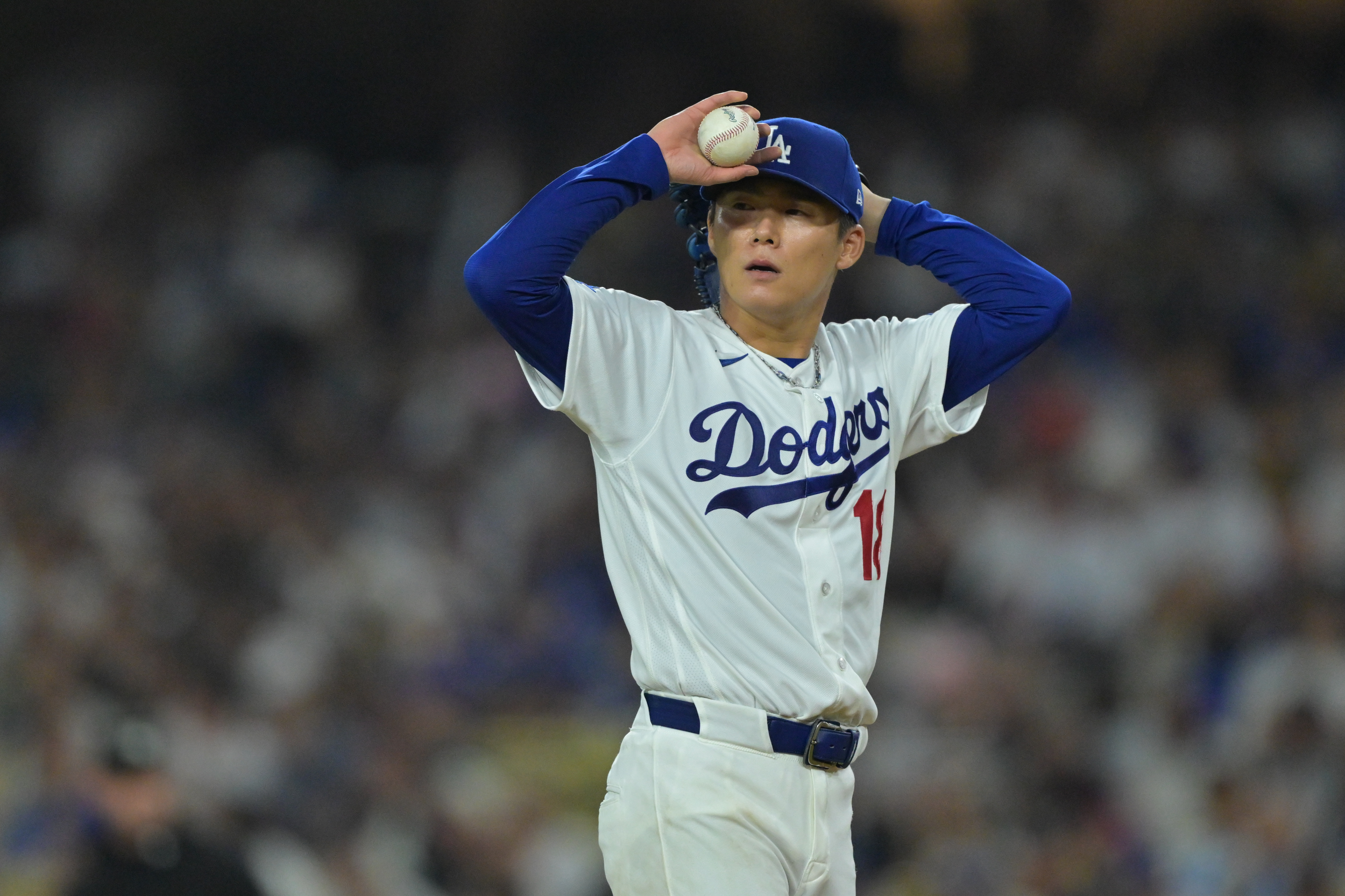
Dodgers vs Braves Game 3 arrives tied 1-1 with Yoshinobu Yamamoto facing Chris Sale and almost no room for either offense to waste an opportunity.
Los Angeles and Atlanta have spent two games demonstrating how quickly a Division Series can become a contest of margins.
The Dodgers won the opener 5-3. Atlanta answered 3-2 in Game 2, using a bullpen plan to hold Los Angeles to six hits while the Dodgers went 0-for-8 with runners in scoring position. Now the series moves to Truist Park with the matchup it has been building toward: Yoshinobu Yamamoto against Chris Sale.
The pregame numbers are almost refusing to separate the teams. Atlanta and Los Angeles sit close to even, while the expected scoring environment has been driven all the way down to six runs. That is less interesting as a wagering signal than as a description of what the game is supposed to demand. Nobody is expecting many second chances.
When the total expectation becomes that compressed, the game stops being about which lineup can produce the most offense over nine innings. It becomes about which club can convert the few opportunities Yamamoto and Sale are likely to allow.
Los Angeles Has Already Wasted Too Much Offense
The Dodgers have not been shut down in the conventional sense. They have reached base, generated power and created situations where one hit could have changed the first two games.
The problem has been finishing those innings.
Los Angeles went 0-for-8 with runners in scoring position in Game 2, and its inability to turn traffic into runs allowed Atlanta’s improvised pitching plan to survive. Ray Kerr and Didier Fuentes combined to cover more than six innings while allowing only one run, giving the Braves the kind of result usually expected from a much more conventional starting-pitching setup.
Freddie Freeman and Max Muncy both homered, but solo power could not compensate for the opportunities Los Angeles left unfinished. That becomes much more dangerous against Sale because the Dodgers should expect fewer of those opportunities in the first place.
Game 3 therefore begins with a different offensive burden. Los Angeles does not necessarily need to score four or five runs. It may need to score twice in the correct inning.
Yamamoto Gives the Dodgers Their Cleanest Reset
If Los Angeles wanted one pitcher to simplify the series again, Yamamoto is probably that pitcher.
He finished the regular season with a 2.53 ERA, 182 strikeouts and a 0.87 WHIP across 185 innings. More importantly for Tuesday, his work away from Dodger Stadium was even stronger. Yamamoto carried a 1.77 road ERA across 12 starts, repeatedly giving Los Angeles exactly what a visiting team needs: a way to keep the game small until the offense finds something.
Atlanta has already seen what that looks like. Yamamoto faced Sale at Truist Park on August 27 and allowed only one run over 6 1/3 innings. On most nights, that would be enough to put the Dodgers in position to win.
It was not enough that night because Sale threw a complete-game shutout.
That previous meeting is not a prophecy. It is useful because it demonstrates how narrow this matchup can become when both pitchers are operating near their best. Yamamoto can pitch extremely well and still find himself behind if Los Angeles cannot turn baserunners into runs.
Atlanta Waited for Full-Strength Chris Sale
The Braves had an opportunity to use Sale earlier in the series and deliberately chose not to.
He had already worked twice during the Wild Card round, including the final inning of Atlanta’s clinching win over Philadelphia. Rather than ask him to pitch for the third time in six days, the Braves used Kerr to open Game 2 and preserved Sale for Tuesday.
That decision looks considerably better after Atlanta won anyway.
The Braves now enter Game 3 with the series even and Sale on normal enough rest to resemble the pitcher they actually want rather than a compromised version they were forced to deploy early. He finished the regular season 14-9 with a 2.16 ERA and 200 strikeouts, and Atlanta has spent much of the year managing his workload specifically so that his best innings would still exist when games like this arrived.
His previous work against Los Angeles only sharpens the matchup. Sale dominated the Dodgers during the regular season, including that August complete-game shutout opposite Yamamoto.
The Braves spent Game 2 protecting their ace. Game 3 is where that choice is supposed to pay off.
Atlanta’s Home Edge Is Really About What It Allows Sale to Do
Atlanta went 54-30 at Truist Park during the regular season, one of the strongest home records in baseball. Los Angeles was also excellent away from home at 49-32, so the location alone does not provide a convincing explanation for why one team should control Game 3.
The more useful advantage is structural.
Sale gets to begin the game in his own park, with Atlanta’s preferred defensive alignment behind him and a bullpen that did significant work in Game 2 but did not require its most important arms to cover the entire night. If he can provide six or seven innings, Walt Weiss can shorten the remaining game considerably.
That is especially important because Atlanta may not need much offense against Yamamoto. A home team that expects a low-scoring game does not need to construct a five-run plan. It needs to create one lead and make the opponent spend the rest of the night trying to erase it.
That is effectively what Sale did to Los Angeles in August. One run was enough.
Six Runs Is a Warning, Not a Promise
A projected total of six immediately tells you how seriously both starters are being treated. It does not guarantee a 2-1 game.
One mistake can still break the entire script. A walk before a home run, one defensive error or one reliever entering with two runners already aboard can move the game outside that narrow range quickly. The smaller the expected total becomes, the more sensitive the game becomes to a single event.
That is why the first five innings may provide the cleanest version of the matchup. The internal postseason data continues to show strong run suppression in early Division Series innings, and Yamamoto against Sale is about as direct a test of that environment as the schedule can provide.
The full nine innings contain more uncertainty because bullpens, pinch hitters and one defensive mistake can change everything after the starters leave. Through five, the argument is simpler: two elite pitchers are being asked to make every baserunner expensive.
Shohei Ohtani Is Being Asked to Adjust Too
Los Angeles is not treating its offensive problems as something that will correct themselves automatically.
Dave Roberts has moved Shohei Ohtani down to fifth in the Game 3 lineup, his lowest position in years. The move reflects both Ohtani’s difficult start to the series and the specific challenge Sale presents from the left side.
That is not a demotion in the traditional sense so much as an attempt to change when Atlanta has to deal with him. The Dodgers need baserunners reaching Sale before their most dangerous hitters arrive rather than asking Ohtani to create the inning himself from the leadoff spot.
Miguel Rojas and Kiké Hernández also enter the lineup against the left-hander, further emphasizing that Los Angeles is not approaching Game 3 as a simple continuation of the first two.
The Dodgers know what the first two games have exposed. The question is whether rearranging the lineup can create better opportunities before Sale closes them.
The Game May Be Decided Before Either Bullpen Matters
The original matchup can be reduced to a very simple problem.
Atlanta has been stronger at home and has Sale. Los Angeles has the better overall regular-season record and has Yamamoto. The teams are tied 1-1. The market barely separates them because there is not much useful evidence suggesting that either lineup should control the game.
That leaves the starters carrying an unusual amount of the argument.
If Yamamoto reaches the middle innings without allowing Atlanta to play from ahead, the Dodgers can force Sale to keep matching zeros while their lineup gets additional looks. If Sale gives the Braves a lead, the game can become increasingly uncomfortable for a Los Angeles offense that has already struggled to convert runners into runs.
The first run therefore matters without becoming mystical. It changes who gets to remain patient.
In a game built around Yamamoto and Sale, patience may be the most valuable thing either team can possess.
Atlanta Has the Narrower Path to Execute
There is very little between these teams, which is exactly why Atlanta’s path looks slightly cleaner.
The Braves do not need to prove they can overwhelm Los Angeles. Game 2 already showed they can win without doing that. They need Sale to keep the Dodgers’ opportunities limited, the defense to avoid giving Los Angeles extra outs and the lineup to find one sequence against Yamamoto that produces something tangible.
Los Angeles has a similar path, but its first two games have created an additional requirement. The Dodgers have to stop wasting the opportunities they do receive.
That is the difference entering Game 3. Atlanta has already demonstrated it can win this series when the game becomes compressed. Los Angeles still has to show it can turn that kind of game in its direction.
Prediction: Atlanta Braves 3, Los Angeles Dodgers 2.
A 3-2 finish would not require either starter to fail. It would require one of them to be marginally less perfect, one lineup to convert one additional opportunity and one bullpen to preserve what remains. With Yamamoto and Sale on the mound, that may be all Game 3 allows.
Sources
MLB, October 6, 2026 — Dodgers-Braves Game 3 probable pitchers and Yamamoto preview | MLB, October 5, 2026 — Atlanta pitching plan and Chris Sale Game 3 assignment | Reuters, October 5, 2026 — Braves 3, Dodgers 2 in Game 2 | Sparked Sports MLB postseason Edge Sheet, October 6, 2026