
White Sox vs Guardians Game 2 begins with Chicago ahead 1-0 and Cleveland already confronting the possibility that its biggest advantages may not matter.
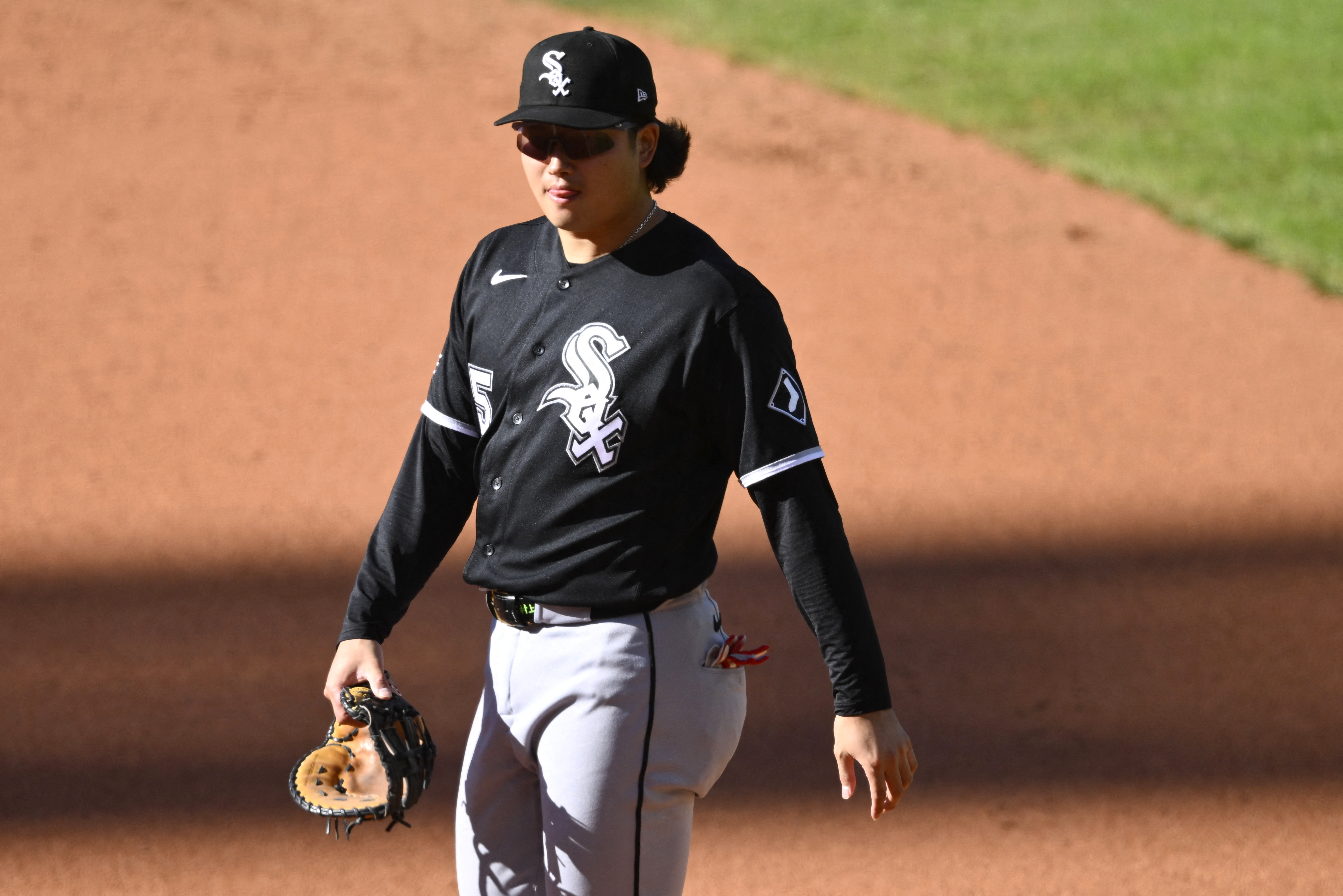
The White Sox did not arrive in Cleveland and steal a chaotic opener. They won 3-0, held the Guardians to three hits and never gave Cleveland the inning it needed to change the game. Munetaka Murakami supplied the biggest swing with a two-run homer, but Chicago’s pitching staff made those runs feel much larger than they were.
That puts Monday’s second game in an entirely different position. Cleveland still has Gavin Williams, home field and the deeper conventional starting-pitching setup. Chicago has something simpler: the first game, a 1-0 series lead and another chance to force Cleveland into a postseason game where every empty inning becomes heavier.
The market still treats Cleveland like the team with the clearer advantage, with the Guardians around -150 and Chicago generally in the +130 range before first pitch. The expected scoring environment is compressed again at roughly 6.5 runs. Those numbers are useful less as instructions than as a description of the matchup: Cleveland is still being trusted to restore order, but nobody expects much room for error.
Game 1 Made Cleveland’s Problem Obvious
Cleveland had opportunities Saturday. The Guardians drew five walks, reached bases-loaded situations in consecutive innings and still finished without a run. Chicago did not dominate every plate appearance. It repeatedly survived the ones that could have changed the game.
That distinction matters in a short series because Cleveland cannot simply assume the next opportunity will produce the hit that the first one did not. The Guardians finished only one game ahead of Chicago in the AL Central, and the regular-season matchup was nearly as close as the standings. Chicago won seven of 13 meetings, with the teams separated by one total run across those games.
Game 1 extended the same pattern. There was no evidence of a large competitive gap suddenly appearing because the calendar changed to October. Chicago found enough offense, then made three runs stand up.
Cleveland’s challenge in Game 2 is therefore not to prove that Saturday was misleading. It is to stop another close game from reaching the late innings with Chicago still holding the leverage.
Anthony Kay Is Opening, but Sean Burke Is the Real Assignment
The White Sox pitching plan looks unusual only if Anthony Kay is treated like a conventional starter. He is not being used that way Monday. Kay will open the game before Chicago turns to Sean Burke for the bulk innings.
That makes Burke one of the central figures in Game 2. He struck out 185 batters in 172 1/3 innings during the regular season and was especially difficult for Cleveland, posting a 1.04 ERA with 21 strikeouts and only three walks across 17 1/3 innings against the Guardians.
The structure gives Chicago a way to disrupt Cleveland’s preparation before its primary pitcher ever enters. Kay can handle the top of the order once, potentially force lineup decisions and allow Burke to begin his workload somewhere other than Steven Kwan at the top of the first inning. From there, Chicago can ask Burke for length without necessarily asking him to navigate a lineup three conventional times from the same starting point.
It is not magic. Cleveland knows what is coming. But postseason baseball is increasingly about controlling when difficult matchups occur rather than pretending every game must follow a starter-to-setup-man-to-closer script.
Gavin Williams Is Cleveland’s Best Chance to Reset the Series
If Cleveland is going to make Game 1 feel temporary, Williams is the obvious pitcher to do it.
He finished the regular season with a 3.76 ERA across a career-high 184 1/3 innings and struck out 248 batters, the second-highest total in the majors. He reached double-digit strikeouts 11 times and completed at least seven innings in 10 starts. Cleveland does not need to manufacture a complicated Game 2 pitching solution. It has a starter capable of controlling the game himself.
There is one obvious pressure point. More than half of the earned runs Williams allowed during the season came on home runs, and Chicago finished fifth in the majors in that category. Murakami already demonstrated Saturday how quickly one swing can change a postseason game that otherwise contains almost no offense.
That makes Williams’ margin less comfortable than his strikeout totals might suggest. He can dominate the lineup for stretches and still lose the game on two poorly located pitches. In a matchup where six or seven total runs may be enough to decide everything, power does not need to arrive repeatedly. It needs to arrive once with somebody on base.
Chicago Keeps Making the Gap Look Smaller Than It Is Supposed to Be
The season-long results are useful here because Chicago has spent months performing better than the way it has routinely been valued.
Cleveland won the division and enters Game 2 at home with the more conventional pitching advantage. Yet those advantages repeatedly failed to create the kind of separation the surrounding expectations implied. The Guardians were only one game better in the standings. Chicago won the season series. The head-to-head scoring margin was essentially nonexistent.
That pattern has also appeared in how the teams have been priced. Chicago repeatedly produced better results than expected, particularly away from home, while Cleveland’s home-field premium was much less reliable than its reputation suggested. Monday’s numbers continue the same argument by treating Cleveland as meaningfully superior even after Chicago took Game 1.
That does not make the market wrong automatically. Williams is one of the best strikeout pitchers in baseball, while Chicago is using an opener and bulk arrangement rather than handing the game to a traditional ace. Cleveland has legitimate reasons to be favored.
The interesting part is the size of the assumption. Everything these teams have done against each other says the gap is narrow. Game 2 begins with Cleveland being asked to demonstrate that it is wider.
The First Run Could Change the Entire Afternoon
A game expected to produce only six or seven runs makes the opening innings unusually important, but not because the first inning must turn into a scoring contest. The opposite is true. When runs are expected to be scarce, the first one changes how both managers can use the rest of the game.
If Chicago scores first, Cleveland immediately begins carrying Saturday’s shutout into Monday. Williams can be pitching well and still find himself working without margin. The Guardians’ hitters, already coming off a three-hit opener, would have to create offense against a pitching plan specifically designed to keep changing the look in front of them.
If Cleveland scores first, the pressure moves back toward Chicago. Williams can attack more freely, the Guardians can shorten the game with their bullpen and the White Sox lose some of the flexibility that comes with forcing Cleveland to chase them.
That is why the opening innings matter even in a game that may ultimately be decided much later. With so little expected separation, one early run can alter who gets to dictate the rest of the afternoon.
Chicago Has a Chance to Turn Pressure Into Control
The Guardians are not facing elimination Monday, but the difference between 1-1 and 0-2 is enormous when the next two games move to Chicago. Cleveland needs Williams to turn its rotation advantage into an actual result before the geography of the series changes.
Chicago does not need another shutout to make that difficult. It needs Burke and the bullpen structure to keep the game close enough for the offense to produce one or two decisive swings. That is essentially what these teams have been doing to each other all season.
The Guardians have the cleaner traditional setup. The White Sox have the series lead, the head-to-head evidence and a pitching plan that has already shown it can survive postseason pressure. Cleveland may still be the more obvious team on paper. Chicago keeps making the paper look less relevant.
Prediction: Chicago White Sox 4, Cleveland Guardians 3.
A one-run Chicago win would not require another Game 1 shutout or a collapse from Williams. It would only require this matchup to remain what it has been for most of 2026: two almost evenly matched teams reaching the late innings before a very small advantage decides the game.
Sources
Supplied Winners & Whiners preview and tracked market data | MLB, October 5, 2026, White Sox-Guardians ALDS Game 2 FAQ and confirmed pitching plan | MLB, October 3, 2026, ALDS series and regular-season matchup context | Reuters, October 3, 2026, Game 1 result and pitching recap