
The first 15 games have reshaped the 2026 MLB playoffs. We update every remaining team’s World Series outlook through the data.
October has given us 15 games, four eliminated teams and enough evidence to begin revising the assumptions that came into the postseason.
Milwaukee entered with baseball’s best record and one of its strongest market profiles. The Brewers are already one victory from the NLCS. Tampa Bay spent the season beating the prices attached to it and opened its postseason by holding the Yankees to one hit. Chicago carried a profitable regular-season moneyline profile into October and has won its first three playoff games.
San Diego entered the Division Series looking like one of the strongest Wild Card survivors and immediately lost two one-run games in Milwaukee. The Yankees scored 18 runs against Boston without Aaron Judge, then managed one hit against Tampa Bay. Atlanta needed Chris Sale to finish the Wild Card round, survived the first two games against Los Angeles without a Sale start, and now brings him home with the series tied.
The handicap has moved because the evidence has moved.
MLB’s postseason changed substantially after the pandemic, culminating in the current 12-team format introduced in 2022. Since then, 186 playoff games have been played through the first 15 games of the 2026 postseason, giving us a useful picture of how October baseball has behaved under the structure teams are playing in now.
Division Series favorites and underdogs have developed distinct results over that span, while first-five and early-inning scoring patterns have become especially revealing as rotations shorten and bullpen usage becomes more aggressive. Those historical tendencies can now be measured alongside what the remaining teams showed during the regular season and what has actually happened through the opening rounds of this postseason.
Put those layers together and the playoff field looks different from the one that started October.
The Wild Card Round Set the Baseline
Chicago produced the first major expectation check.
The sixth-seeded White Sox went into Houston and won 6-3 and 7-3. They scored early in both games, used their pitching staff aggressively and completed the franchise’s first postseason series victory since 2005.
The result fit a season-long pattern. Chicago finished the regular season with a +7.41% moneyline return. The White Sox had already spent six months winning often enough at favorable prices to indicate the market was lagging their actual performance.
New York arrived through a much louder route. The Yankees swept Boston while Judge remained sidelined by a calf injury and scored 18 runs across two games. Their 9-2 clincher made the lineup look deep enough to absorb the absence of its best hitter, at least against one opponent.
San Diego’s Wild Card round was even more convincing. The Padres beat the Cubs 8-0 and 4-1, allowed one run in 18 innings and received 5 2/3 scoreless innings from the bullpen in the clincher. Their regular-season numbers supported the performance: +7.26% moneyline ROI, +8.84% on the run line and +5.06% on the first-five run line.
Atlanta had to work harder. The Braves needed three games to eliminate Philadelphia and used Sale out of the bullpen to finish the clincher. That decision solved the immediate problem and created another one. Sale could not start at the beginning of the Dodgers series.
Those four paths created four different expectations entering the Division Series. Chicago carried an undervalued profile. New York carried offensive momentum without Judge. San Diego looked deep and in form. Atlanta arrived with its rotation temporarily compromised.
The Regular Season Had Already Left Clues
Tampa Bay finished the regular season with the strongest moneyline return among the remaining playoff teams at +10.56%. Milwaukee followed at +9.89%. Chicago returned +7.41%, San Diego +7.26% and Atlanta +3.90%.
The run-line numbers added more support. New York finished at +10.04%, San Diego at +8.84%, Tampa Bay at +8.16%, Milwaukee at +7.83% and Atlanta at +5.90%.
These returns measure how teams performed relative to the prices attached to them. A team can win 100 games and still be expensive if bettors have to lay enormous prices all season. Another team can win fewer games and produce better returns because the market repeatedly gives it favorable numbers.
Tampa and Milwaukee combined elite records with strong market performance. Chicago kept winning at prices that left room for profit. San Diego produced strong results in several markets. Atlanta entered October with a positive profile despite receiving far less attention than Los Angeles.
Cleveland carried a weakness in the opposite direction. The Guardians’ home moneyline performance had been one of their least attractive splits, producing a negative double-digit ROI despite much better results away from home.
Those were the expectations entering the Division Series. The first six games have begun sorting them.
Favorites Have Owned October So Far
Since the current playoff format began in 2022, Division Series underdogs have generally outperformed market expectations.
Division Series underdog moneylines entered this postseason at 34-36 for +8.60 units and a +12.29% ROI. The first-five version was much stronger: 33-25-10 for +17.10 units and +25.15% ROI.
The opening 15 games of the 2026 postseason have gone heavily toward favorites instead. Favorites have returned +27.3% on the moneyline. Underdogs are 4-11 with a -34.6% ROI. Home moneylines have returned +14.3%.
Fifteen games do not erase a 171-game historical baseline. They do tell us what this particular tournament has produced so far.
Monday’s American League games give that split an immediate test. Chicago is +136 in Cleveland. Tampa Bay is +109 at home against New York. Both fit the historical Division Series underdog profile. Both also run directly into a 2026 postseason where favorites have controlled the board.
Those prices are useful because they force the expectation question into the open. Chicago and Tampa have already produced strong season-long results relative to their markets. If they continue winning as underdogs in October, the favorite surge starts looking less durable very quickly.
The First Five Innings Keep Getting Tighter
The cleaner postseason trend has developed in the first five innings.
Division Series F5 Under 3.5 entered October at 24-19 for +5.89 units and +13.70% ROI. F5 Under 4.5 was 28-15 for +5.44 units and +12.65%.
The 2026 playoffs have strengthened that pattern. Through 15 games, F5 Under 3 has returned +24.3% and F5 Under 3.5 has returned +21.5%. Five of the first six Division Series games produced three or fewer runs through five innings.
The Wild Card round produced six YRFIs in nine games. The first six Division Series games produced two in six. Scoring has become more expensive as the tournament has moved deeper.
The pitching schedule gives that trend another chance to continue. Gavin Williams gets Chicago’s Anthony Kay and Sean Burke plan. Cam Schlittler faces Freddy Peralta. Tuesday brings Chris Sale against Yoshinobu Yamamoto. San Diego sends Nick Pivetta against Dustin May.
The playoff field has removed many of the weak innings that exist during the regular season. Starters are better. Managers have more days off to work with. Relievers enter earlier. A lineup may get two looks at a starter before a high-leverage arm replaces him.
That environment has become the most consistent data thread of the postseason.
Chicago Is Still Getting Underdog Prices
The White Sox are 3-0 in October after winning Game 1 in Cleveland 3-0. Munetaka Murakami hit a two-run home run, Colson Montgomery added an RBI double and five Chicago pitchers combined to hold the Guardians to three hits.
That win followed the same operating model Chicago used in Houston. The White Sox have been willing to divide games among several pitchers instead of forcing one conventional starter to carry six or seven innings.
Game 2 pushes that approach further. Cleveland has the recognizable starting-pitching advantage with Williams. Chicago plans to open with Kay before moving to Burke in a bulk role. Burke struck out eight over four innings during the Wild Card round.
The refreshed market still lists Chicago at +136 and Cleveland at -148.
Chicago’s regular-season moneyline record finished 87-78 for +13.60 units and a +7.41% ROI. Cleveland’s home moneyline finished 41-41 and lost 13.80 units in the current all-games tracker. The historical Division Series underdog moneyline is positive. The historical underdog F5 performance is even stronger.
The case for Chicago is therefore larger than a three-game playoff streak. The market spent the regular season pricing the White Sox below the results they kept producing. October has extended the same pattern through Houston and the first game in Cleveland.
A Cleveland win would send the series to Chicago tied 1-1. A White Sox win would create a 2-0 lead with the next two games at home.
Chicago entered October as a sixth seed. Its current path looks much stronger than the seed implied.
Tampa Bay Has Been Doing This for Six Months
Tampa Bay’s 1-0 win over New York in Game 1 looked exactly like the kind of result its season-long profile had been pointing toward.
Drew Rasmussen carried a no-hitter into the eighth inning, struck out 10 and allowed one hit over eight scoreless innings. Jonathan Aranda’s solo home run supplied the entire offense.
The Rays won 98 games and finished with a +10.56% moneyline return, +8.16% on the run line and +8.84% on the first-five run line. Their home moneyline performance was especially strong.
New York brought a very different October story into the series. The Yankees had just scored 18 runs against Boston without Judge. Tampa immediately held the same lineup to one hit.
Game 2 matches Schlittler against Peralta. Schlittler finished the regular season with a 1.95 ERA. Peralta enters after an excellent finish to his first season in Tampa. The Yankees also carried a positive F5 Under profile through the regular season.
The current market makes New York a small -118 favorite and Tampa Bay a +109 home underdog.
That price puts the league’s top American League seed, a 98-win team and the strongest moneyline performer among the remaining field at plus money in its own stadium.
A Tampa win creates a 2-0 lead before the series moves to New York. A Yankees win produces a best-of-three with two of the next three at Yankee Stadium.
Of Monday’s games, this one creates the largest immediate swing in the American League handicap.
Milwaukee Has the Best Position in Baseball
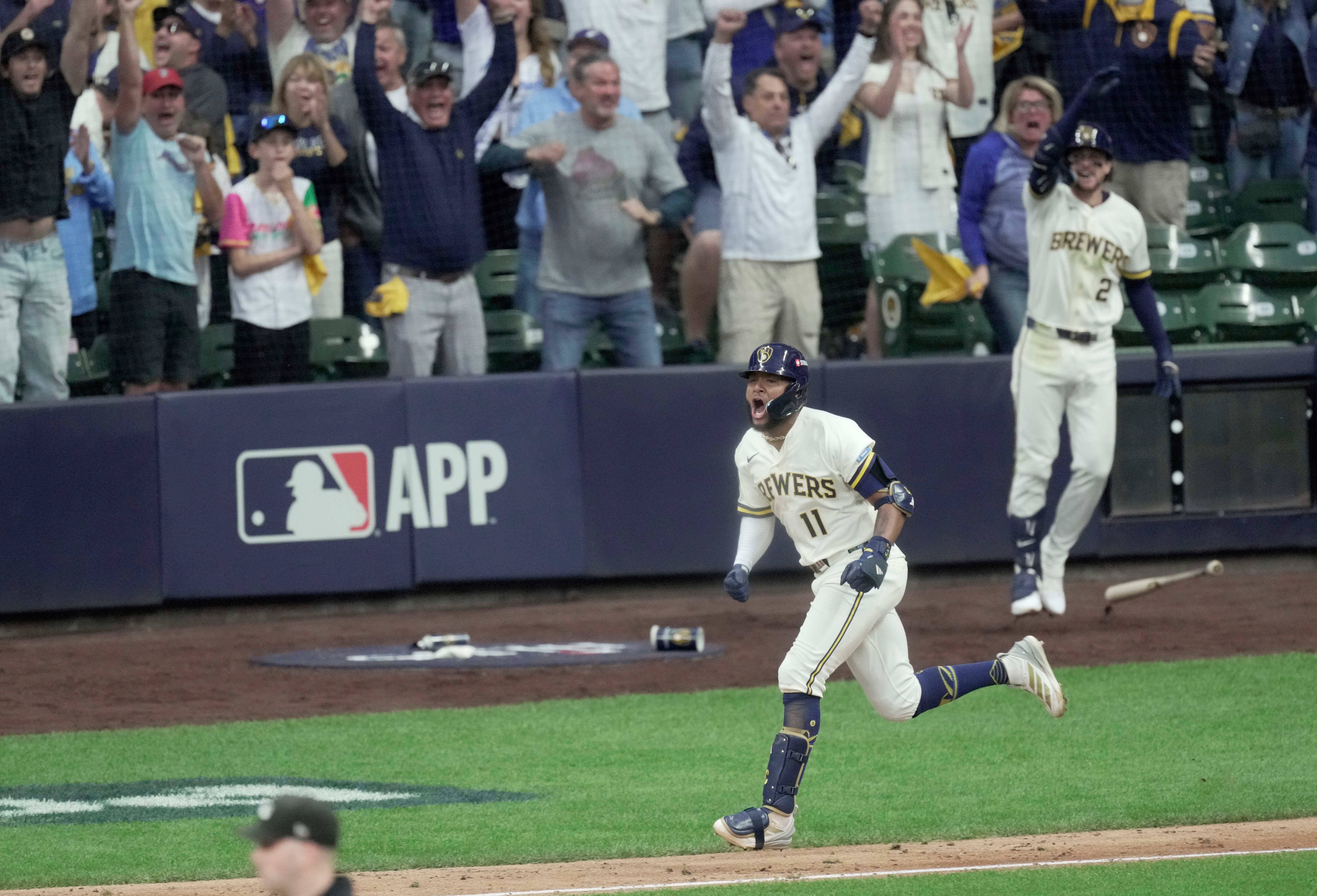
The Brewers started October with a franchise-record 103 wins, home-field advantage and a +9.89% regular-season moneyline return. Their run-line ROI finished at +7.83%.
They have converted that position into a 2-0 NLDS lead.
Game 1 ended 3-2. Game 2 was another one-run game, with San Diego taking a 3-2 lead into the ninth before Jackson Chourio’s two-out, two-run single gave Milwaukee a 4-3 victory.
The Padres have hardly been overwhelmed. Both games were decided by one run. Their regular-season profile remains excellent, and Pivetta gives them a strong Game 3 starter.
The series position now dominates the handicap. San Diego needs three consecutive victories. Milwaukee needs one.
Tuesday’s refreshed market has San Diego around -130 at home with Milwaukee +118. The underdog case receives support from Milwaukee’s season-long profitability and the historical Division Series underdog numbers. The full-game Under at 7 also aligns with Milwaukee’s positive regular-season Under return and the postseason’s broader run-suppression environment.
The larger World Series advantage comes from the calendar. Milwaukee can end this series Tuesday or Wednesday, rest its bullpen and arrange its rotation while Atlanta and Los Angeles remain tied.
No remaining team has combined regular-season strength, market performance and series leverage as successfully as Milwaukee.
Atlanta Bought Itself a New Series
Los Angeles and Atlanta are tied 1-1. Atlanta returns home with Sale available for Game 3.
The path to that position was difficult. Sale had to pitch out of the bullpen to finish the Wild Card round, which prevented Atlanta from starting him in Los Angeles. The Dodgers won Game 1 5-3.
Atlanta answered in Game 2 with Ray Kerr and Didier Fuentes. They combined for 6 1/3 innings of one-run baseball. Michael Harris II went 3-for-5, and the Braves won 3-2 while Los Angeles went 0-for-8 with runners in scoring position.
That result brought Sale back into the series under far better conditions. He now gets Yamamoto in Atlanta. The two faced each other on August 27, when Sale threw a complete-game shutout and Atlanta won 1-0 despite Yamamoto allowing one run in 6 1/3 innings.
The refreshed Game 3 market is essentially a pick’em, with Atlanta around -109 and Los Angeles -101. The full-game total has already been compressed to 6.
Atlanta’s regular-season moneyline return was +3.90%, and its run-line return finished at +5.90%. The Braves also went 5-1 against Los Angeles during the regular season.
The Dodgers still carry a terrifying rotation and the deepest offensive ceiling in the field. Atlanta has forced that roster into a best-of-three and gets its best pitcher for the first game at home.
The series is balanced enough that Game 3 can move either team several places in the overall handicap.
San Diego Has Lost the Most Ground
The Padres entered the Division Series with one of the strongest combinations of current form and regular-season market performance.
They swept the Cubs while allowing one run. Their bullpen dominated. Their moneyline, run-line and first-five profiles were all positive.
Two close losses have reduced all of that to an elimination game.
San Diego still has enough pitching to make the series uncomfortable. Pivetta gives the Padres a favorable Game 3 matchup against May, and both games in Milwaukee were competitive through the final inning.
The path requires three consecutive wins. Every previous strength now has to survive without a single bad game.
The Padres are the clearest example of what short postseason series can do to a strong underlying profile. Their data has not suddenly become useless. Their available paths have simply collapsed from many to one.
The Yankees Have One Immediate Problem
New York’s Wild Card sweep raised its ceiling. Tampa’s pitching immediately lowered it again.
The Yankees can still win this series. Schlittler gives them a legitimate Game 2 advantage on the mound, and a victory sends the matchup to the Bronx tied 1-1.
Judge remains unavailable during the ALDS. The offense therefore has to prove that the Boston series represented something sustainable rather than one favorable matchup against a weaker pitching staff.
New York’s regular-season run-line return was excellent at +10.04%, and its road moneyline performance remained positive. Tampa still owns the stronger full-season expectation profile and the current series lead.
Game 2 carries enormous weight because the Yankees’ path looks completely different at 1-1 than it does at 0-2.
Cleveland Has to Change the Series Monday
The Guardians have played one postseason game and lost it 3-0. Their ranking reflects the matchup and the immediate series pressure more than one bad night.
Williams gives Cleveland a strong Game 2 starter. A win sends the series to Chicago tied 1-1 and restores a large part of the advantage the Guardians earned with a bye.
The concern comes from the larger pricing record. Cleveland’s home moneyline was one of the weaker splits among the remaining teams during the regular season, while Chicago produced a positive overall return and has continued winning on the road.
Cleveland needs to score enough to make the starter advantage relevant. Three hits in Game 1 did not create much room for anything else.
The Updated World Series Handicap
1. Milwaukee Brewers
Best regular-season record, strong moneyline and run-line returns, a 2-0 series lead and the possibility of gaining several rest days before the NLCS. Milwaukee currently has the best combination of team quality and bracket position.
2. Los Angeles Dodgers
The roster and rotation still give Los Angeles the highest raw ceiling in the field. Atlanta’s Game 2 victory has made the route significantly more difficult, and Game 3 places the Dodgers against Sale in Atlanta.
3. Tampa Bay Rays
The AL’s No. 1 seed also owns the strongest regular-season moneyline return among the remaining teams. Tampa leads New York 1-0 and can take a 2-0 advantage into Yankee Stadium with another win Monday.
4. Atlanta Braves
Atlanta survived the part of the series where its rotation was compromised and returns home tied 1-1 with Sale ready. Another win could move the Braves above Los Angeles in the handicap.
5. Chicago White Sox
The most interesting remaining underdog has won three straight road playoff games after producing a +7.41% regular-season moneyline ROI. The market still offers +136 in Game 2.
6. New York Yankees
The Wild Card offense remains relevant, and Schlittler provides a strong route back into the series. Judge’s absence and Tampa’s pitching create much less margin than Boston did.
7. Cleveland Guardians
Cleveland can repair most of the damage with one Williams start Monday. A loss creates a 2-0 deficit before the series goes to Chicago.
8. San Diego Padres
The Padres remain far better than an eighth-place talent ranking. Their eighth-place playoff handicap comes from needing three consecutive victories against the team with baseball’s best regular-season record.
What the Next Four Games Can Change
Chicago and Tampa can both create 2-0 American League leads Monday. If they do, the two strongest regular-season underdog/value profiles left in the AL will each need one more victory to reach the Championship Series.
Cleveland and New York can erase most of that leverage with one win each. Both series would become best-of-three matchups.
Tuesday carries different stakes in the National League. Milwaukee can become the first team into the LCS and begin converting its series lead into a rest advantage. San Diego can extend a season that has reached the point where every game is an elimination game.
Atlanta and Los Angeles play the closest thing to a true swing game. The series is tied, Sale and Yamamoto create the strongest starting-pitching matchup of the round, and the winner takes control of a best-of-three.
The first-five scoring trend will run through all four matchups. Historical Division Series F5 Unders were already profitable before this postseason. The first six games of this round have made early scoring even scarcer.
That is the strongest league-wide expectation worth carrying forward right now.
Where the Playoffs Stand Now
Milwaukee entered October with elite results and has turned them into the best bracket position in baseball. Tampa entered with the strongest moneyline return among the surviving field and has opened by shutting down New York. Chicago’s profitable regular season increasingly looks like an accurate signal of a team the market priced too cheaply.
Atlanta has improved its path substantially by splitting in Los Angeles without starting Sale in Game 2. The Dodgers remain dangerous enough to win the entire tournament, although the Braves have removed any easy route through this round.
San Diego has seen the largest deterioration in position. The Padres played two competitive games and lost both. Their statistical case remains recognizable. Their postseason case now requires perfection.
New York and Cleveland can still change the American League picture Monday. Both have starting pitchers capable of doing it. Both are facing opponents whose season-long market profiles provide more evidence than their seeding alone.
The current hierarchy is Milwaukee, Los Angeles, Tampa Bay, Atlanta, Chicago, New York, Cleveland and San Diego.
Four games from now, there is a good chance it looks different again.