
The White Sox lost the AL Central by one game. Five days later, they arrive in Cleveland with a playoff sweep behind them.
The Cleveland Guardians spent the final weeks of September taking the AL Central away from Chicago. The White Sox responded by going to Houston and eliminating the Astros in two games.
That brings them back together Saturday afternoon with very little distance between them. Cleveland finished 85-77. Chicago finished 84-78. The White Sox won the season series 7-6 and outscored opponents by 56 runs during the regular season, compared with Cleveland’s +11. The Guardians earned the division title, the first-round bye and home field. Chicago arrives having already won two postseason games on the road.
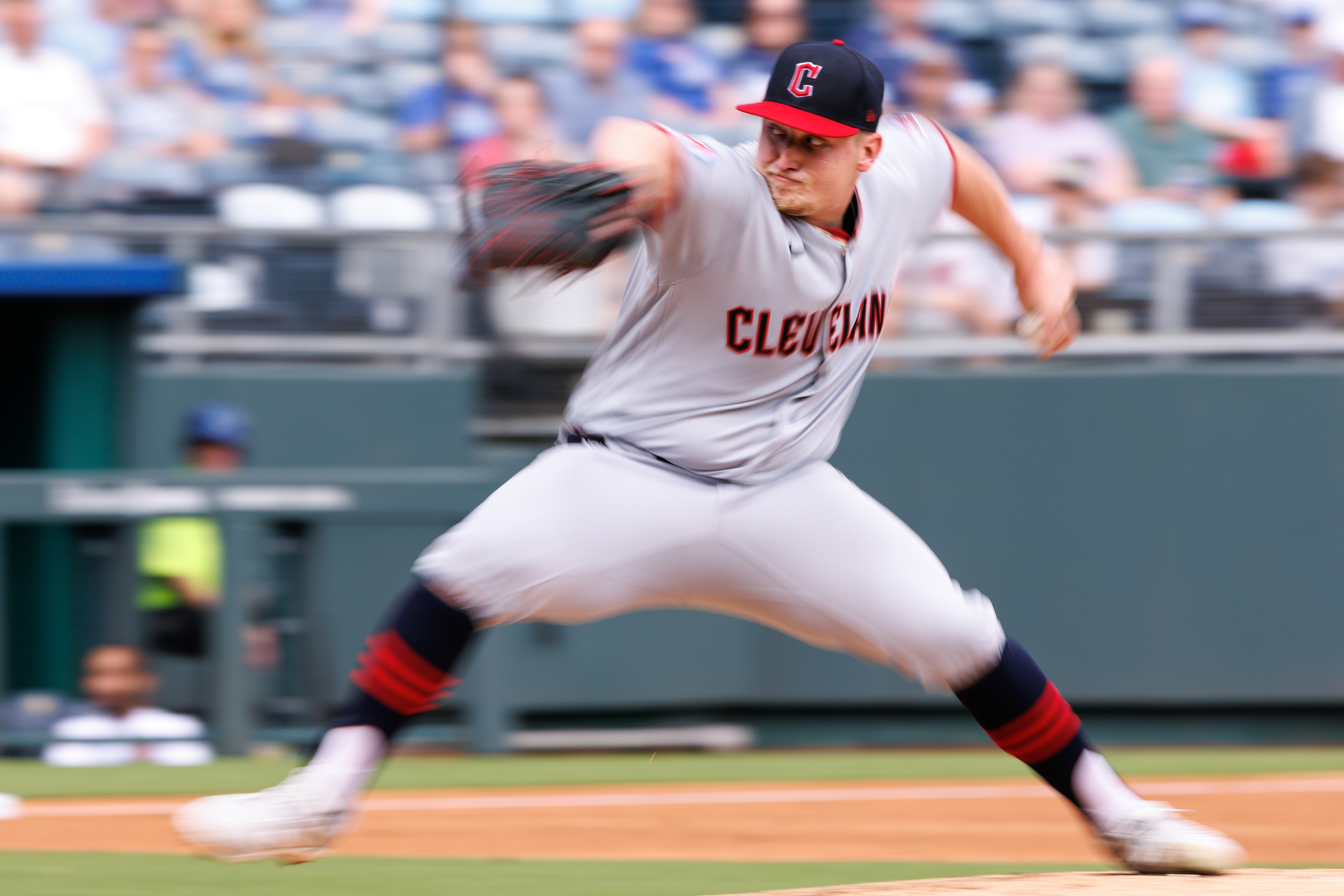
The expected scoring environment around seven runs fits a Game 1 built around two left-handers and two teams that spent six months learning almost everything there was to know about each other. Parker Messick gets the ball for Cleveland. Chicago returns to Hagen Smith, the rookie who started its postseason by giving Houston three scoreless innings.
Chicago Made Houston Look Uncomfortable
The White Sox did not sneak through the Wild Card round. They scored six runs in Game 1, seven more in Game 2 and never trailed in the series.
Chicago put pressure on Houston immediately Tuesday. AJ Blubaugh walked Sam Antonacci, Miguel Vargas and Andrew Benintendi in the first inning before Munetaka Murakami drove home the opening run. The White Sox added two more in the second, and Colson Montgomery made it 4-0 with a 432-foot homer in the fourth. Hagen Smith supplied three scoreless innings before Will Venable began moving through his bullpen. Chicago won 6-3.
The clincher started even faster. Chicago scored four times in the first against Hunter Brown, who recorded only two outs. Kyle Teel, Benintendi and Tristan Peters delivered RBI singles before Houston gradually cut the lead to 4-3. Chase Meidroth ended that comeback attempt in the sixth with a three-run homer off Bryan Abreu. The 7-3 victory gave the White Sox their first postseason series win since the 2005 World Series.
Thirteen runs in two games came from different places. Colson Montgomery broke out of a brutal late-season slump. Meidroth delivered the biggest swing of the clincher. Antonacci reached base. Murakami created runs. Teel and Peters contributed. Chicago reached the Division Series without needing one hitter to carry the entire offense.
Hagen Smith Opens the Game Again
Smith’s Game 1 assignment says plenty about how Chicago plans to use its pitching staff. He began the year as a Triple-A starter, missed time with a shoulder impingement, shifted to the bullpen in July and reached the majors in August. He finished his first major-league regular season with a 1.29 ERA and 41 strikeouts in 28 innings.
He also already knows Cleveland. Smith faced the Guardians three times during the regular season and allowed two earned runs across 5 2/3 innings. Current Cleveland hitters have managed a .105 average against him in the small sample tracked by Statcast.
Chicago is unlikely to ask him for seven innings. Smith threw three in Houston and handed the game to Jordan Hicks. Venable has spent the season treating labels like starter and reliever as suggestions, and October gives him even more reason to do it. Grant Taylor, Noah Schultz, Anthony Kay and several traditional starters can all appear behind Smith depending on the lineup and score.
The off-days Sunday and Tuesday make that flexibility easier. Smith and Taylor can be used aggressively without Chicago immediately paying for it the following afternoon.
Messick Gives Cleveland Stability
Cleveland has a much more traditional Game 1 plan. Messick made 32 starts, threw 186 1/3 innings and finished with a 2.56 ERA, 193 strikeouts and 49 walks. He allowed two runs or fewer in 25 starts and three or fewer in 29. The 25-year-old went from fighting for an Opening Day roster spot to starting the first playoff game for a division champion.
Chicago saw him plenty. Messick faced the White Sox four times and posted a 2.81 ERA with 29 strikeouts against five walks in 25 2/3 innings. Current Chicago hitters have a .209 average against him with a .284 wOBA.
That familiarity can cut in both directions. Messick knows where Chicago’s weaknesses are. Meidroth, Vargas, Murakami and the Montgomerys have already had multiple chances to see how his fastball plays and how he sequences the rest of his six-pitch mix.
Cleveland’s larger advantage is length. Messick routinely works deep enough to keep Stephen Vogt from exposing the middle of his bullpen too early. Chicago expects to build Game 1 from several pitchers. Cleveland can begin with one.
These Teams Finished One Game Apart
The division race provides better context for Game 1 than either team’s seed. Chicago spent at least part of 96 days in first place. Cleveland did so for 89. The Guardians finally moved ahead by taking a September series from the White Sox at Progressive Field and held on long enough to finish one victory ahead.
Chicago still won seven of the 13 games between them. The White Sox also scored 98 more runs than Cleveland over the full regular season and finished with the much stronger run differential. Cleveland’s advantage came from surviving close games, pitching consistently and closing September better when the division was available.
That makes this a peculiar matchup for a No. 2 seed against a No. 6. Chicago spent most of the year operating like the better offensive club, won the head-to-head season series and came within one game of avoiding the Wild Card round entirely.
The Wild Card round then gave the White Sox exactly what the standings denied them: another chance to go through Cleveland.
Chicago’s Lineup Has More Ways to Hurt You
Vargas finished his breakout season with 33 homers, 22 stolen bases and 101 walks. Murakami reached base at a .347 clip while supplying the power Chicago expected when it signed him. Meidroth hit .276 with a .350 on-base percentage and became one of the better defensive second basemen in baseball. Colson Montgomery led American League shortstops with 31 home runs despite also setting a major-league record with 227 strikeouts.
That creates an offense with obvious flaws and several different ways to score. Montgomery can strike out three times and change the game with the fourth plate appearance. Vargas can reach base without a hit. Meidroth can extend an inning and then steal a base. Murakami can punish a pitcher who has spent too much time working around everyone else.
Chicago also reached October with young players who have stopped behaving like they are waiting for permission to matter. Antonacci, Braden Montgomery, Peters and Teel all contributed against Houston. That depth made the bottom of the order a problem instead of somewhere opposing pitchers could recover.
Cleveland Wants the Game in Cade Smith’s Hands
The Guardians have spent years winning games that look almost too small to support an entire postseason run. This roster still understands that formula. José Ramírez remains the hitter capable of changing a game with one swing or one stolen base, while Steven Kwan finished the second half at .353 with a .443 on-base percentage after shifting into center field. Travis Bazzana closed September with a .978 OPS.
The pitching staff remains Cleveland’s cleanest route. Messick can carry the game into the middle innings, and the Guardians can then work toward Cade Smith. Smith tied for the major-league lead with 41 saves, struck out 107 hitters in 74 innings and finished an MLB-high 60 games. Hunter Gaddis, Erik Sabrowski and Tim Herrin give Cleveland rested setup options ahead of him.
A one-run Cleveland lead entering the seventh forces Chicago to solve exactly the part of this roster the bye was designed to preserve.
The First Inning Has Already Mattered
Chicago has scored in the first inning of both postseason games. Murakami’s sacrifice fly started Game 1. The White Sox then sent nine hitters to the plate and scored four times in the opening inning of Game 2. Houston answered that second rally with a Jeremy Peña homer in the bottom half.
Smith’s role adds another reason to watch the opening inning closely. Cleveland knows Chicago expects a short outing and can force Venable into an earlier move by making Smith work. Chicago knows Messick becomes more difficult once he settles into his rhythm and begins moving rapidly through the order.
An early run would fit the supplied postseason trend as well. Both Chicago Wild Card games produced first-inning scoring, and the original data put first-inning runs at slightly above half of all postseason games since 2022.
Game 1 may eventually become a bullpen contest. The first inning offers both teams a chance to decide which bullpen has to work from behind.
Seven Runs Leaves Very Little Space
The expected scoring range around seven assumes the pitching can keep this rivalry compressed. Messick’s regular season supports that. Smith’s short major-league sample supports it too, especially if Chicago can move cleanly from him into its deeper power arms.
Chicago’s offense creates the tension inside that number. The White Sox scored 776 runs during the regular season, nearly 100 more than Cleveland, then opened October with 13 runs in two games. Cleveland scored 678 and built its division title around run prevention and close-game execution.
A 3-2 game would look familiar to Cleveland. A 5-3 game would look much more like Chicago. Saturday may turn on which team can force the afternoon into its preferred scoring environment before the late innings arrive.
Cleveland’s Home Edge Was Thin
Progressive Field did not produce the kind of regular-season separation usually associated with a division winner hosting a Wild Card survivor. Cleveland finished 41-40 at home. Chicago went 36-45 on the road. Neither number makes the venue disappear, though the gap is considerably less imposing than the playoff seeds suggest.
The Guardians earned home field by winning the Central at the finish. Chicago earned its way back by surviving Houston without requiring a third game. Smith last pitched Tuesday, the bullpen received Thursday and Friday off, and the White Sox arrive without the kind of exhaustion a full three-game Wild Card series can create.
Cleveland owns the rotation advantage entering the series. Chicago brings the stronger offense, the head-to-head season series and a pitching plan built around aggressively deploying its best young arms rather than preserving traditional roles.
Chicago Can Keep the Pressure on Cleveland
The White Sox have spent the last week forcing opponents to respond immediately. They scored in the first inning Tuesday, built a 5-0 lead Wednesday and have yet to play from behind this postseason. That style puts pressure on Cleveland’s greatest strength because the Guardians become much more comfortable once Messick can pitch with a lead and the game starts moving toward Cade Smith.
Chicago’s best path is to prevent that progression from ever becoming comfortable. Smith can give Venable three or four useful innings, and the off-day structure allows the White Sox to chase matchups aggressively behind him. The lineup has already shown enough power and patience to damage good pitching before a game settles.
Prediction: Chicago White Sox 4, Cleveland Guardians 3. Cleveland has the more stable Game 1 starter and the cleaner late-inning bullpen structure. Chicago brings the stronger season-long offense, won seven of 13 meetings and has already turned two postseason games into early chases. One run separated these teams across 162 games. Game 1 looks capable of staying just as close.
Sources
MLB, White Sox-Guardians ALDS preview and position breakdown | MLB, Hagen Smith Game 1 announcement | MLB, Parker Messick Game 1 announcement | MLB, 2026 regular-season standings | Baseball Savant, Game 1 pitcher matchup data | Reuters, White Sox-Astros Wild Card Game 1 recap | Reuters, White Sox-Astros Wild Card Game 2 recap