
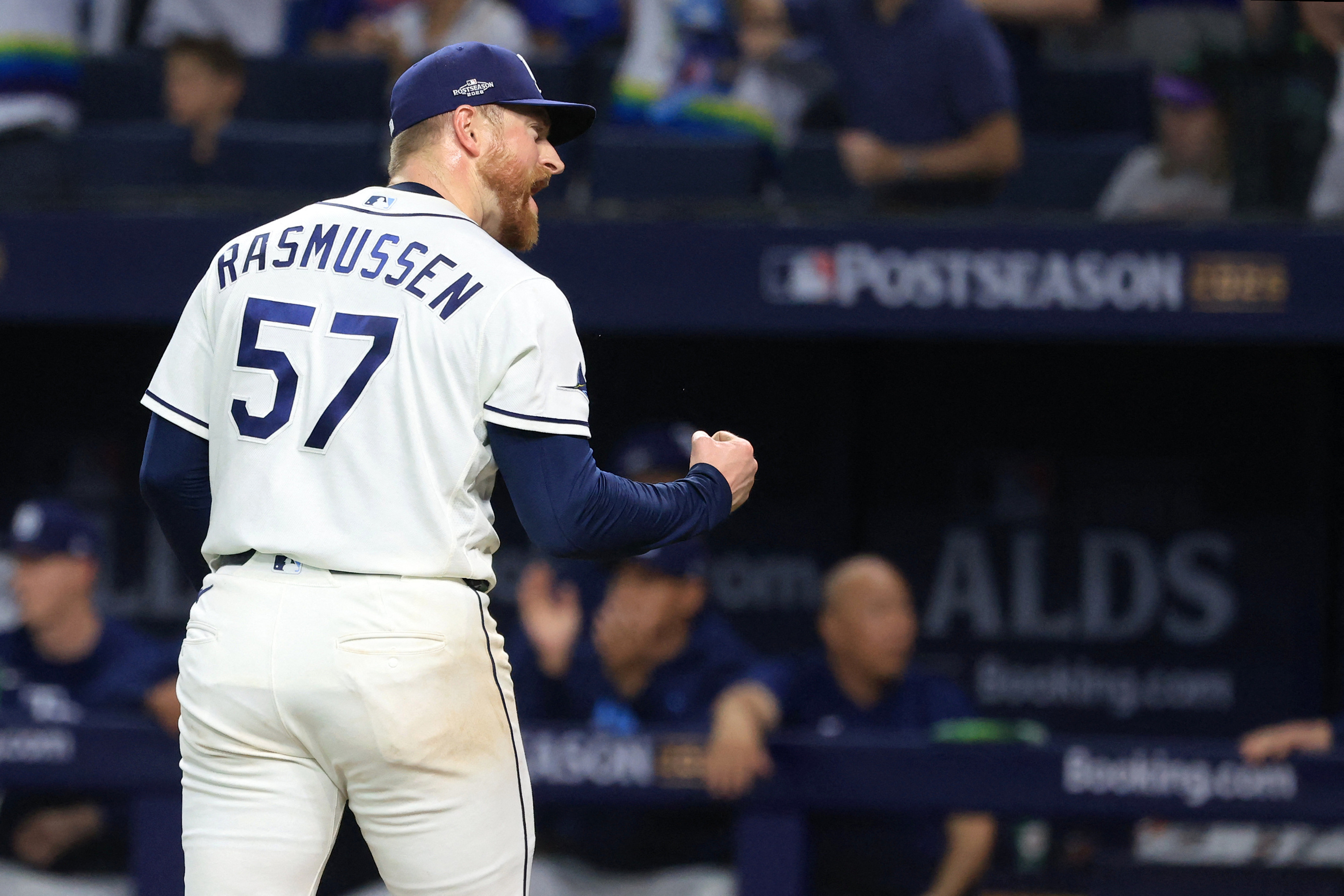
Drew Rasmussen carried a no-hitter into the eighth as the Rays beat the Yankees 1-0 behind Jonathan Aranda’s solo home run.
Tampa Bay needed one swing Saturday night because Drew Rasmussen spent eight innings making sure the Yankees could do almost nothing with theirs. Jonathan Aranda homered off Gerrit Cole in the third inning, Rasmussen carried a no-hitter within four outs of completion, and the Rays opened the AL Division Series with a 1-0 win at Tropicana Field.
The Yankees arrived after scoring 18 runs in two Wild Card victories over Boston. Tampa Bay reduced that offense to one hit, two walks and no runs. New York stayed close because Cole and the bullpen were nearly as effective, but a game this compressed leaves very little room for a wasted opportunity. When Austin Wells finally broke through in the eighth, the Yankees turned their only hit into the final out of the inning by trying to take an extra base.
Rasmussen Did It to New York Again
Rasmussen entered Game 1 with years of success against the Yankees, including a 1.81 career ERA and 0.86 WHIP against them. His final regular-season appearance against New York had already offered a warning: he carried a no-hitter into the seventh inning and struck out 11 while Tampa Bay clinched the AL East.
Game 1 went even further. Rasmussen did not allow a hit through seven innings, struck out 10 and repeatedly put New York’s hitters behind in counts. Cody Bellinger struck out twice, Spencer Jones struck out twice, and a lineup that had spent the Wild Card round driving Boston pitching all over the ballpark rarely produced comfortable contact.
Rasmussen finished eight scoreless innings on 101 pitches, allowing one hit and two walks. The Yankees could not generate a sustained inning against him, which allowed Tampa Bay to protect a one-run lead without asking its offense for anything after the third.
Aranda Found the One Run Tampa Needed
Cole gave New York the kind of performance that normally wins a postseason game. Tampa Bay collected five hits against him over five innings, but only one produced a run. Aranda got a changeup in the third and drove it over the right-center-field wall for his first postseason hit and a 1-0 Rays lead.
Cole prevented the inning from growing after the homer and kept Tampa Bay off the board through the fifth. He struck out five, walked one and allowed one earned run, giving the Yankees five innings in which a single offensive sequence could have changed the game.
Rasmussen never gave New York that sequence. Aranda’s homer gradually changed from an early advantage into the only run Tampa Bay needed to manufacture all night.
Judge’s Absence Changed the Margin for Error
Aaron Judge had already been left off the ALDS roster because of his calf injury, leaving New York to begin the series without the hitter around whom the offense is normally organized. The Yankees had shown against Boston that they could still score without him, producing nine runs in consecutive Wild Card games behind contributions throughout the lineup.
Rasmussen exposed how much narrower that offense can become against an elite starter. There was no Judge plate appearance waiting if someone could reach base and no middle-of-the-order hitter capable of forcing Rasmussen away from the aggressive approach that was working. Ben Rice and Jazz Chisholm Jr. drew the only walks, and every other Yankee stayed off base until the eighth.
The difference from the Boston series was extreme. New York produced 26 hits across two Wild Card games before managing one against Tampa Bay. October can make a missing bat feel much larger when the replacement lineup runs into a pitcher who already has a history of controlling it.
Wells Broke Up the No-Hitter
Austin Wells finally ended Rasmussen’s no-hit bid with two outs in the eighth, driving a sinker down the right-field line and reaching second safely. MLB scored the play as a double. That classification ended the no-hitter immediately, before anything Wells did afterward on the bases.
The distinction can feel strange because the play itself ended with Wells tagged out at third and nobody left on base. Baseball separates the result of the batted ball from the runner’s later attempt to advance. Once Wells safely earned second base on the hit, the double existed in the official record. His decision to continue toward third created a second event on the same play.
Being thrown out afterward could not retroactively erase what happened at the plate. Official scorers do make judgment calls on plays involving hits, errors and how many bases should be credited, but the underlying principle here is established. A batter who reaches safely on a hit keeps that hit even when he is subsequently retired trying to take another base.
The clean description of the play is also the official one: Wells broke up the no-hitter with a double, then was thrown out advancing to third. The out removed the runner; it did not remove the hit.
Trying for Third Was the Real Question
The scoring rule deserves little controversy. Wells’ baserunning decision deserves considerably more examination. New York trailed 1-0 with two outs, and Wells was already the tying run in scoring position at second. Ryan McMahon was due up next, meaning a single could potentially have tied the game regardless of whether Wells stood at second or third.
Wells chose to push for third after Victor Mesa Jr. retrieved the ball in right field. Mesa got the ball back toward the infield, Taylor Walls handled the relay and Junior Caminero applied the tag. The Yankees’ first hit of the night became the third out of the inning before McMahon ever reached the plate.
The potential reward for reaching third was real but limited. A wild pitch, passed ball or infield hit could have scored Wells from third when it might not have scored him from second. The cost of failure was much larger because getting thrown out immediately eliminated the only baserunner New York had produced against Rasmussen all night.
That is where the frustration surrounding the play belongs. The official scoring did exactly what baseball’s rules require. The decision to challenge Tampa Bay’s relay with two outs and the tying run already in scoring position turned a rare opportunity into the end of the inning.
The Play Looked Stranger Than It Scored
Anyone watching the sequence without thinking in official-scoring terms could reasonably experience a moment of confusion. Wells hit the ball, Tampa Bay eventually tagged him out, the inning ended and Rasmussen walked back to the dugout having faced the minimum number of hitters in the eighth. Visually, the sequence resembles a batter being retired.
The box score records more information than the final image of the play. Wells safely reached second because of his batted ball, earning the double and ending Rasmussen’s no-hit attempt. His subsequent attempt to reach third belonged to the baserunning portion of the play, where Tampa Bay recorded the out.
That separation between batting and baserunning explains why Rasmussen finished with one hit allowed even though Wells was no longer on base when the inning ended. The hit records how Wells reached second. The out records what happened when he tried to leave it.
Tampa Bay’s Defense Finished the Play
The relay also reflected the kind of baseball Tampa Bay played throughout its 98-win season. Mesa did not concede third after Wells reached second, Walls executed the middle portion of the play and Caminero finished it cleanly. The Rays had just lost a historic no-hit bid, yet the defense immediately turned the first Yankees hit into an inning-ending out.
Tampa Bay had already taken hits away earlier in the game, including a sliding catch by Chandler Simpson in left. In a game where neither offense created much, defensive execution carried almost the same value as another baserunner.
The Rays stranded seven runners of their own and never scored after Aranda’s homer. Their advantage came from executing a nearly perfect run-prevention game around Rasmussen, then refusing to give New York any extra margin when the Yankees finally created something.
New York’s Bullpen Kept It at One
The Yankees received exactly what they needed from the bullpen after Cole left. Ryan Weathers, Paul Blackburn and Brent Headrick covered the final three innings without allowing another run, preserving the 1-0 margin and giving the offense repeated chances to find one equalizer.
Tampa Bay had opportunities to create insurance and failed to cash them, leaving the entire game balanced on Aranda’s third-inning homer. That made New York’s offensive silence increasingly painful. The pitching staff allowed one run over eight innings in a road playoff game and never held a lead or even a tie after the third.
Cole’s outing still matters for the rest of the series. He demonstrated that Tampa Bay’s offense can be contained, while the bullpen prevented the Rays from creating late separation. New York’s immediate problem sits with producing enough offense to make those pitching performances matter.
Baker Closed the Only Lead He Needed
Kevin Cash sent Bryan Baker out for the ninth after Rasmussen completed eight innings. Baker faced Giancarlo Stanton, Ben Rice and Bellinger with the entire game still balanced on one run, and the Yankees never produced another opening.
Baker retired all three hitters to preserve the shutout and give Tampa Bay a 1-0 series lead. The final inning completed the shape of the Rays’ win: Aranda supplied one mistake from Cole, Rasmussen removed almost everything else from the game, the defense protected the lead when New York finally found a hit, and Baker handled the final three outs.
Game 1 Was Even Smaller Than Expected
The starting matchup always pointed toward a low-scoring game. Cole had allowed only three earned runs across three regular-season starts against Tampa Bay, while Rasmussen had spent years frustrating New York and entered Saturday with another dominant Yankees start only days behind him.
The 1-0 final pushed that pitching advantage to its extreme. Tampa Bay did not need its lineup depth to create a large offensive night, and New York’s bullpen prevented any late separation. Aranda’s solo homer became sufficient because Rasmussen reduced an explosive Wild Card offense to almost nothing.
The result also reinforced Tampa Bay’s home-field strength. The Rays went 55-26 at Tropicana Field during the regular season and opened October by playing the kind of game they were built to win there: dominant starting pitching, clean defense and enough offense to make one mistake by the opponent survive nine innings.
New York Has to Find More Than One Chance
Rasmussen will not start Game 2, but the problem he created extends beyond one pitcher. The Yankees have now seen Tampa Bay suppress them this way twice in a short span, with Rasmussen carrying a no-hitter deep into both starts. The Rays know they can attack New York’s Judge-less lineup aggressively and trust their defense when the ball is put in play.
New York also leaves Game 1 knowing its pitching can keep the series close. Cole allowed one run, the bullpen allowed none, and the Yankees lost because their offense generated one genuine opportunity against Rasmussen and then lost that runner trying to advance.
Final: Tampa Bay Rays 1, New York Yankees 0. Aranda provided the only run, Rasmussen provided eight dominant innings, and Wells supplied the play that perfectly captured the game. He broke up the no-hitter with a legitimate double, then removed New York’s only baserunner by challenging Tampa Bay for a base it did not need nearly as badly as it needed another plate appearance.
Sources
MLB, Yankees-Rays ALDS Game 1 coverage | MLB, Austin Wells breaks up no-hitter and is thrown out at third | MLB Official Baseball Rules, Rule 9.05 Base Hits | MLB Gameday, Yankees-Rays Game 1 | SNY, Yankees-Rays Game 1 recap