
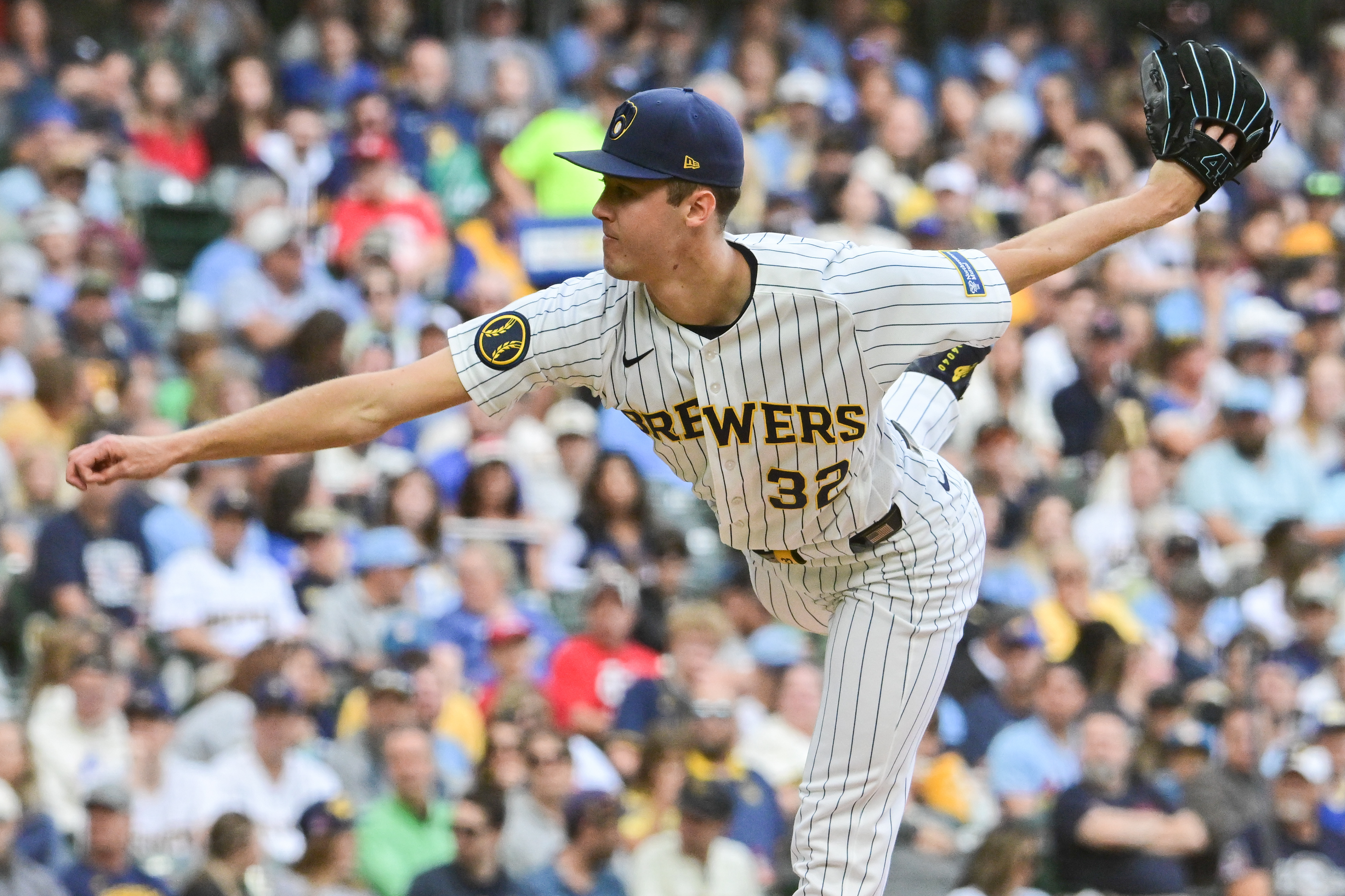
Padres vs Brewers Game 1 now sends Robbie Ray against Jacob Misiorowski after a late change reshaped San Diego’s rotation.
Milwaukee spent the Wild Card round resting the pitcher who just completed one of the most dominant regular seasons in baseball. San Diego spent Saturday changing the pitcher expected to face him.
Walker Buehler was placed on the postseason paternity list before Game 1, moving Robbie Ray into the opening assignment and Michael King to Game 2. Buehler could return when the series moves to San Diego. Ray now gets Jacob Misiorowski with Milwaukee rested, at home and coming off a 103-win regular season.
That gives Saturday a much sharper identity than it had earlier in the week. San Diego arrives after sweeping Chicago. Milwaukee arrives with the best record in baseball and its best pitcher fully lined up. The Padres have already shown they can make this matchup uncomfortable after winning four of six regular-season meetings. Game 1 still begins with Milwaukee holding the clearest individual advantage on the mound.
Misiorowski Gets the Stage He Earned
Misiorowski finished 16-5 with a 1.80 ERA and 252 strikeouts. His 0.80 WHIP led the majors, and opponents hit .157 against him, the lowest recorded average allowed by a qualified starting pitcher. Milwaukee spent the late part of the season managing his workload with October in mind, and he closed the regular season by throwing 5 1/3 scoreless innings against St. Louis.
The difference between Misiorowski now and the pitcher Milwaukee carried into last October is enormous. A year ago he entered the postseason as a talented arm who could help from the bullpen. This time the Brewers have arranged the series around him. His velocity still draws the attention, but the season became historic because hitters struggled to reach base at all.
San Diego therefore faces a familiar postseason problem in its most extreme form. Fernando Tatis Jr., Manny Machado, Jackson Merrill and Xander Bogaerts can all change a game with one swing. Misiorowski makes the opportunities before those swings unusually scarce.
San Diego Had to Rewrite Its Rotation
Buehler had been positioned to start Saturday before the paternity-list move. His absence pushes Ray into Game 1 and King into Sunday. Randy Vásquez temporarily joins the active roster while Buehler is away.
Ray finished the season 13-8 with a 3.59 ERA, though his time with San Diego was much rougher. He went 3-2 with a 5.02 ERA in nine Padres starts, striking out 33 and walking 27 across 43 innings. Saturday will be his first postseason start since 2022.
The left-handed matchup gives Craig Stammen a reason to believe the move can work. Milwaukee was far more destructive against right-handed pitching during the regular season, and Ray can force Pat Murphy to make different lineup decisions than he would against Buehler or King.
Ray’s command becomes the larger concern. Milwaukee led baseball in on-base percentage and built much of its offense around forcing pitchers to remain in the strike zone. A starter carrying recent walk problems into a lineup that refuses to chase can spend an entire inning working from the stretch without allowing a hard-hit ball.
Milwaukee Can Make Ray Work
The Brewers reached 103 wins without relying on the kind of home-run volume normally associated with elite offenses. Their pressure came from contact, patience, speed and a lineup that rarely gave pitchers the quick inning they wanted.
Brice Turang and Jackson Chourio can turn a walk or single into immediate pressure on the bases. William Contreras can extend an at-bat until a pitcher finally comes into the zone. Christian Yelich still gives Milwaukee another disciplined left-handed bat capable of turning one mistake into extra bases.
That style is particularly relevant against Ray. San Diego can live with a solo homer. Three walks spread across the first four innings create a much more exhausting problem, especially when Milwaukee keeps forcing Ray to throw another pitch instead of expanding the zone for him.
San Diego’s Sweep Preserved the Bullpen
The Padres arrive from Chicago in much better shape than a Wild Card team forced through three games. They won the opener 8-0, finished the series with a 4-1 victory and needed only two nights to advance.
That matters because the San Diego bullpen may be the best weapon available behind Ray. Jason Adam, Adrian Morejon and Mason Miller give the Padres enough high-leverage pitching to turn five solid innings into a complete game plan. Ray can hand over a close game without being asked to navigate Milwaukee’s lineup four times.
The Padres used that formula against Chicago when their starter could not provide length. Their bullpen covered the final 5 2/3 innings of the clincher without allowing a run. Game 1 becomes far more manageable if Ray can get them into that structure with the score still close.
The First Run Carries Extra Weight
The original matchup already pointed toward an important first inning, and the pitching change adds another layer. San Diego gets the first opportunity against Misiorowski. Milwaukee then gets a chance to immediately test Ray’s command.
Milwaukee’s recent postseason history has repeatedly produced early scoring, while San Diego has also played plenty of October games where somebody reaches the board before the second inning. Those patterns matter less than the actual mechanism Saturday: an aggressive Padres top order facing elite velocity and a patient Brewers lineup facing a pitcher who has recently walked too many hitters.
A quick Milwaukee run would also change how long Stammen can tolerate trouble from Ray. The Padres have too much relief depth to watch a postseason opener drift away while waiting for a starter to find his command.
San Diego Has Already Beaten Milwaukee
The Padres won four of six regular-season meetings, including a three-game sweep in San Diego. They held Milwaukee to 3-for-28 with runners in scoring position during that August series and repeatedly found ways to survive the exact kind of close game Milwaukee prefers.
That history prevents Game 1 from becoming a simple celebration of Milwaukee’s 103 wins. Tatis, Machado, Merrill and Bogaerts have already seen this roster succeed and fail against them. San Diego enters American Family Field with recent evidence that it can disrupt Milwaukee’s preferred rhythm.
The Brewers also responded to that sweep by immediately winning three of four in Los Angeles and continuing the run that carried them to baseball’s best record. Their season did not bend around one bad series. Saturday gives them a chance to revisit it with Misiorowski on the mound.
Milwaukee’s Home Edge Runs Deeper
The Brewers went 55-26 at American Family Field. They were able to win there with Misiorowski dominating, with the offense breaking games open and with low-scoring games moving into a bullpen that rarely gave opponents a clean route back.
San Diego was good enough on the road to make home field a factor rather than a verdict. The Padres also arrive already accustomed to postseason leverage after two games against Chicago.
Milwaukee’s larger advantage comes from how well its pieces fit Saturday. Misiorowski can suppress early traffic. The lineup can force Ray into long plate appearances. A rested bullpen can take over if the Brewers carry a lead into the later innings.
A Two-Run Gap Makes Sense Here
The earlier version of this matchup looked like a game likely to stay compressed around the pitching. Misiorowski still supports that. The late change on the San Diego side creates more room for Milwaukee to separate.
Ray can absolutely keep the Padres in the game. His left-handedness creates a real tactical advantage against Milwaukee, and San Diego’s bullpen is strong enough to shut the door once it gets the matchup it wants. His recent command gives the Brewers more opportunities to create pressure before that bullpen arrives.
Milwaukee also has the luxury of asking Misiorowski for exactly the game he has delivered all season: limit baserunners, miss bats and make the opposing lineup try to manufacture runs from isolated chances.
Milwaukee Can Create Separation Late
San Diego is talented enough to keep the first half of the game tight. Misiorowski’s presence makes a large Padres rally difficult to project, while Ray gives San Diego a veteran capable of working through Milwaukee’s left-handed core.
The matchup begins tilting toward Milwaukee once those starters leave. The Brewers can spend the middle innings forcing San Diego to use its best relievers while protecting a rested bullpen of their own. If Ray gives Milwaukee extra baserunners early, even a strong Padres relief performance can begin with too much work already done.
Prediction: Milwaukee Brewers 4, San Diego Padres 2. Misiorowski gives Milwaukee the largest individual advantage in the game, and Ray’s uneven San Diego stretch gives the Brewers more opportunity to create traffic than Buehler would have offered. San Diego’s bullpen keeps the game competitive. Milwaukee’s pitching and home pressure give it enough room to finally pull two runs clear.
Sources
MLB, Padres-Brewers NLDS pitching preview | MLB, Robbie Ray Game 1 announcement | MLB, Brewers probable pitchers | Reuters, Walker Buehler paternity-list update | Reuters, Jacob Misiorowski regular-season finale