
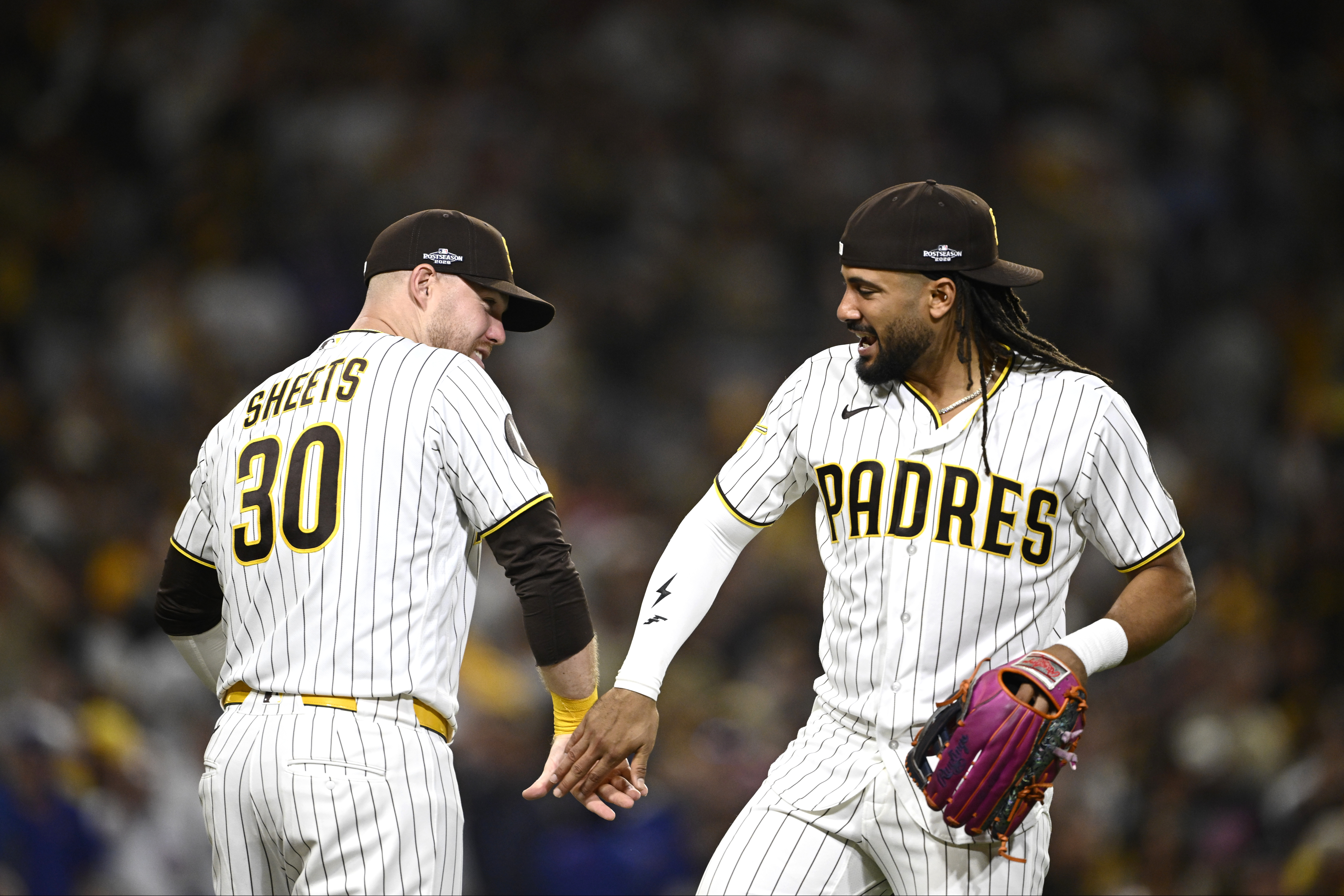
Cubs vs Padres Game 2 begins with Chicago one loss from elimination after San Diego controlled nearly every part of the Wild Card opener.
The Cubs did not spend much of Game 1 wondering where the turning point would come. Fernando Tatis Jr. supplied it on the first pitch San Diego saw, driving Matthew Boyd over the center-field wall. Two batters later, Manny Machado homered too. Before Chicago had sent its lineup to the plate a second time, the Padres were ahead 2-0 and Michael King already had something to protect.
San Diego never gave Chicago a realistic path back into the game. King carried a no-hitter into the seventh inning, the Padres led 7-0 by the time Nico Hoerner finally reached with Chicago’s first hit, and the night ended 8-0 with the Cubs managing only three hits. Game 2 therefore begins with a straightforward problem. Chicago does not need to prove that Tuesday was a fluke. It needs Kevin Gausman to prevent Wednesday from developing in the same order.
San Diego Took Control Before Chicago Could Settle In
Tatis attacked Boyd immediately, homering on the first pitch of the bottom of the first. Machado followed with another solo shot two batters later, giving San Diego two runs before the Cubs had a chance to establish any kind of defensive rhythm. Boyd did not collapse after that inning, but he never regained control of the matchup either. Xander Bogaerts added another solo homer in the fourth, leaving Boyd responsible for four runs and three home runs over four innings.
The game then moved from difficult to effectively finished in the fifth. Jackson Merrill drove home two runs with a single off Ryan Rolison, and Ty France scored later in the inning on a passed ball. San Diego had built a 7-0 lead through five, which meant King no longer had to pitch as though one mistake could change the game. He could attack Chicago with the scoreboard providing almost no pressure behind him.
That is the part Chicago has to prevent in Game 2. The Cubs cannot let Pivetta pitch with the same freedom King enjoyed. San Diego scored before King threw his fourth pitch of the second inning, extended the lead repeatedly and allowed its starter to work from ahead all night. Once the Padres had both the pitching advantage and scoreboard control, Chicago had almost no way to force them into uncomfortable decisions.
Michael King Never Let the Cubs Create Pressure
King’s performance was even more dominant than the final line needed to be. He allowed one hit over seven scoreless innings, struck out eight and walked three while carrying his no-hit bid into the seventh. Hoerner finally broke it up with a soft one-out single down the third-base line, but by then Chicago was seven runs behind and simply reaching base no longer changed the structure of the game.
Yuki Matsui and Joe Musgrove handled the final six outs, which gave San Diego another benefit beyond the victory itself. The Padres did not have to cycle through their high-leverage bullpen simply to protect Game 1. Chicago never forced that decision. San Diego enters Wednesday with both a series lead and a pitching staff that was allowed to follow almost the cleanest possible postseason script.
That makes Chicago’s offensive task against Pivetta larger than simply scoring more than zero. The Cubs need to make San Diego use pitchers under stress. A four-pitch inning helps the Padres even if Pivetta eventually leaves after five. A long inning with multiple baserunners changes what Craig Stammen has to ask from the bullpen and when he has to ask it.
Kevin Gausman Cannot Give San Diego Another Head Start
Gausman finished the season with a 4.51 ERA, which gives San Diego the stronger season-long run-prevention profile again with Pivetta sitting at 2.86. But Chicago does not need Gausman to win a statistical comparison. It needs him to prevent the first two innings from dictating the rest of the night. Boyd never had that luxury Tuesday. By the time he began settling into the game, Tatis and Machado had already given King a two-run lead.
That places unusual importance on Gausman’s command the first time through the order. San Diego can hurt him without building a long rally. Tatis demonstrated that with one pitch. Machado did it again moments later. One walk in front of that power changes the cost of the next mistake, so Gausman has to attack the zone without simply feeding the middle of it.
Five competitive innings would give Chicago a very different game. Six would allow the Cubs to organize their own bullpen around actual leverage rather than emergency innings. The objective is not seven scoreless. It is reaching the middle of the game without San Diego already controlling when and how every important pitching decision will be made.
Nick Pivetta Only Needs to Keep San Diego’s Plan Intact
Pivetta enters with the cleaner season line after posting a 2.86 ERA, but the situation around him matters almost as much as the number itself. San Diego does not need him to reproduce King’s seven scoreless innings. Five or six strong frames can be enough if the Padres force Chicago to chase the game and then turn a narrow lead over to a rested bullpen.
That allows Pivetta to pitch differently from a starter who knows he must carry seven innings. San Diego can be aggressive once Chicago’s lineup reaches a dangerous pocket for the third time. If Pivetta gives the Padres 15 or 18 useful outs, there is little reason to squeeze another inning from him merely to preserve relievers who were barely taxed Tuesday.
The Cubs therefore have to make those first two trips through the order matter. Waiting until the seventh inning to begin creating traffic may mean dealing with the exact relievers San Diego wants in the exact situations it wants to use them. Chicago has to either score against Pivetta or make him work hard enough that the bullpen enters before the Padres can completely dictate the sequence.
Chicago Needs Its Offense to Change the Pitching Decisions
Three hits in Game 1 were not enough to create even one difficult managerial choice for San Diego. Hoerner did not record Chicago’s first hit until one out in the seventh, and by that point the Padres were protecting a seven-run lead. King could challenge hitters aggressively, the defense could trade outs for bases if necessary and the bullpen could prepare without urgency. Chicago never made San Diego manage the score.
Game 2 has to contain traffic earlier. That does not mean the Cubs need three runs in the first. A walk followed by a long at-bat can matter because it begins increasing Pivetta’s workload. A stolen base can change how he attacks the next hitter. One extra-base hit with a runner aboard can make a 1-0 deficit feel completely different from the 2-0 hole Chicago faced before it had even recorded its fourth out Tuesday.
The Cubs’ lineup is too talented for Game 1 to become the expectation, but San Diego does not need another shutout to win the series. Chicago has to make its offensive quality visible early enough that the Padres cannot simply repeat the same starter-to-bullpen progression with a lead.
Petco Park Keeps Reinforcing San Diego’s Advantage
Tuesday’s result fit what San Diego had done at home throughout the season. The Padres consistently produced stronger results at Petco Park than Chicago did on the road, and that gap was even more pronounced over the first five innings. Game 1 turned those season-long tendencies into an extreme version of themselves: San Diego led 7-0 through five and never played a single inning under scoreboard pressure.
The important point for Game 2 is not that another blowout should follow. It is that San Diego does not need one. A 2-1 or 3-2 lead entering the seventh creates an entirely different score but many of the same structural advantages. The Padres are at home, they have the final at-bat and their most important relievers were not forced through a difficult Game 1 workload.
Chicago’s road history keeps that from becoming automatic. The Cubs were a capable road club throughout the year, and the Wild Card round has repeatedly produced successful road teams in recent seasons. Those broader patterns matter, but they do not change the immediate matchup. Chicago has to create a reason for San Diego’s home advantages to stop compounding.
Seven and a Half Runs Leaves Room for a Very Different Game
The expected scoring environment around 7.5 runs does not assume Tuesday’s eight-run margin will repeat. It points toward a much more conventional postseason game in which both starters have a chance to keep the score compressed before the bullpens take over. Pivetta’s season supports that expectation, while Chicago’s best chance depends on Gausman producing something much closer to his better stretches than Boyd managed in the opener.
Recent Wild Card games around this scoring range have often stayed lower, but the team-specific evidence is less decisive. Chicago’s road games and San Diego’s home games did not produce a clean enough scoring pattern to make the number itself the story. The more useful question is how the runs arrive. San Diego scored three times on solo homers before breaking Game 1 open with traffic in the fifth. Chicago never answered once.
A competitive Game 2 could look completely different while still ending with six or seven runs. If Gausman prevents the early home runs and Chicago forces Pivetta to pitch with runners aboard, the game can remain one swing from changing through the middle innings. That is the environment the Cubs need.
The First Inning Still Carries More Weight Than Usual
Game 1 added another example to a postseason pattern already pointing toward early scoring for these teams. Six of Chicago’s eight postseason games from 2022 through 2025 produced a first-inning run in the supplied historical sample, including all three Cubs road games. Fourteen of San Diego’s 22 postseason games during that period also produced a run in the opening inning, including five of eight at Petco Park.
Tatis then reinforced the pattern in the most direct way possible Tuesday, homering on the first pitch San Diego saw. Machado followed two batters later. That does not mean Gausman is destined to repeat Boyd’s first inning, but it shows why the opening frame matters beyond historical percentages. The top of San Diego’s order can make one poorly located pitch immediately expensive.
Chicago also has more reason than usual to attack early. Scoring first would force Pivetta to work without the cushion King enjoyed and would make San Diego consider its bullpen from behind rather than simply organizing a path toward the final nine outs. One first-inning run would not decide Game 2. It could change the type of game both managers are allowed to manage.
San Diego Does Not Need Another 8-0 Game
The mistake after a postseason blowout is assuming the next game has to validate or reject the previous result. Game 2 does neither. Chicago can be dramatically better than it was Tuesday and still lose. San Diego can score half as many runs and still advance.
The Padres begin with several independent advantages that remain after the 8-0 score is removed. Pivetta enters with the stronger season-long run-prevention numbers. San Diego was consistently better at Petco Park. Its bullpen arrives rested because King carried seven innings and the Cubs never created a high-leverage situation. Chicago, meanwhile, has to trust Gausman to prevent another game from moving away before its offense can establish itself.
Prediction: San Diego Padres 4, Chicago Cubs 2. Chicago should create considerably more resistance than it managed in Game 1, and nothing about the matchup requires another runaway score. But Pivetta gives San Diego the cleaner opening structure, the Padres can turn to a rested bullpen if they get ahead, and the Cubs have to reverse Tuesday’s pattern before those advantages begin reinforcing each other again. A competitive game still points toward San Diego if the Padres are the team carrying a narrow lead into the final three innings.