
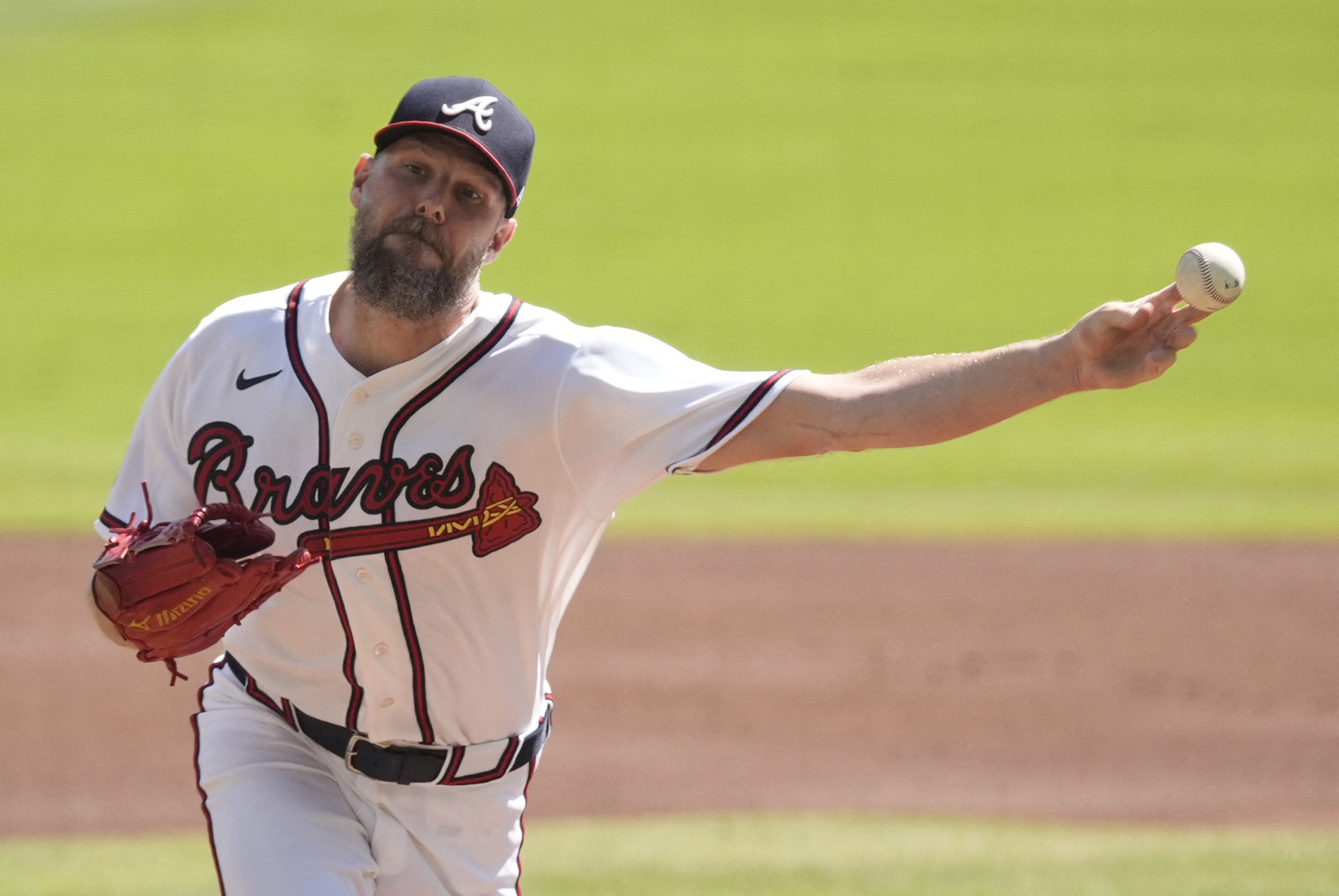
Phillies vs Braves Game 1 opens another October meeting between two teams that already know how quickly this rivalry can change.
Atlanta enters the Wild Card series with the cleaner setup. The Braves finished 94-68, won nine of their 13 regular-season meetings with Philadelphia and have Chris Sale fully lined up for the opener at Truist Park. Philadelphia reached October at 88-74 and will counter with Jesús Luzardo, who only recently returned from shoulder inflammation. That gives Atlanta the stronger regular-season résumé and the more stable pitching situation, even before home field enters the equation.
But this matchup carries more history than those numbers suggest. Philadelphia eliminated Atlanta from the postseason in both 2022 and 2023, which gives Game 1 a different texture than a typical matchup between a 94-win division champion and an 88-win Wild Card team. The Braves have the more obvious advantages. The question is whether Sale can turn those advantages into enough control that Philadelphia never gets the game into the kind of late-inning chaos that has defined this rivalry before.
Chris Sale Gives Atlanta the Strongest Fixed Advantage
Sale is the clearest reason Atlanta begins Game 1 in the stronger position. He finished the regular season with a 2.16 ERA and handled Philadelphia well during the year, giving the Braves exactly what they want from an October opener: a starter who can miss bats, limit traffic and control innings without depending on perfect defense behind him.
That matters against a Philadelphia lineup built around hitters who can change the game quickly. Bryce Harper and Kyle Schwarber do not need a sustained rally to alter the score. A walk followed by one mistake in the middle of the plate can turn a quiet inning into two runs before Atlanta has time to react. Sale’s strikeout ability helps remove that possibility because it allows him to escape trouble without always putting the ball back into play.
The Phillies therefore face a different challenge than simply waiting for Sale to tire. They have to make his innings expensive enough that Atlanta cannot organize the entire game around him. If Sale reaches the seventh on a manageable pitch count with the Braves ahead, Philadelphia’s path becomes considerably narrower. If the Phillies can force deep counts and bring Atlanta’s bullpen into the game earlier, the matchup becomes less concentrated around the one area where the Braves hold their clearest advantage.
Philadelphia Does Not Need Luzardo to Match Sale
Luzardo enters Game 1 under very different circumstances. His ability is not the problem. His recent workload is. Returning from shoulder inflammation near the end of the regular season means Philadelphia cannot approach the opener as though it needs seven innings from him simply because Sale may provide Atlanta with seven on the other side.
The Phillies can be more aggressive than that. Luzardo’s job is to keep Atlanta from creating the kind of multi-run inning that changes the game before Philadelphia’s offense has a chance to solve Sale. If his command begins to fade or the Braves reach a dangerous portion of the lineup for a third time, Philadelphia has little reason to wait for the obvious warning signs. October gives the Phillies permission to treat five strong innings as enough.
That distinction is important because Philadelphia does not need the starting pitching matchup to be even. It only needs to prevent Atlanta’s advantage from becoming decisive. A 2-1 or 2-2 game when Luzardo leaves is a completely different contest from a 5-1 game in which the Phillies spent too long trying to squeeze another inning from a pitcher still working back from a shoulder issue.
Atlanta Controlled the Season Series
The Braves’ nine wins in 13 regular-season meetings are difficult to dismiss because they show that Atlanta’s overall advantage was not limited to the standings. The Braves repeatedly found ways to beat Philadelphia over six months, and now they begin the postseason at home with their best available starter on the mound. That is the strongest collection of evidence either side brings into Game 1.
What those 13 games cannot tell us is how much the series changes once the calendar reaches October. Postseason games compress decisions. Starters have shorter leashes, relievers can appear earlier and managers are far less willing to let one difficult matchup develop into an entire bad inning. The Braves can carry their regular-season success into Game 1, but they cannot simply assume the same sequence that worked from April through September will reproduce itself in a best-of-three.
Philadelphia’s recent history against Atlanta makes that especially clear. The Phillies entered both the 2022 and 2023 postseason series without the cleaner regular-season profile and still eliminated the Braves. That history does not give Philadelphia a mystical October advantage, but it does demonstrate how quickly the structure of this rivalry changes once a short series reduces the value of everything that happened over 162 games.
Philadelphia’s September Makes the First Six Innings Critical
The Phillies had to work through the final day of the season to secure their postseason place, using important pitching resources along the way. They also went through stretches in September where the offense struggled to create sustained pressure. Neither factor makes Philadelphia incapable of winning Game 1, but together they make the opening six innings especially important.
A tired club facing Sale cannot afford to spend four innings chasing pitches and then expect the game to become easier later. Philadelphia needs productive plate appearances even when they do not end in hits. Foul balls, walks and full counts can matter because forcing Sale to throw additional pitches is one of the few ways the Phillies can reduce the amount of the game Atlanta controls through its starter.
At the same time, Philadelphia cannot afford to ask its own pitching staff for emergency innings immediately. Luzardo keeping Atlanta quiet through the first trip through the order allows the Phillies to choose when the bullpen enters rather than having Atlanta make that decision for them. The entire game becomes easier to manage if Philadelphia can reach the fifth inning without chasing a multi-run deficit.
Seven Runs Tells You What Kind of Game This Could Become
The expected scoring environment around seven runs fits the pitching matchup. Sale gives Atlanta elite run prevention on one side, while Philadelphia can compensate for Luzardo’s uncertain workload by moving quickly to its bullpen rather than forcing him deeper into the game than his recent preparation justifies.
That creates a game where individual baserunners become more valuable. A walk in front of Harper or Schwarber can matter as much as a hit. One Atlanta runner reaching ahead of the middle of the order can force Luzardo to work differently. When the game is expected to live in a narrow scoring range, one two-run home run can account for a significant share of the offense either side needs to win.
The number also explains why Philadelphia does not need Luzardo to match Sale inning for inning. If the Phillies can prevent Atlanta from creating a large early inning, there may not be enough scoring opportunities for the Braves’ broader advantages to show up repeatedly. The game can remain close even while Atlanta holds the stronger pitching matchup.
One Walk Could Change the Entire Game
Low-scoring postseason games are often described as pitching duels, but the more useful way to think about Game 1 is as a contest where mistakes become disproportionately expensive. A leadoff walk against Sale gives Philadelphia a chance to put Harper or Schwarber in a run-producing plate appearance without having earned multiple hits first. A free baserunner against Luzardo can do the same thing for Atlanta.
That is why command matters almost as much as pure stuff in this matchup. Sale’s strikeout ability gives him more ways to escape traffic, while Luzardo has to make sure he does not create those situations himself. Philadelphia can survive solo damage. What becomes much harder is allowing Atlanta to turn one bad pitch into two or three runs because a walk or hit-by-pitch already put somebody on base.
The Braves face the same risk against Philadelphia’s power. Harper and Schwarber can erase several quiet innings with one swing, which means Sale’s best defense is keeping the bases empty before they get that opportunity. The game may not produce many scoring chances. That only increases the importance of the ones that appear.
The Bullpens Can Keep the Game Compressed
Philadelphia’s best response to the starting-pitching gap is not pretending it does not exist. It is reducing how much of the game the gap controls. Luzardo can give the Phillies competitive innings, and the bullpen can take over before fatigue or a difficult third trip through Atlanta’s order turns a close game into something else.
Atlanta’s version is simpler. The Braves want Sale to work deep enough that the bullpen inherits a lead rather than a problem. If he gets through six or seven innings efficiently, Atlanta can shorten Philadelphia’s opportunity window to a handful of late plate appearances. That is exactly the type of game the Braves are built to control.
The interesting tension is that both strategies point toward the same kind of scoreboard. Atlanta wants Sale to suppress Philadelphia long enough that the late innings become manageable. Philadelphia wants to remove Luzardo before Atlanta can build separation. If both plans work reasonably well, neither offense gets many chances to create a runaway game.
Atlanta Has the Better Setup, but the Margin May Stay Small
The Braves enter Game 1 with the stronger record, home field, a 9-4 advantage in the season series and Sale on normal preparation. Philadelphia counters with a talented but recently injured starter and an offense that had to fight its way through the final stretch of September. The surface-level case belongs to Atlanta.
The reason Game 1 still looks capable of staying close is that Atlanta’s largest advantage is concentrated in one place. Sale can control Philadelphia’s offense, but the Phillies can respond by shortening Luzardo’s assignment and treating the game aggressively once his effectiveness begins to change. They do not need to win the pitching matchup on paper. They need to keep it from producing a large enough deficit to make the rest of the game irrelevant.
Philadelphia’s recent postseason history against Atlanta also makes it difficult to assume the Braves’ regular-season superiority will carry cleanly into October. The Phillies have already demonstrated twice that a short series can strip away many of Atlanta’s larger-sample advantages. That does not make Philadelphia the stronger team entering Game 1. It means the Braves still have to translate their advantages into runs before the series can start to look the way the standings suggest it should.
Prediction: Atlanta Braves 3, Philadelphia Phillies 2. Sale gives Atlanta the clearest individual advantage in the game, and the Braves have earned the right to enter October as the stronger team. But Philadelphia has enough pitching flexibility and enough middle-of-the-order power to keep the opener compressed. A 3-2 game fits a matchup where Atlanta controls more of the underlying conditions without necessarily creating much separation on the scoreboard.