
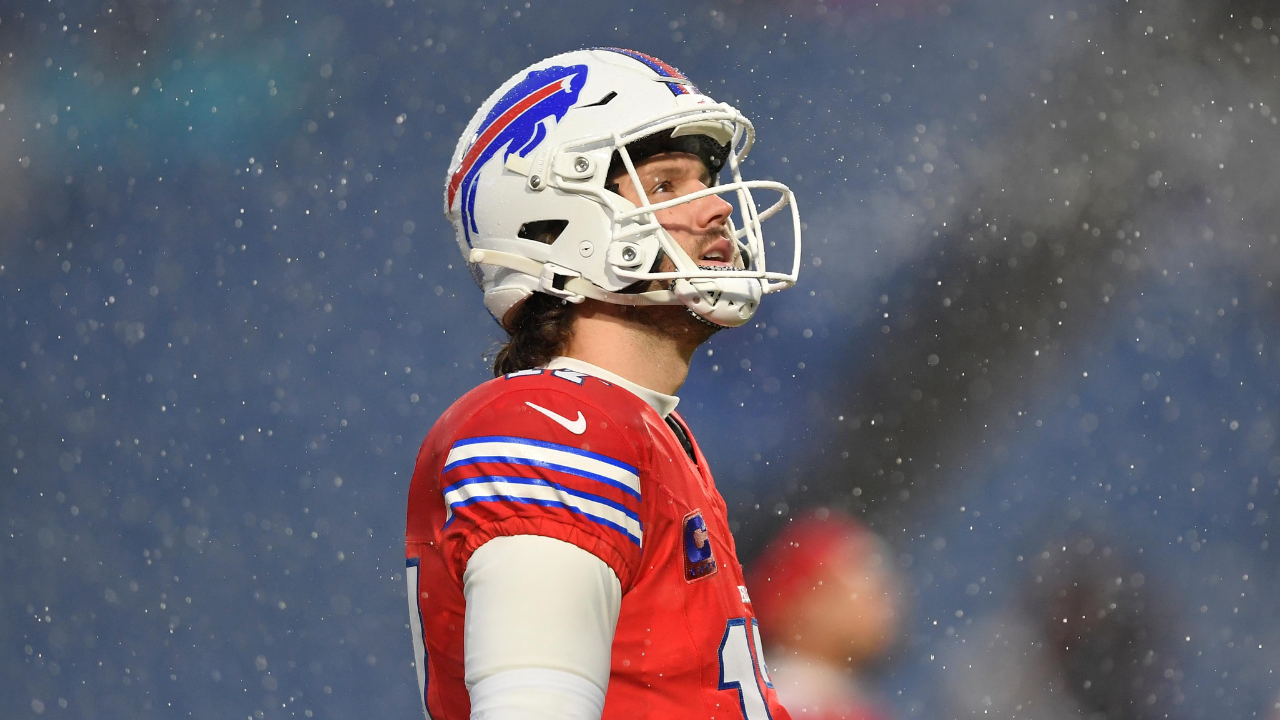
There’s dread in every Buffalo moment—not because Josh Allen can’t deliver, but because the sideline tightens, retreats, and coaches small when it matters.
There’s a very specific feeling that settles in when the Buffalo Bills reach a high-leverage moment. It doesn’t matter if it’s December or January, rain or snow, division on the line or playoff survival. The drive starts, the tension builds, and instead of anticipation, there’s dread. Not because the quarterback can’t handle it. Because the sideline won’t.
You can feel it when the Bills cross midfield and slow themselves down. You can feel it when the formation comes out static, when there’s no motion, no disguise, no sense of stress being applied to the defense. You can feel it when the play clock drains and the call arrives already feeling smaller than the moment demands.
This is not about one loss, or one play, or one missed throw. It’s about a pattern that has defined an entire era. For all the talent Buffalo has accumulated, for all the highlights and wins and statistical dominance, the Bills repeatedly arrive at the same destination and fall in the same way. The stage gets bigger, and the offense gets tighter.
That isn’t random. And it isn’t bad luck.
The Josh Allen Paradox
The defining contradiction of modern Buffalo football is simple: the Bills possess one of the most physically overwhelming quarterbacks the league has ever seen, and they coach him as if he is something fragile.
Josh Allen is not just a quarterback. He is a structural advantage. He is bigger than linebackers, faster than defensive ends, and capable of making throws that collapse coverage rules. His presence should force defenses into impossible choices. Every snap should feel like a math problem the defense cannot fully solve.
Instead, in the most important moments, Buffalo treats him like a variable to be controlled rather than a force to be unleashed.
The offense tightens. The sequencing turns conservative. The design removes conflict rather than creating it. Allen’s ability to threaten multiple defenders at once is muted by calls that isolate him instead of amplifying him. The result is an offense that plays beneath its own ceiling precisely when it needs to exceed it.
This is the paradox of the Allen era. Buffalo dominates when things are comfortable and scripted. When pressure mounts, the coaching impulse is to reduce risk, even if doing so also reduces the very advantages that make the Bills dangerous in the first place.
Red Zone Malpractice Disguised as Caution
Nowhere is this more obvious than inside the red zone, where Buffalo’s decision-making routinely borders on self-sabotage.
The Bills consistently compress the field for the defense. Static formations invite downhill aggression. Shotgun runs into stacked boxes eliminate horizontal stress. The defense is allowed to trigger without hesitation because nothing in the design forces hesitation.
More damning is how often Allen’s best traits are deliberately removed. Designed movement disappears. Rollouts vanish. Run-pass conflict evaporates. Instead of stretching defenders laterally or vertically, Buffalo asks Allen to operate from flat-footed positions in the most crowded part of the field.
This is how you end up with fourth-and-goal scrambles where the quarterback has no outlet. This is how drives end without points despite first-and-goal opportunities. This is how the offense relies on Allen improvisation to rescue plays that should never have required rescuing in the first place.
When Allen does break structure to make something happen, it is framed as hero ball. In reality, it is compensation for design failure. The structure didn’t hold. The quarterback was left alone.
Game Theory Failures in Plain Sight
The problems don’t stop with play design. They extend into game management, situational football, and basic leverage math.
Under Sean McDermott, the Bills have developed a peculiar habit: they are aggressive when aggression is cheap, and conservative when aggression is essential.
They burn timeouts in low-leverage moments and hoard them when seconds are currency. They settle for field goals in situations where touchdowns change the entire equation. They kick when forcing a defense to defend four downs would impose real pressure. They slow tempo in games where variance favors their talent edge.
These decisions are often defended as prudence. In reality, they are failures of game theory. Against elite teams, playing not to lose is indistinguishable from choosing to lose slowly.
Buffalo’s talent profile demands pressure football. Instead, the coaching approach prioritizes control, even when control works against them.
The Coordinator Excuse
The easiest deflection is to blame the offensive coordinator. Buffalo has tried that. The results haven’t changed.
Brian Daboll left, and the same high-leverage issues persisted. Ken Dorsey arrived, and the offense continued to shrink in the same moments. The names changed. The patterns didn’t.
That’s the uncomfortable truth. When coordinators rotate and outcomes remain consistent, the problem is institutional. It is philosophical. It is embedded in how the team understands risk, control, and trust.
McDermott’s defensive background shows up not just in schemes, but in instincts. Control the game. Minimize mistakes. Trust the system. Those principles work on one side of the ball. On offense, paired with a quarterback like Allen, they become constraints.
The Bills don’t lack creativity. They lack conviction.
The Script Repeats Every January
Watch Buffalo’s biggest games back-to-back and a familiar rhythm emerges.
The opening phases are cautious. The offense avoids mistakes but also avoids imposing itself. The opponent remains within reach longer than it should. Eventually, urgency arrives. Allen is asked to do more with less margin. He nearly does. Sometimes he does. Sometimes he doesn’t.
When the final play fails, the narrative crystallizes around that moment. A missed throw. A turnover. A heroic attempt that came up short. The coaching decisions that narrowed the margin never receive the same scrutiny.
This is how a generational quarterback ends up needing perfection to overcome his own sideline.
Other elite quarterbacks are given margin. Allen is given responsibility.
Fear Masquerading as Discipline
The most damning thing about the Allen era isn’t that Buffalo hasn’t won a Super Bowl. It’s that they never lose because they were too aggressive.
They don’t lose by going for it too often. They don’t lose by forcing defenses into impossible binds. They don’t lose because they trusted their quarterback too much.
They lose because they were afraid to fully commit to who they are.
When the lights get brightest, the Bills retreat into control football. They reduce variance when variance is their ally. They seek safety when safety offers no reward.
Against elite competition, that is surrender dressed up as professionalism.
Until Buffalo embraces the chaos their quarterback creates instead of fearing it, the ending will keep feeling the same. Tight. Familiar. And painfully inevitable.