
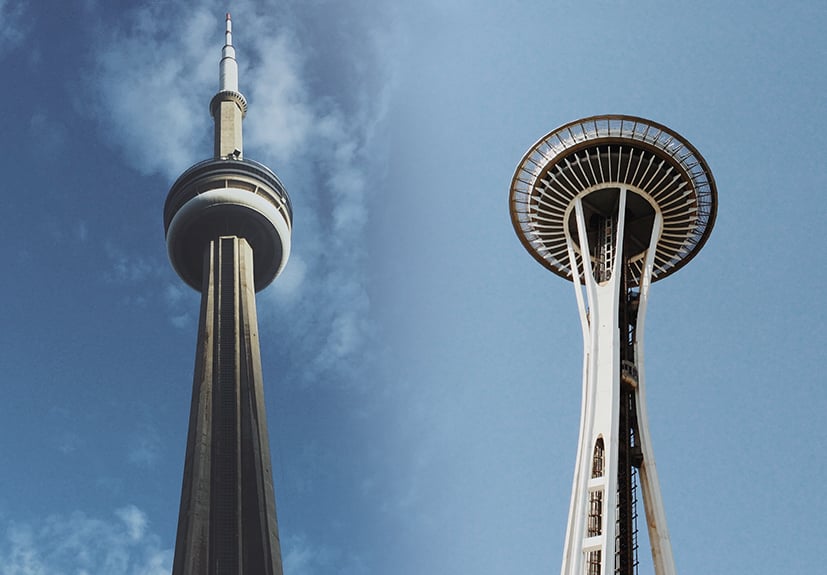
Two cities bonded by loss, longing, and stolen glory have built one of North America’s most compelling modern rivalries through parallel histories and shared sports trauma.
When people talk about great sports rivalries, they tend to default to geography or legacy. Yankees–Red Sox. Lakers–Celtics. Canadiens–Bruins. But every once in a while, a rivalry emerges not from proximity or championship stakes, but from something more human: shared trauma. And that’s exactly why Toronto and Seattle, two cities on opposite sides of the continent and separated by mountains, nations, currencies, and cultures, have quietly become one of the most natural rivalries in North American sports.
This rivalry isn’t built on hatred. It’s built on the strange comfort of looking across the field at another fan base and thinking: you’ve suffered too.
Parallel Histories of Almost Greatness
Toronto’s sports identity is defined by yearning. The Maple Leafs haven’t lifted the Stanley Cup since 1967. The Blue Jays had their early-90s dynasty, followed by two decades of wandering the desert. Even the Raptors, the city’s shining moment of redemption, only broke through after a series of heartbreaks and what some might call a lunar-level alignment of circumstances.
Seattle fans understand this at a cellular level. Before the Mariners were a threat, they were a punchline—decades of irrelevance punctuated by a few transcendent talents who shone bright in losing seasons. The Seahawks didn’t emerge as a serious NFL power until the 2010s. And worst of all, the city’s basketball heart was ripped out when the NBA approved the relocation of the SuperSonics to Oklahoma City. It wasn’t just a sports loss. It was a civic wound. A team drafted Kevin Durant, developed Russell Westbrook, and then—poof—became someone else’s dynasty.
Toronto fans know something about civic wounds. Ask anyone from Quebec City about the Nordiques. They lost their franchise just before the team’s young core peaked in Colorado, transforming overnight into a Stanley Cup champion. It was insult layered on top of injury: the reminder that your pain becomes someone else’s parade.
So when Mariners fans talk about the bitterness of losing the Sonics right as Seattle exploded into a desirable, high-tech metropolis, Torontonians recognize the pattern. These are cities where economic ascension didn’t protect them from sports heartbreak—if anything, it heightened the sting.
A Rivalry Rooted in Recognition
Toronto–Seattle doesn’t fit the usual script. It’s not driven by geographic convenience or a century of bad blood. What makes it compelling is its emotional symmetry.
Both cities:
- endured long periods of irrelevance in major sports,
- cultivated fiercely dedicated fan bases despite mediocrity,
- saw beloved teams taken or broken at crucial moments,
- and now find themselves rising within the same cultural and sports landscape.
When the Blue Jays face the Mariners, it’s more than two teams playing baseball. It’s two groups of fans looking into a kind of mirror. Each sees a version of themselves on the other side: loyal, wounded, hopeful, and perhaps slightly delusional in the way that only committed sports fans can be.
It’s no accident that the 2022 and 2024 MLB postseason clashes between these two clubs generated genuine passion—not hostility, but tension of recognition. It wasn’t about hatred. It was about empathy wrapped in competition. Each fanbase is so used to suffering that when they see the other succeed, it feels uncannily like watching a sibling get the life you thought you were supposed to have.
The Civic Soul of the Sonics and Nordiques
What truly binds Toronto and Seattle is the shared memory of cities losing more than just franchises. Quebec City lost the Nordiques at the exact moment they were poised for greatness. Seattle lost the Sonics just before they became the nucleus of a new NBA powerhouse. These weren’t merely relocations. They were thefts of civic identity.
For Seattle, the Sonics’ departure became a before-and-after moment. The city’s tech-driven boom reshaped its culture, economy, and demographics. But the lack of an NBA team remains a missing piece of civic adulthood. Much like how Quebec City’s pride remains entangled in what might have been if the Nordiques had stayed.
When you understand that level of loss, you understand why the Mariners’ resurgence feels existential. Why the Blue Jays’ return to relevance feels like overdue justice. Why their meetings feel heavier than they should.
Why This Rivalry Works Now
As both teams ascend simultaneously, their interlocking histories make every matchup feel like a referendum on which sports city is finally emerging from the long night.
Toronto thinks:
We deserve this because we’ve endured the longest droughts, the deepest scrutiny, and the national spotlight that magnifies every failure.
Seattle thinks:
We deserve this because our city had its heart stolen, our fans were treated like collateral damage, and we rebuilt from the ashes.
They’re both right. That’s why it works.
This rivalry isn’t hostile. It’s cathartic. Two wounded cities rising at the same time, colliding on a stage neither of them has occupied often enough.
A Rivalry Made for the Modern Era
As MLB leans into cross-border storytelling, TV spectacle, and emotional narratives, Toronto–Seattle is the kind of rivalry that fits perfectly in a fragmented, streaming-era sports economy. It’s authentic, modern, and rooted in a shared generational trauma that transcends market size and traditional sports logic.
Whether or not either city ever reaches the sustained dominance their fans crave, the rivalry itself feels like a recognition ceremony. A mutual acknowledgment:
We’ve both suffered. We’ve both waited. Now let’s see who finally gets to climb out first.
And in the world of sports, that’s all a great rivalry really needs.