
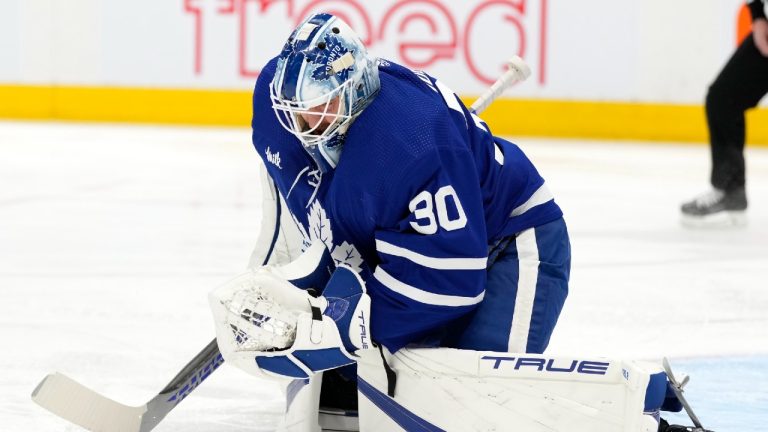
Modern analytics and defensive systems have reshaped goalie performance, shrinking the gap between elite and average and making dominance fleeting and unpredictable.
For most of NHL history, goaltending was seen as the most mystical, least predictable, and most irreplaceable position in hockey. Entire franchises were built around singular goaltending icons like Patrick Roy, Martin Brodeur, Dominik Hašek, and Henrik Lundqvist. These were players who didn’t just steal games; they defined eras. They were the system, the safety net, the identity.
But in today’s NHL, that world barely exists. Modern goaltending has been reshaped, fragmented, and—depending on how you look at it—diminished by analytics, systems play, and the evolution of the sport itself.
Elite goalies still exist, but they no longer dominate with the mythic consistency of past generations. Instead, the position has become both more important and more volatile than ever.
This is the goaltending paradox of the modern NHL.
The Analytics Revolution Has Flattened the Position
One of the biggest shifts driving this change is the analytics revolution. Over the past decade, analytics haven’t just altered the way we evaluate goaltenders; they’ve fundamentally changed how teams defend. In previous eras, the gap between a great goalie and an average one was enormous.
Teams routinely gave up high-danger rushes, heavy screens, backdoor tap-ins, and uncontested slot chances. The goaltender’s workload was chaotic and wildly unpredictable, and having the ability to make impossible, acrobatic saves was essential to survival. But as analytics spread throughout the league, teams began structuring defensive systems specifically to limit high-danger opportunities.
Coaches learned how to suppress slot chances, control rebounds, and steer play toward low-percentage shooting areas. The result is that goalies today face fewer truly unsalvageable situations. That means the performance gap between elite and average netminders has narrowed dramatically.
In today’s NHL, the environment controls more of the save percentage than the goalie does. This doesn’t make great goalies irrelevant, but it does shrink what used to be massive margins. Teams can now win with “good enough” goaltending to a degree that simply wasn’t possible twenty or thirty years ago.
Matt Murray: The Rise-and-Fall Case Study
No player illustrates this volatility better than Matt Murray. In 2016 and 2017, he was a revelation—young, calm, athletic, and seemingly destined to become the next great franchise cornerstone at the position. Winning back-to-back Stanley Cups before turning 24 was the kind of achievement that once signaled a goalie’s arrival into the Hall of Fame conversation. And then, almost overnight, it evaporated.
Within a few seasons, Murray went from foundational piece to trade candidate to a player whose contract became a burden. Injuries contributed to the decline, but the larger lesson is how quickly a goaltender’s value can collapse in the modern NHL. It’s not that Murray suddenly forgot how to play. It’s that the league studied him, mapped his tendencies, and exploited the weaknesses in his game. Today’s goalies are relentlessly analyzed. Their movement patterns, glove quirks, post integrations, rebound tendencies—all of it is charted, catalogued, and then attacked.
Once the book is written on a goalie, the whole league reads it. If a goalie cannot evolve fast enough, his performance and reputation can spiral almost immediately. This is the modern goaltending life cycle: meteoric rise, accelerated decline, constant vulnerability.
Why We Don’t See Roy or Brodeur-Level Dominance Anymore
The reason we no longer see decade-long dominance like Roy or Brodeur isn’t for lack of talent. Today’s goalies are more technically refined than their predecessors, trained in highly specialized systems from childhood onward.
But the environment no longer allows for the kind of mythic consistency that defined earlier eras. Defensive systems are stronger, reducing chaos. Scouting is more sophisticated, leaving no stylistic mystery unsolved.
The position is more homogenized, meaning fewer unique styles that can’t be countered. Variance plays a bigger role because goalies face fewer high-danger shots overall. And teams no longer ride a single goalie the way they once did; load management and tandem approaches dilute the opportunity to build legendary résumés.
All of these factors combine to create a league in which no goalie is allowed to inhabit the same mythic space Roy or Brodeur once occupied.
The Paradox: Goalies Matter Less… and More
This creates a strange paradox. Even though elite goaltending matters less in a long-term, structural sense, it matters more in the short term. The volatility of the position means that playoff success often hinges on a goalie suddenly going nuclear for a few weeks—something that can’t be predicted and rarely repeats. Recent Stanley Cups have been won by decent goalies playing out of their minds or backups turning into temporary superstars.
Jordan Binnington, Adin Hill, Cam Ward, Antti Niemi, Jonathan Quick’s late-career bursts, and yes, Matt Murray again—these are the faces of the new era. The position has become a slot machine.
All you can do is pull the lever and hope you hit the jackpot at the right moment. Because long-term dominance is rare, teams are increasingly hesitant to spend big on goalies.
This creates a bizarre market dynamic where goalies are undervalued until the exact moment they become the only thing that matters.
The Future of Goaltending: Volatility as the New Normal
Everything about the modern position points toward a new reality: the era of the reliably elite, decade-long franchise goaltender is over. Instead, we live in a league defined by short windows of elite play, rapid adaptation cycles, analytics-driven defensive structures, tandem workloads, and goaltenders who can be solved faster than ever. There will still be great goalies, and occasionally transcendent ones, but their greatness will be fleeting, fragile, and endlessly scoutable.
In this environment, Matt Murray wasn’t a fluke; he was a blueprint. His career reflects a position shaped not by mystique but by systems, scouting, and variance. Today’s goalies must constantly evolve and withstand pressures far beyond raw talent. And fans—and teams—must learn to view the position differently.
Great goaltending still exists, but it is no longer a given, nor is it stable. It is the wild card, the gamble, the unpredictable force that both defines and disrupts seasons. That, more than anything, is the reality of goaltending in the modern NHL.