
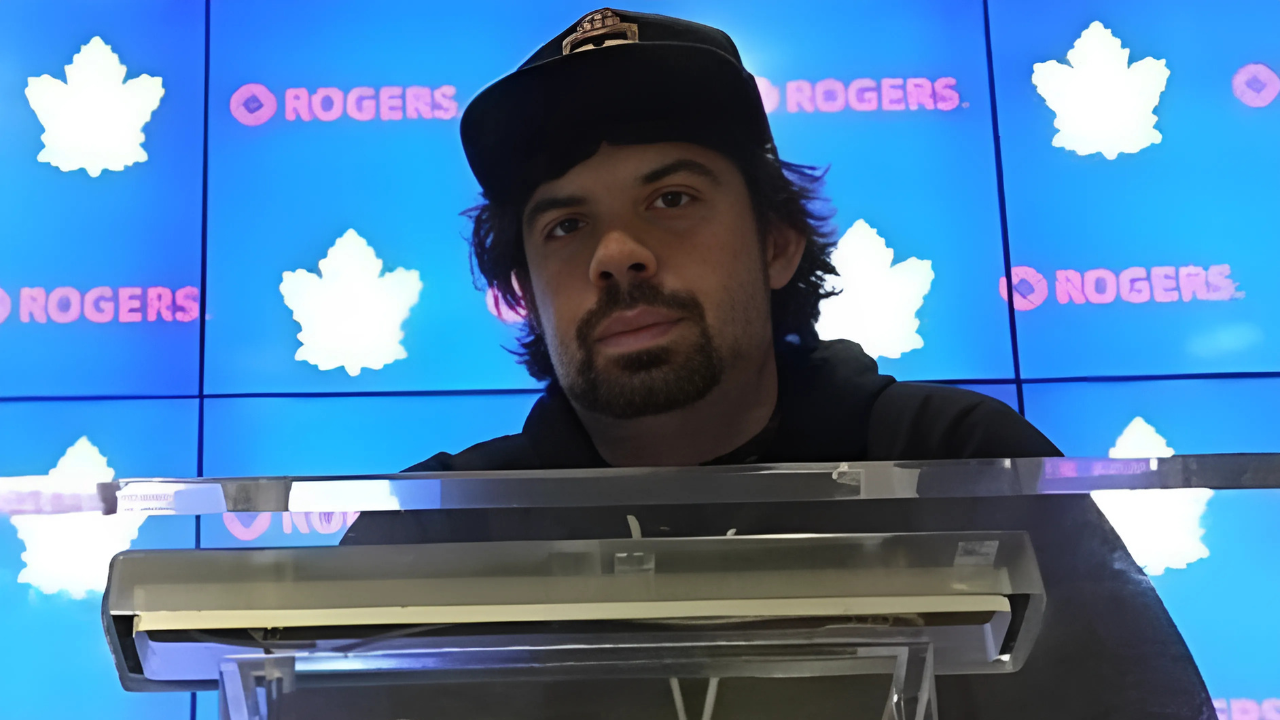
A lifelong Leafs devotee explains how inherited loyalty, corporate mythmaking, and ritualized heartbreak kept them trapped in a cycle of belief they finally escaped.
For most of my life, I was exactly the kind of Leafs fan I now warn people about. I wasn’t just someone who tuned in for big moments or dipped in and out depending on the standings. I was fully invested. I was the sort of fan who built my emotional seasons around theirs, who let my mood get set by wins, losses, and injuries. I believed in a way that wasn’t rational, wasn’t casual, and wasn’t healthy. I believed because the belief had been woven into my identity long before I was old enough to understand what fandom even was.
I grew up in Sudbury, in the same place Joe Bowen came from, the voice of the team I worshipped. I grew up hearing that connection repeated like a piece of regional scripture. But my deeper tie came from my family’s relationship with George Armstrong’s family. Armstrong wasn’t just a name on a banner or a black-and-white photograph in an old program. He was a personal friend of my grandfather. My dad’s brother, Uncle George, is named after him.
Stories of that 1967 team weren’t stories of “them”—they were stories of “us.” They were passed down the same way people pass down religious stories, except the moral wasn’t virtue, sacrifice, or transcendence. The moral was loyalty. Stay loyal to the Leafs. Stay loyal through everything. One day it will pay off.
That wasn’t fandom. That was inheritance. It was a cultural and emotional heirloom, something handed down without question. And in Southern Ontario, that kind of inheritance isn’t uncommon. Entire communities build their emotional rhythms around the Leafs. They treat hockey as identity, losing seasons as character formation, and playoff failures as rites of passage. You’re not encouraged to think critically about the team or the corporation behind it. You’re encouraged to believe—unconditionally.
My belief deepened when I worked for MLSE. Suddenly my connection to the Leafs wasn’t just familial or emotional. It was professional. I saw how the organization operated from the inside. I saw the corporate logic. I saw the brand management. I saw how fans were framed, segmented, studied, and targeted. I learned how the mythology gets manufactured. And even then, even while knowing how the sausage was made, I still believed. That’s how powerful the mythology is: even when you understand the mechanics, you still get caught up in them. You tell yourself you’re helping shape something meaningful. You tell yourself you’re part of something bigger than yourself. But really, you’ve just been absorbed into the machine.
The Hope Business
Sports fandom in Canada is not like fandom in most other places. It’s not just a hobby or entertainment. It becomes a form of civic religion. People pour into the streets, organize their lives around game nights, and treat the team’s suffering as their own. The Leafs don’t sell wins—they sell hope. They sell the idea that justification lives just around the corner, that your loyalty will eventually transform into transcendence. And if you’re born into that belief, it’s incredibly difficult to question it.
The peak of my belief came in 2019 during the Raptors’ title run. I watched that team surge through the playoffs and convinced myself I was part of it in some cosmic way. Before Game 6 against Milwaukee, I planted a “lucky loonie” under the court at Scotiabank Arena. It sounds absurd now, but at the time I genuinely felt like I had nudged the universe. And when Kawhi lifted the trophy, I treated it like evidence that belief works. That loyalty works. That rituals matter. Looking back, it wasn’t magic—it was marketing. But at the time, it felt like destiny.
But belief—especially belief manufactured by corporations—always has an expiration date. Mine came in 2021.
Game 7, Montreal, and the Break
The Leafs were up 3–1 against Montreal. Finally, it seemed like the cycle might break. Finally, the promise might be fulfilled. And then they collapsed. Again. But this collapse felt different. Game 7 was lifeless, hollow, the kind of performance that feels like it’s mocking the people who believe in it.
When the final buzzer sounded, something inside me snapped. I realized I wasn’t experiencing heartbreak. I was experiencing clarity. I wasn’t watching a sports team fail; I was participating in a ritualized extraction of emotion and attention. A monetized cycle of disappointment designed to keep me invested, not fulfilled.
The Raptors championship—the lucky loonie, the euphoria—suddenly looked different too. It wasn’t proof of destiny. It was proof of how easy it is to turn belief into content. And once that realization set in, quitting became inevitable.
Leaving the Leafs felt like leaving a cult. My entire life had been organized around them—socially, emotionally, even professionally. But once I stepped back, the spell broke. Shortly after the Montreal collapse, I quit my job at MLSE. I left Toronto altogether. I moved to Montreal, and with distance came perspective. I didn’t become a Canadiens fan—far from it. I’m Habs-adjacent because the arena is bigger and the tickets are cheaper. I go for fun, to be apart of something, not for identity or meaning. I cheer because cheering is enjoyable, not because I’m spiritually invested.
Leafs Fandom as Manufactured Suffering
One of the biggest truths I learned after walking away is that the Leafs don’t just allow suffering—they rely on it. The heartbreak isn’t a flaw in the system. It is the system. MLSE profits more from anticipation than from resolution. Winning a Cup would provide closure. It would end the cycle. And the cycle is precisely what keeps people buying tickets, merchandise, and hope.
Leafs fans aren’t masochists. They’re participants in a generational emotional economy built on deferred gratification. The pain is inherited. The devotion is inherited. The disappointment is inherited.
But just because it’s inherited doesn’t mean you have to keep carrying it.
From Fan to Consumer
The hardest realization was understanding that I had never been a “fan” in the way I thought I was. I was a consumer. I was part of a segmented market. MLSE doesn’t cultivate community—they cultivate customers. They sell belonging the way luxury brands sell status. And they do it by keeping you in a permanent state of “almost.” Almost good enough. Almost far enough. Almost there.
It mirrors the logic of neoliberalism perfectly: constant effort, constant hope, never resolution.
Breaking the Cycle
Walking away doesn’t mean abandoning hockey. It means abandoning the idea that loyalty must be monetized, that suffering must be inherited, and that identity must be purchased. Leafs fandom is a construct—carefully engineered and ruthlessly maintained. Rejecting it means rejecting the emotional economy that feeds it.
When you walk away, you aren’t just quitting a team. You’re reclaiming your time, your attention, your agency. You’re refusing the psychic wound passed down like an heirloom.
And maybe—finally—you’re making space for something real.