
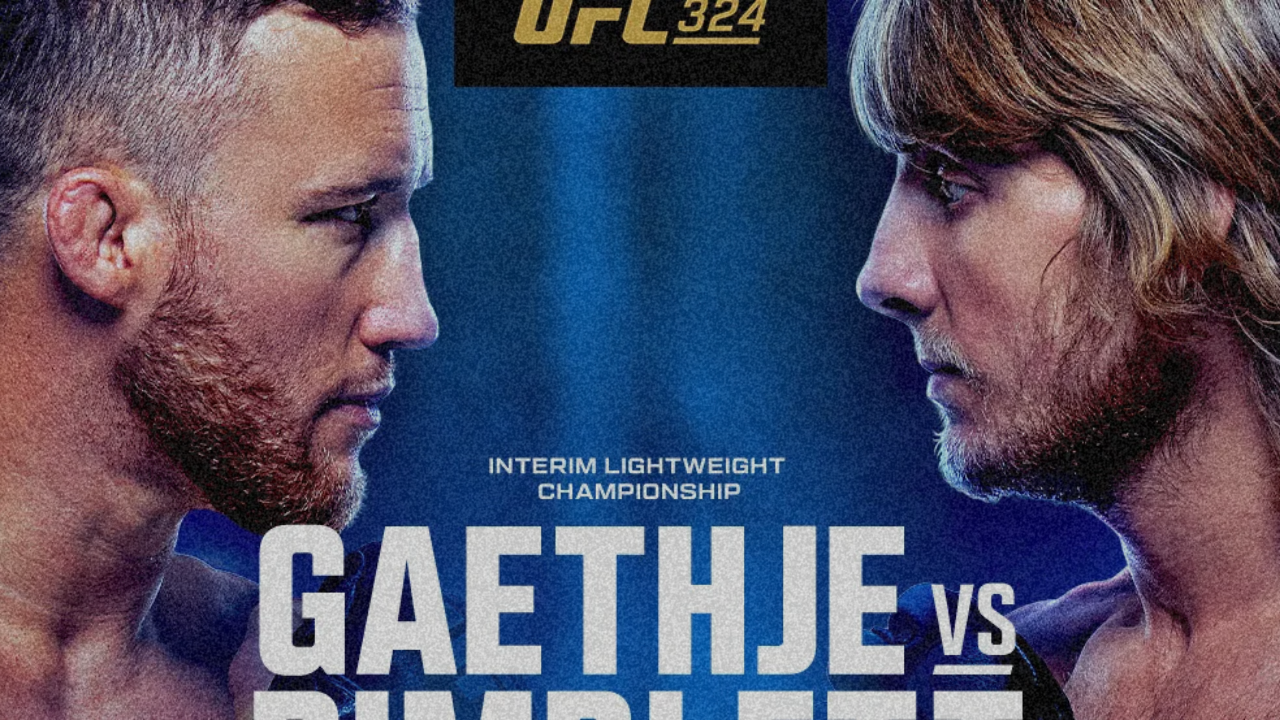
Marketed as a launch, UFC 324 exposed a platform built on risk shifted downward, eroding trust for fighters and fans while prioritizing valuation over sport.
UFC 324 was supposed to feel inevitable. Not just another fight card, but a moment of arrival. A stress test for a new era, a signal that the UFC had successfully crossed into a more polished, confident, and historically significant phase of its evolution. Instead, the event felt brittle. Fragile. Unfinished.
The problems were obvious. A weigh-in collapse. Unexplained fight cancellations. A co-main event disappearing before fight week due to a severe injury to a reigning champion. A main event that many fans and fighters openly criticized as underwhelming for the moment it was meant to represent. None of these failures were unprecedented on their own. The UFC has always been chaotic. But chaos doesn’t exist in a vacuum. Context matters.
This card was not just another show. It was supposed to be a launch. And launches are about confidence, control, and trust. UFC 324 did not inspire any of those things. It didn’t feel like the beginning of something new. It felt like a rehearsal that accidentally went live.
That’s why UFC 324 won’t be remembered as a debut. It will be remembered as a warning.
Chaos Isn’t New. Context Is.
The easiest defense of UFC 324 is also the laziest: the UFC has always been messy. Fights fall apart. Injuries happen. Cards change. This is combat sports. Anyone who’s followed the promotion for more than a few years understands that instability is baked into the product.
But that defense misses the point. This wasn’t just another pay-per-view. The UFC is in the middle of asking both fighters and fans to trust a new system. A new distribution model. A new economic structure. A new vision of what the company is and where it’s going.
When you ask people to buy into “progress,” the first impression matters. A debut moment can’t feel improvised. It can’t feel patched together at the last minute. It can’t feel like the organization is reacting instead of leading. Chaos in the past was tolerated because it existed within a familiar framework. Chaos now carries different weight because it arrives alongside new promises.
Trust is fragile. UFC 324 didn’t build it.
A Rehearsal Masquerading as a Rollout
Launches are symbolic. They’re designed to project inevitability. They tell the audience that this is the new normal, and that it’s already working. Rehearsals, by contrast, expose uncertainty. They reveal what hasn’t been figured out yet.
UFC 324 felt like the latter. The card didn’t convey polish or confidence. It felt like a test run that accidentally became canon. That matters, not because optics are everything, but because perception is inseparable from legitimacy in modern media ecosystems.
The UFC wants to be seen as a mature, global entertainment platform operating at the highest professional level. That requires a sense of control. When the rollout looks fragile, it undermines the idea that the system behind it is stable. You don’t get to tell audiences that this is the future while showing them something that looks unfinished.
This wasn’t a collapse. It was worse. It was a quiet exposure of fragility.
From Fighters to Platform Value
To understand why UFC 324 felt the way it did, you have to understand what the UFC is actually selling now. It’s no longer selling fighters. It’s selling platform value.
This is the central shift. Fighters are no longer the stars. The brand is. The platform is. The UFC doesn’t need individual athletes to transcend the sport anymore. It needs them to justify the existence of the platform. Fighters have become interchangeable inputs into a system whose primary value proposition is scale, consistency, and content volume.
That’s why the presentation has become increasingly homogenized. That’s why individual narratives feel thinner. That’s why star-building feels optional rather than essential. The platform doesn’t require stars. It requires bodies. It requires content. It requires events that can fill a schedule and satisfy contractual obligations.
This isn’t accidental. It’s structural. When platform value becomes the product, labor becomes replaceable. Fighters are no longer positioned as irreplaceable attractions. They are cost centers to be managed. The UFC’s confidence is no longer rooted in who’s fighting. It’s rooted in the assumption that the audience will show up regardless.
UFC 324 exposed what happens when that assumption meets reality.
Mainstream Push Meets a Niche Reality
At the same time, the UFC is pushing aggressively into mainstream culture. Network promotions. Award show appearances. Cross-platform visibility. Fighters showing up at events that have nothing to do with fighting. The message is clear: this is no longer just a sport. It’s a cultural property.
But MMA remains a niche product. Not because it lacks popularity, but because it is fundamentally polarizing. Its appeal is specific. Its violence is not easily universalized. Forcing it into a generalized entertainment mold doesn’t expand its meaning. It dilutes it.
The UFC’s mainstream push exposes a contradiction. The more the company tries to flatten itself into mass culture, the more it loses the specificity that made it compelling. Homogenization makes sense for platforms. It makes less sense for subcultures. UFC 324 felt like the product of that tension: slick in ambition, hollow in execution.
The Deal, the Gamble, and Downstream Risk
The financial context matters. The massive media deal that underpins this new era was always a gamble. Analysts weren’t skeptical because they misunderstood the UFC’s popularity. They were skeptical because the UFC operates in a niche, volatile market at a time when streaming economics demand endless growth.
That growth has already stalled. The post-pandemic plateau is real. When growth slows, costs don’t move upward. They move downward. Executives don’t absorb the risk. Labor does. Consumers do.
Someone has to pay for a multi-billion-dollar valuation. It was never going to be the company. It was always going to be the people inside the system. Fighters absorb more physical risk with less leverage. Fans absorb more commercialization, more advertising, and a degraded viewing experience.
UFC 324 wasn’t just a card that struggled. It was an early example of how risk is being redistributed downward to justify financial expectations set at the top.
Transparency Collapse and Betting Integrity
One of the clearest warning signs came in the form of missing transparency. Fight cancellations without clear explanations. Confusion around injuries. Unanswered questions. The situation surrounding the removal of the Michael Johnson–Alex Hernandez fight crystallized the problem.
When injuries are undisclosed, when betting lines move dramatically, and when information appears to circulate unevenly, trust erodes. Not through scandal, but through ambiguity. Combat sports depend on legitimacy. Betting markets depend on information symmetry. Privatization without transparency breaks both.
This isn’t about proving wrongdoing. It’s about recognizing how opacity becomes normalized under corporate consolidation. As the sport becomes more privatized, accountability doesn’t increase. It disappears behind contracts and nondisclosure agreements.
UFC 324 didn’t just raise questions. It showed how few answers are now expected.
Fighters and Fans Absorb the Cost
For fighters, the consequences are physical and economic. More risk. Less leverage. Fewer guarantees. For fans, the cost is experiential. Ads layered over walkouts. Constant branding. The spectacle pushed away from the cage and toward the balance sheet.
This is not accidental. It’s the logical outcome of a platform-first model. The event is no longer designed primarily for immersion. It’s designed for monetization. The audience is no longer just watching the product. They’re being processed by it.
UFC 324 made that impossible to ignore.
Not Just The Future of MMA. The Future of Labor.
The mistake is thinking this is about MMA. It isn’t. The UFC is a case study in a broader labor model that dominates tech-adjacent entertainment. When money gets bigger, workers don’t. Production gets cheaper. Labor becomes interchangeable. The value extracted from the product increases while the people producing it see less of it.
Violence, in this context, becomes just another cost to be minimized. The platform grows. The labor shrinks in importance. Awareness alone doesn’t change this. The incentives are too clear. The structure is already in place.
UFC 324 wasn’t an outlier. It was illustrative.
The Warning Shot
UFC 324 will not be remembered as the beginning of a new era. It will be remembered as the moment the cracks became visible. A signal to fighters that leverage is shrinking. A signal to fans that they’re paying more for less. A signal that the future being sold is already here.
Not as progress. As a warning.